
Judges 3:15 is about how the Israelites cried out to God for help, and He raised up a deliverer, Ehud, who was left-handed and used his skill and cleverness to defeat the oppressive Moabite ruler Eglon, symbolizing God’s provision of unexpected and unconventional ways to rescue His people from their enemies.
15 Then the people of Israel cried out to the Lord, and the Lord raised up for them a deliverer, Ehud, the son of Gera, the Benjaminite, a left-handed man. The people of Israel sent tribute by him to Eglon the king of Moab.
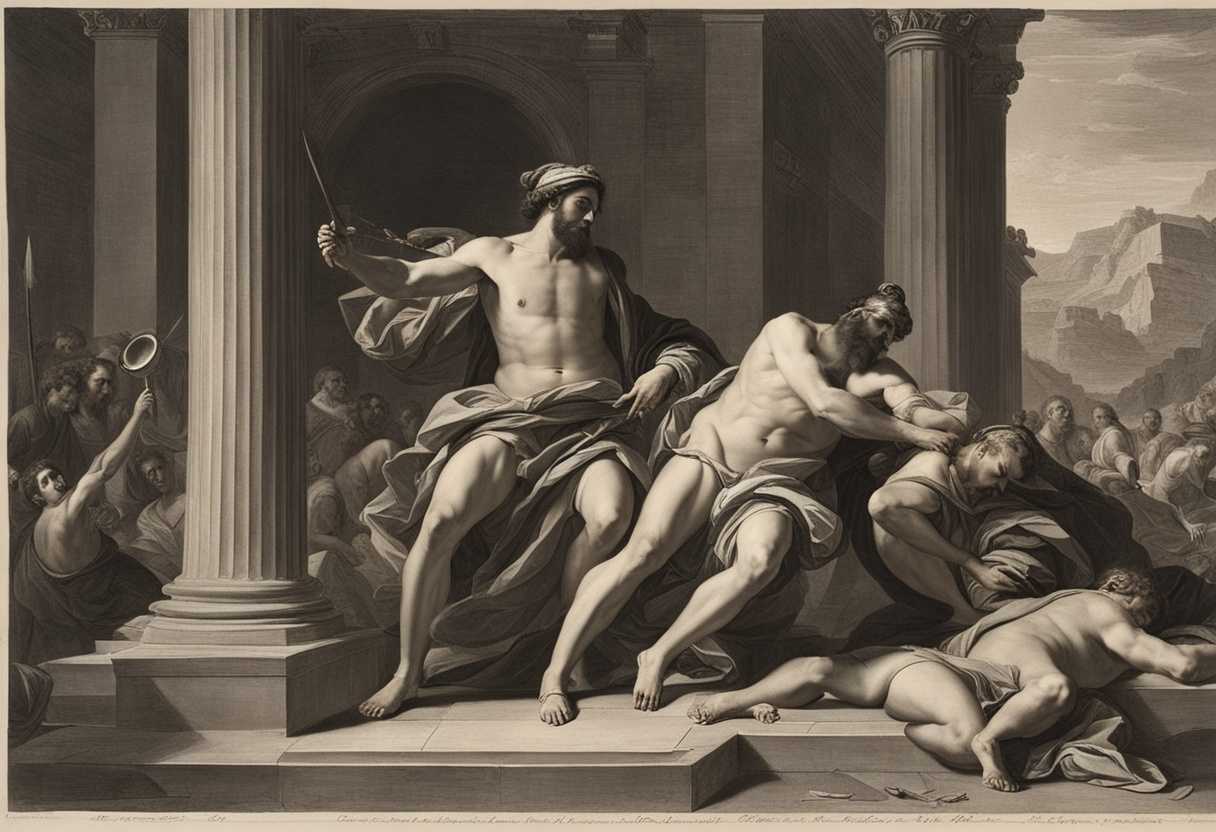
Setting the Scene for Judges 3:15
In Judges chapter 3, we find the Israelites once again doing evil in the eyes of the Lord. As a result, they are oppressed by Eglon, the king of Moab, for 18 years. The scene unfolds in the city of Jericho, a place known for its strategic location and lush vegetation. Eglon, a powerful and oppressive ruler, has established his palace in Jericho, flaunting his authority over the Israelites.
Among those present in this scene are Ehud, a left-handed man from the tribe of Benjamin, and Eglon, the overweight king of Moab. Ehud, chosen by God to deliver the Israelites from oppression, has crafted a double-edged sword and concealed it on his right thigh. Through a series of events orchestrated by God, Ehud gains an audience with King Eglon in his lavish palace in Jericho. The tension in the room is palpable as Ehud approaches the king, claiming to have a secret message for him.
As the scene reaches its climax, Ehud draws the sword from his right thigh and plunges it into Eglon’s belly, delivering a fatal blow. The guards outside the chamber are unaware of what is happening inside as Ehud makes his escape, rallying the Israelites to rise up against their oppressors. The palace in Jericho, once a symbol of Moabite power, becomes a site of liberation and victory for the Israelites, setting the stage for the cycle of deliverance and rebellion that characterizes the book of Judges.
What is Judges 3:15 about?
This verse describes a significant moment in the history of Israel, showcasing Ehud’s bravery and commitment to delivering his people from oppression under Moabite rule. Ehud, a leader chosen by God, takes on the dangerous task of confronting King Eglon, showing his faith in God’s guidance and strength. Ehud becomes a symbol of resistance and liberation for the Israelites by successfully carrying out this mission.
Reflect on the courage and determination displayed by Ehud in this verse. Consider how he embodies the idea of standing up against oppression and fighting for justice. Think about the importance of having faith in God’s plan and relying on His strength to overcome challenges. What lessons can we learn from Ehud’s story in terms of leadership, faith, and the pursuit of freedom? Let the courage of Ehud inspire you to confront obstacles with determination and trust in God’s guidance.
Understanding what Judges 3:15 really means
The Book of Judges provides a historical narrative of Israel’s recurring pattern of sin, oppression, repentance, and deliverance. In Judges 3:15, we are introduced to Ehud, a left-handed man from the tribe of Benjamin, chosen by God to be a deliverer for Israel. This verse serves as a poignant reminder of God’s responsiveness to the cries of His people when they turn to Him in times of trouble. The phrase “The Israelites cried out to the Lord” signifies a crucial moment of repentance and acknowledgment of their need for divine intervention. It reflects a turning point where the Israelites recognize their dependence on God for deliverance.
“The Lord gave them a deliverer” in Judges 3:15 showcases God’s mercy and willingness to rescue His people despite their shortcomings. The mention of Ehud being left-handed is not merely a physical description but a symbol of God’s ability to use unconventional and unexpected means to achieve His purposes. This detail foreshadows Ehud’s unique approach to deliverance, highlighting God’s sovereignty in choosing individuals for specific tasks, regardless of societal norms or expectations.
Drawing parallels with other biblical passages such as Exodus 3:7-8, Psalm 34:17, and 1 Corinthians 1:27, we see a consistent theme of God hearing the cries of His people and using unexpected avenues to bring about deliverance. These passages reinforce the idea that God’s ways are higher than ours, and He often works through the weak and the unexpected to showcase His power and wisdom.
The relevance of Judges 3:15 extends to our lives today by emphasizing the importance of seeking God in times of distress and trusting in His deliverance. It challenges us to look beyond conventional standards and recognize that God can use anyone, regardless of perceived weaknesses or limitations, to accomplish His purposes. Just as Ehud’s left-handedness was a key asset in his mission, our unique traits and talents can be instrumental in bringing about positive change in our communities.
An anecdote can further illustrate this point: Imagine a community facing a crisis where an unlikely hero emerges—a young individual with a talent for organizing relief efforts. Despite initial doubts due to their age and lack of experience, their unique skills and perspective prove invaluable in coordinating effective support. This narrative mirrors Ehud’s story, showcasing how God can raise deliverers from unexpected places and how our distinct qualities can be harnessed for the greater good.
In conclusion, Judges 3:15 serves as a powerful reminder of God’s faithfulness in responding to our pleas for help and His ability to use ordinary individuals for extraordinary purposes. It encourages us to trust in God’s sovereignty, seek His guidance in times of need, and embrace the diverse gifts and abilities He has bestowed upon us to be agents of His deliverance in the world.
How do we respond when unexpected challenges arise?
When unexpected challenges arise, we can respond with faith and reliance on God’s guidance. We too can trust in God’s provision and strength in difficult situations, just as Ehud faced the unexpected challenge of bringing down Eglon, the king of Moab, in the verse. We can overcome unexpected challenges with courage and faith by being open to God’s leading and willing to take bold and unconventional steps. God is always with us in times of unexpected challenges and is ready to help us through any obstacles we may face. Like Ehud, who trusted in God’s strength and guidance, we can turn to prayer and seek wisdom to navigate through challenges. We can find the strength and courage needed to overcome unexpected trials and emerge victorious on the other side by staying connected to God and seeking His direction. We should trust in God’s plan for us and rely on His unfailing support in times of uncertainty and difficulty.
Application
Embrace the courage of Ehud and face your challenges head-on. Stand strong in your beliefs and do not be afraid to confront the darkness around you. It is time to be bold and resolute in your actions, just like Ehud was in his. Will you answer the call to be courageous in your own journey and make a difference in the world?

Reverend Michael Johnson is an experienced Church Minister with a profound expertise in spirituality and guidance. With a serene presence and a compassionate heart, he has faithfully served his congregation for over 20 years, leading them on a spiritual journey towards inner peace and enlightenment. Reverend Johnson’s extensive knowledge of religious philosophies and profound understanding of human nature have made him a trusted confidant and mentor to many, as he seamlessly weaves his profound wisdom into life teachings. Reverend Johnson’s calming demeanor and empathetic nature continue to uplift and heal souls, nurturing a sense of unity and tranquility within his community.