
2 Chronicles 12:13-16 is about Rehoboam’s reign as king of Judah, highlighting his unfaithfulness to God which led to the loss of treasures from the Temple and the eventual spiritual decline of the kingdom.
13 Thus King Rehoboam grew strong in Jerusalem and reigned. Rehoboam was forty-one years old when he began to reign, and he reigned seventeen years in Jerusalem, the city that the Lord had chosen out of all the tribes of Israel to put his name there. His mother’s name was Naamah the Ammonite.
14 And he did evil, for he did not set his heart to seek the Lord.
15 Now the acts of Rehoboam, from first to last, are they not written in the chronicles of Shemaiah the prophet and of Iddo the seer? There were continual wars between Rehoboam and Jeroboam.
16 And Rehoboam slept with his fathers and was buried in the city of David, and Abijah his son reigned in his place.
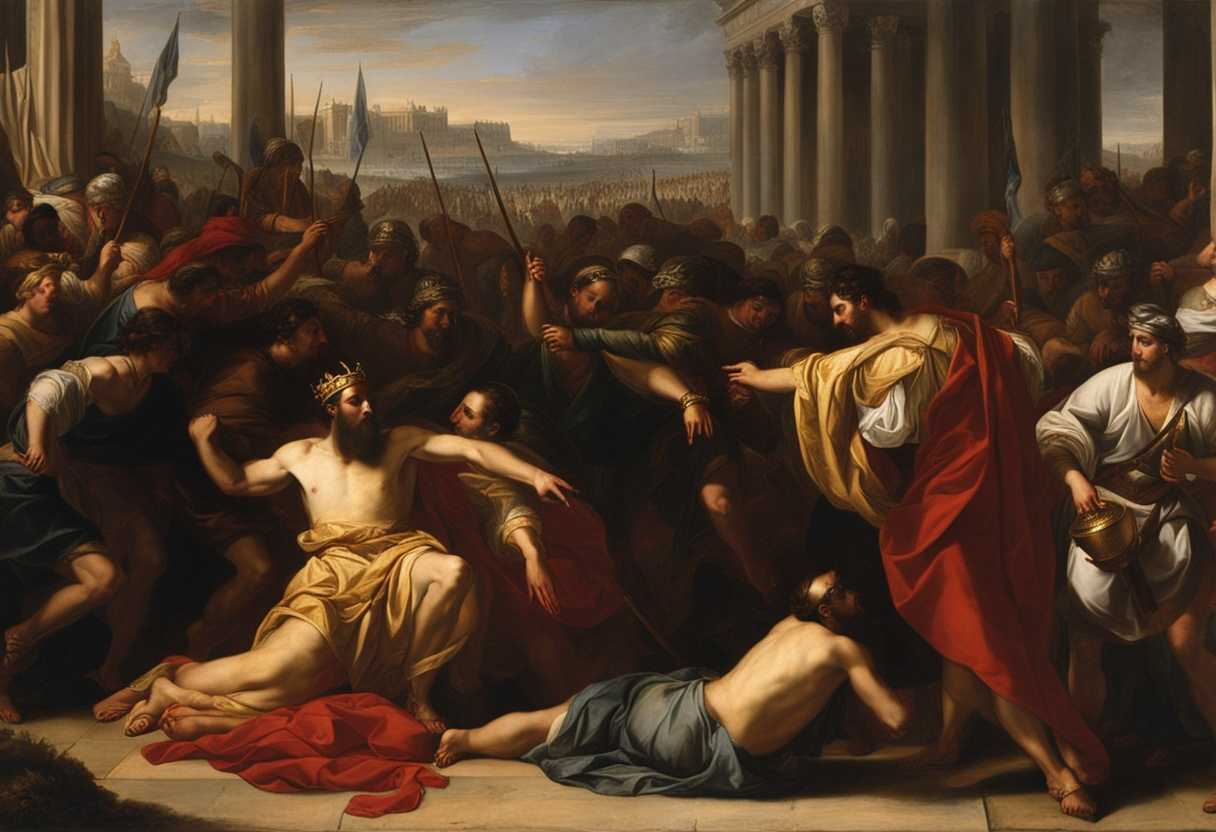
Setting the Scene for 2 Chronicles 12:13-16
In 2 Chronicles chapter 12, we find the scene set in the royal court of Judah during the reign of King Rehoboam. The king had forsaken the ways of the Lord, leading to the kingdom being attacked by the Egyptian king Shishak. As a result, the people of Judah, including the king and his officials, found themselves in a state of distress and vulnerability.
Among those present in the scene are King Rehoboam himself, his officials, and the prophet Shemaiah. The king and his officials had humbled themselves before the Lord in response to the prophet’s message, acknowledging their wrongdoing and seeking forgiveness. The surroundings are likely tense and somber, with a sense of urgency and repentance in the air as they await the consequences of their actions.
As the scene unfolds, we witness the mercy of the Lord as He responds to their repentance by preventing the complete destruction of Judah. The kingdom is spared from total devastation, although it is subjected to servitude under the Egyptian king. This moment serves as a powerful reminder of the consequences of turning away from God and the importance of seeking His forgiveness and mercy in times of trouble.
What is 2 Chronicles 12:13-16 about?
Let’s unpack this verse together. Here, we are learning about Rehoboam, who was a king of Judah, and the details of his reign and death are documented in the annals of the kings of Judah. This verse is a snippet of historical information, highlighting Rehoboam’s significance in the lineage of Judah’s rulers. As we delve into this verse, we are reminded of the importance of recording history and preserving the stories of those who came before us. It gives us insights into the political, social, and cultural landscapes of ancient civilizations. Studying the reign of Rehoboam and his eventual death can provide us with a deeper understanding of the challenges and triumphs faced by the rulers of Judah during that time.
Reflecting on this verse prompts us to contemplate our own legacies and the impact we leave behind. What lessons can we learn from the lives of historical figures like Rehoboam? How can we ensure that our own stories are remembered and shared for generations to come? Exploring the annals of the kings of Judah connects us not just with the past, but also with our shared human experiences and the enduring power of history.
Understanding what 2 Chronicles 12:13-16 really means
The verses in 2 Chronicles 12:13-16 shed light on the reign of King Rehoboam, the son of Solomon, who ruled over Judah during a tumultuous period. Rehoboam’s reign was marred by division within the kingdom of Israel, leading to the split between the northern tribes and the establishment of the kingdom of Judah in the south. As the narrative unfolds, we see Rehoboam taking steps to fortify himself in Jerusalem, the political and spiritual center of Judah. This strategic move indicates his efforts to secure his position amidst the challenges he faced.
However, despite his attempts to strengthen himself politically, the text highlights a crucial flaw in Rehoboam’s leadership. It is noted that he did evil because he had not set his heart on seeking the Lord. This critical assessment underscores the importance of prioritizing a relationship with God in leadership and decision-making. Rehoboam’s failure to seek divine guidance ultimately led to his downfall and the troubles that befell his kingdom. This serves as a poignant reminder of the consequences of neglecting spiritual growth and ethical values in leadership.
Drawing parallels to contemporary times, Rehoboam’s story resonates as a cautionary tale for individuals today. In a world that often prioritizes self-reliance and material success, it is easy to overlook the significance of seeking God’s guidance and nurturing a relationship with Him. The narrative of Rehoboam prompts reflection on the dangers of moral compromise and the importance of anchoring our decisions in faith and ethical principles.
Imagine a modern-day leader who, like Rehoboam, neglects wise counsel and ethical values in pursuit of power and success. Over time, this leader’s choices lead to chaos within their organization and personal remorse. This scenario mirrors Rehoboam’s experience, emphasizing the enduring relevance of seeking divine wisdom and maintaining a heart focused on God. By internalizing the lessons from Rehoboam’s story, we are encouraged to prioritize our relationship with God, seek His guidance in our decisions, and uphold His values in our lives.
In conclusion, the verses in 2 Chronicles 12:13-16 serve as a poignant reminder of the consequences of neglecting a relationship with God. Rehoboam’s downfall underscores the importance of seeking divine guidance and aligning our hearts with God’s will. By learning from his missteps, we are challenged to cultivate a deep connection with God, make decisions rooted in faith, and uphold ethical values in all aspects of our lives.
How can we stay humble amidst success?
We can stay humble amidst success by recognizing that our achievements are ultimately a result of God’s blessings and grace upon us. When we acknowledge that our success is not solely due to our own efforts, it helps to keep us grounded and humble. Remembering that it is God who gives us the ability to succeed can prevent feelings of pride or arrogance from creeping in.
Additionally, staying connected to our faith community and seeking guidance from wise mentors can also help us maintain humility. Surrounding ourselves with people who can provide accountability and perspective can serve as a reminder of our place in the larger scheme of things. We can resist the temptation to let success get to our heads by staying open to feedback, correction, and learning from others.
Lastly, practicing gratitude and giving back to others can also help us remain humble. We shift the focus away from ourselves and towards a mindset of service and generosity by expressing thanks for the blessings we have received and using our success to benefit others. Humility comes from recognizing that our success is not just for our own gain, but also for the betterment of those around us.
Application
Think about the impact of your choices in your life’s journey. Just like leaders at work or family could make errors, you too can make them. Remember, pick your path carefully and look for divine guidance. Will you allow God to lead your steps today?

Reverend Michael Johnson is an experienced Church Minister with a profound expertise in spirituality and guidance. With a serene presence and a compassionate heart, he has faithfully served his congregation for over 20 years, leading them on a spiritual journey towards inner peace and enlightenment. Reverend Johnson’s extensive knowledge of religious philosophies and profound understanding of human nature have made him a trusted confidant and mentor to many, as he seamlessly weaves his profound wisdom into life teachings. Reverend Johnson’s calming demeanor and empathetic nature continue to uplift and heal souls, nurturing a sense of unity and tranquility within his community.