
Matthew 21:23-27 is about Jesus challenging the religious leaders’ authority by questioning the source of John the Baptist’s authority, emphasizing the importance of sincerity and true authority in matters of faith.
23 And when he entered the temple, the chief priests and the elders of the people came up to him as he was teaching, and said, “By what authority are you doing these things, and who gave you this authority?”
24 Jesus said to them, “I will also ask you one question, and if you tell me the answer, then I will also tell you by what authority I do these things.
25 The baptism of John, from where did it come? From heaven or from man?” And they discussed it among themselves, saying, “If we say, ‘From heaven,’ he will say to us, ‘Why then did you not believe him?’
26 But if we say, ‘From man,’ we are afraid of the crowd, for they all hold that John was a prophet.”
27 So they answered Jesus, “We do not know.” And he said to them, “Neither will I tell you by what authority I do these things.
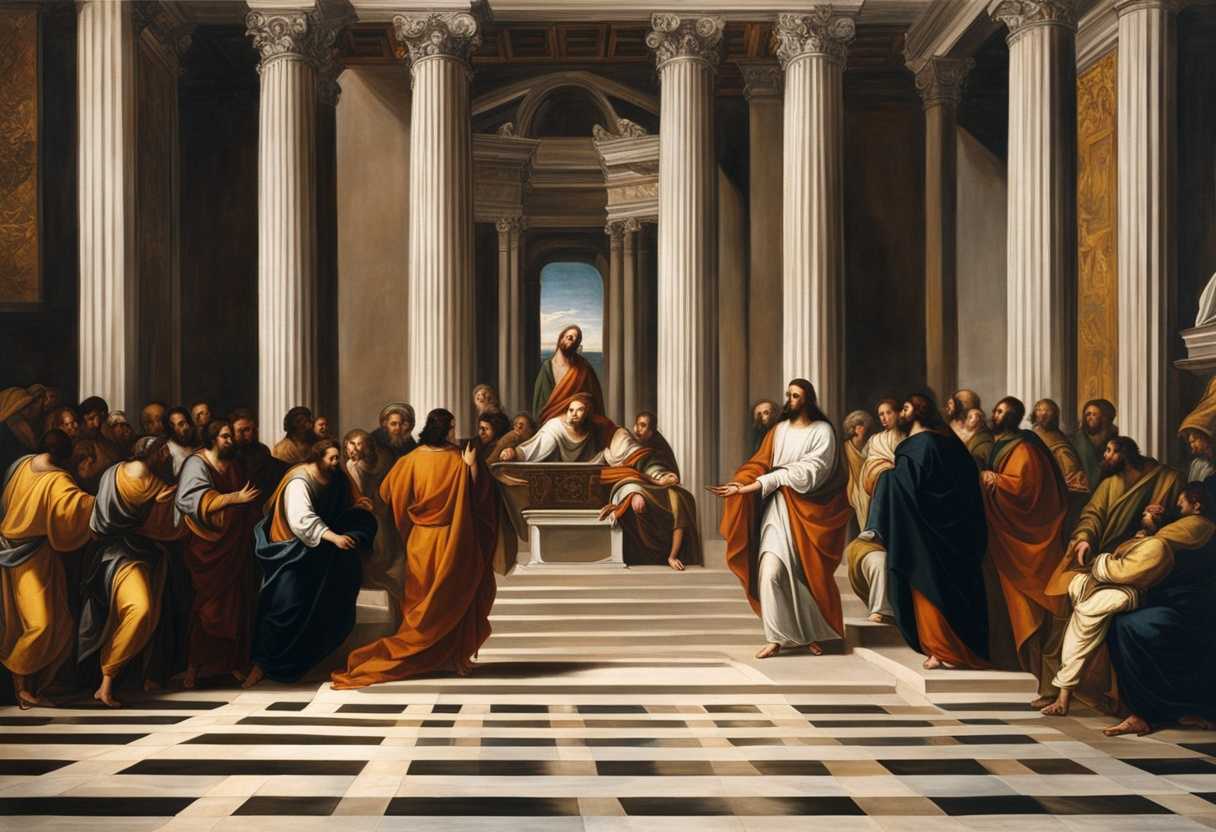
Setting the Scene for Matthew 21:23-27
In Matthew chapter 21, we find Jesus entering the temple courts in Jerusalem. The scene is bustling with activity as people from all walks of life have gathered for various reasons. The religious leaders, including the chief priests and elders, are present, as well as a crowd of onlookers who are curious about Jesus and his teachings.
The chief priests and elders approach Jesus, questioning his authority and demanding to know by what right he is performing miracles and teaching in the temple. Jesus, in his characteristic wisdom, responds by asking them a question about the authority of John the Baptist. This exchange creates a tense atmosphere as the religious leaders try to trap Jesus with their questions, but he skillfully navigates the situation, leaving them unable to give a satisfactory answer.
The setting is significant, as the temple was considered the holiest place in Jerusalem, and Jesus’ actions and teachings there challenged the religious establishment of the time. The scene sets the stage for further confrontations between Jesus and the religious leaders, ultimately leading to his crucifixion and resurrection.
What is Matthew 21:23-27 about?
The religious leaders are challenging Jesus in this verse to explain the source of his authority. This confrontation highlights a significant tension in the Gospels between Jesus and the religious establishment of his time. The religious leaders, who were supposed to be the spiritual guides of the people, are actually testing Jesus in a way that exposes their lack of faith and their hypocrisy. They reveal their own insecurity and refusal to acknowledge the divinely appointed mission that Jesus was carrying out by questioning Jesus’ authority. The religious leaders’ motivations behind their actions invite us to reflect on this verse. What led them to challenge Jesus in this way? Were they genuinely seeking the truth, or were they more concerned with preserving their own power and authority? Jesus’s response to their question challenges us to examine our own hearts and intentions when we question or doubt the authority of God in our lives. Are we willing to submit to God’s authority with humility and faith, or do we, like the religious leaders, allow our own pride and self-interest to cloud our judgment? The encounter between Jesus and the religious leaders serves as a powerful lesson for us to always approach God with sincerity, humility, and faith.
Understanding what Matthew 21:23-27 really means
During Jesus’ final week in Jerusalem, amidst the buzz of His triumphal entry and the cleansing of the temple, the chief priests and elders approached Him, questioning the source of His authority. Their inquiry, “By what authority are you doing these things?” aimed to challenge Jesus’ teachings and actions, probing the legitimacy of His divine mandate. In response, Jesus, displaying His profound wisdom, turned the tables by posing a question of His own, “I will also ask you one question.” This strategic move not only showcased Jesus’ astuteness but also exposed the true intentions of His interrogators, highlighting the depth of His insight.
Jesus’ subsequent question about the origin of John the Baptist’s baptism, whether from heaven or men, placed the religious leaders in a dilemma, compelling them to confront their beliefs and the public’s perception. This tactic not only revealed Jesus’ ability to navigate complex situations but also emphasized the importance of acknowledging and discerning spiritual authority. Drawing parallels to John the Baptist’s divine commission in John 1:6-8 and the baptism of Jesus in Matthew 3:13-17, the passage underscores the continuity of divine authority in the unfolding of God’s redemptive plan.
In a contemporary context, where skepticism towards authority abounds, this passage prompts believers to reflect on the essence of true spiritual leadership. Jesus’ method of responding with questions serves as a timeless lesson in approaching challenges with wisdom and insight rather than mere confrontation. By recognizing the divine authority underpinning Jesus’ teachings and actions, individuals are encouraged to deepen their faith and understanding of His mission.
Consider a workplace scenario where a new manager introduces significant changes, prompting employees to question their authority. However, if the manager demonstrates wisdom, knowledge, and a clear vision, employees may eventually respect and follow their leadership. Similarly, Jesus’ authority, initially questioned by the religious leaders, is ultimately affirmed through His divine wisdom and mission, resonating with those who seek to discern and honor true spiritual authority.
In conclusion, this passage from Matthew 21:23-27 challenges us to not only acknowledge and respect divine authority but also to respond to challenges with wisdom and discernment. It underscores the significance of recognizing Jesus’ authority, rooted in His divine mission and affirmed by God, as evidenced through His teachings and actions. As we navigate questions of authority in our lives, may we draw inspiration from Jesus’ example, embracing His wisdom and insight in our journey of faith.
By what authority do you live out your beliefs?
I live out my beliefs by recognizing the authority of God in all aspects of my life. I also strive to live according to the teachings and principles found in the Bible, just as Jesus demonstrated authority from God when challenged by the religious leaders in Matthew 21:23-27. I align my actions and beliefs with His will by following God’s word and seeking His guidance through prayer and reflection.
The story in Matthew 21:23-27 reminds me that my authority and beliefs ultimately come from God. When faced with opposition or challenges to my faith, I can confidently stand firm in the knowledge that I am accountable to Him alone. I am able to witness to others and reflect His love and grace to the world around me by living out my beliefs in humility and obedience to God’s will.
Application
Think about your daily grind—work, family, everything you juggle. Are you true to your core values as you navigate through it all? Jesus questioned the leaders back then, and now it’s your turn to self-examine. Is your faith genuine and guiding your actions every day? What changes can you make to live out your beliefs authentically? Will you make the choice to align your actions with what you truly believe?

Reverend Michael Johnson is an experienced Church Minister with a profound expertise in spirituality and guidance. With a serene presence and a compassionate heart, he has faithfully served his congregation for over 20 years, leading them on a spiritual journey towards inner peace and enlightenment. Reverend Johnson’s extensive knowledge of religious philosophies and profound understanding of human nature have made him a trusted confidant and mentor to many, as he seamlessly weaves his profound wisdom into life teachings. Reverend Johnson’s calming demeanor and empathetic nature continue to uplift and heal souls, nurturing a sense of unity and tranquility within his community.