
Hebrews 13:11-13 is about the importance of believers seeking spiritual purity and identifying with Christ’s sacrifice by going outside the camp, bearing His disgrace, and focusing on eternal glory rather than earthly comforts.
11 For the bodies of those animals whose blood is brought into the holy places by the high priest as a sacrifice for sin are burned outside the camp.
12 So Jesus also suffered outside the gate in order to sanctify the people through his own blood.
13 Therefore let us go to him outside the camp and bear the reproach he endured.
Setting the Scene for Hebrews 13:11-13
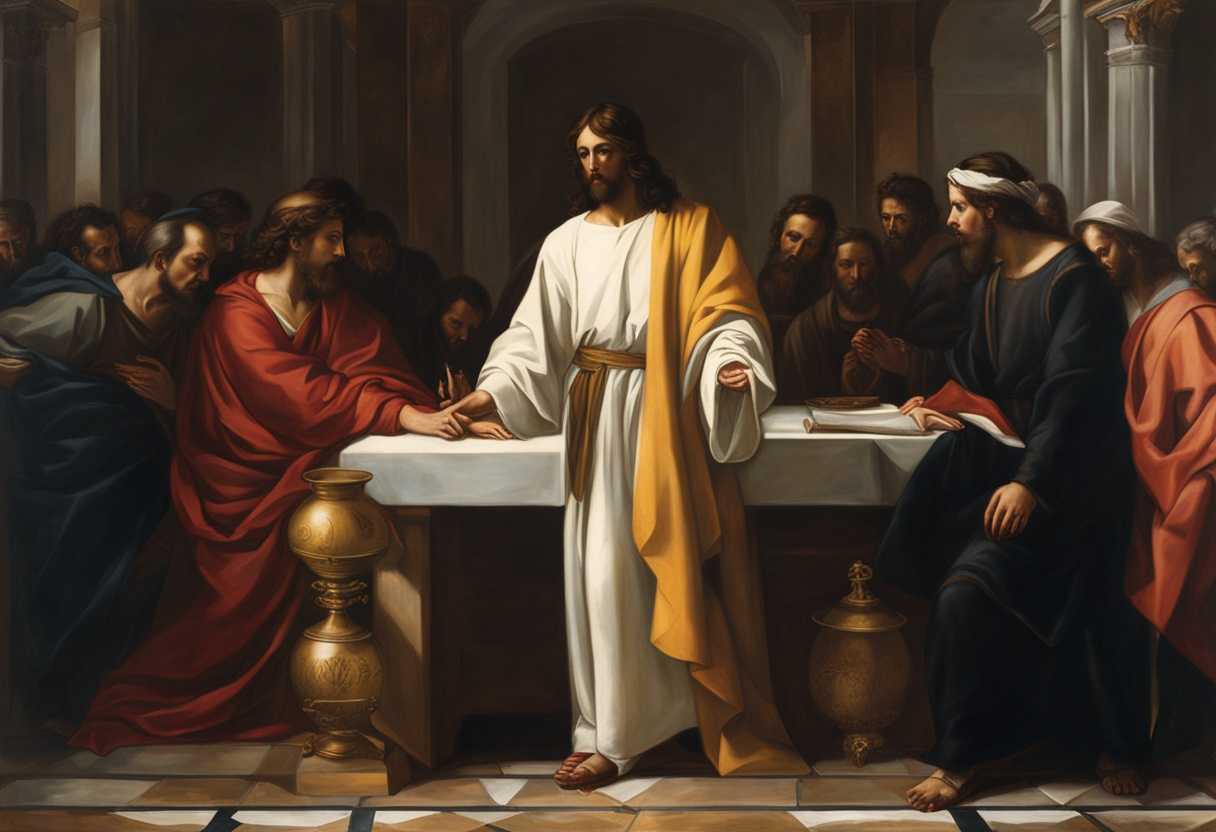
In Hebrews chapter 13, the scene described in verses 11-13 takes place outside the camp, a reference to the Old Testament practice of taking impure things outside the camp of Israel. The writer of Hebrews uses this imagery to explain that Jesus also suffered outside the city gate to make the people holy through his own blood.
In this scene, we see Jesus, the central figure, being led outside the city gates of Jerusalem to be crucified. He is accompanied by a crowd of onlookers, soldiers, and religious leaders. The atmosphere is tense and somber as Jesus carries his cross to Golgotha, the place of the skull, where he will be crucified. The dusty road is lined with spectators, some weeping, some mocking, and others simply curious about the spectacle unfolding before them.
As Jesus is nailed to the cross and lifted up, the onlookers witness the ultimate sacrifice for the sins of humanity. The scene is a powerful reminder of the love and grace of God, as Jesus willingly lays down his life for the salvation of all who believe in him. The setting outside the city gates symbolizes the rejection and suffering that Jesus endured on behalf of humanity, ultimately leading to his victory over sin and death through his resurrection.
What is Hebrews 13:11-13 about?
These verses point to the selfless act of Jesus enduring suffering and death outside the city walls to make us holy. This act of sacrifice was symbolic of Jesus carrying the weight of our sins and offering himself as a pure and blameless sacrifice for our salvation. Jesus demonstrated his willingness to take on the burden of our transgressions and to cleanse us from all impurities by suffering outside the city.
Think about the significance of Jesus choosing to suffer outside the city. Why did he deliberately distance himself from the comfort and safety of the city walls? It was a deliberate act to show that he was willing to bear our shame and disgrace in order to bring us closer to God. This act of sanctification, of making us holy, required Jesus to go to the most extreme lengths, even unto death. It underscores the depth of God’s love for us and the extent to which he is willing to go to redeem and sanctify us. Let this profound act of sacrifice by Jesus outside the city walls serve as a powerful reminder of his unconditional love and the sanctifying grace that we receive through his suffering.
Understanding what Hebrews 13:11-13 really means
The Book of Hebrews was penned to Jewish Christians grappling with persecution and the allure of reverting to Judaism. Hebrews 13:11-13 delves into the sacrificial system and Jesus’ suffering beyond the city gates. The imagery of the high priest carrying animal blood into the Most Holy Place, while their bodies were incinerated outside the camp, symbolizes sin’s separation and sanctity. Likewise, Jesus’ suffering outside Jerusalem, akin to the Old Testament practice, signifies His bearing of sins and rejection, sanctifying believers through His blood. The call to “go to him outside the camp” urges believers to embrace Jesus’ suffering and disgrace, even if it entails facing societal scorn or persecution.
In Leviticus 16:27, the burning of sin offerings outside the camp mirrors Jesus’ crucifixion beyond the city walls in John 19:17-18. Matthew 16:24 further echoes this theme, as Jesus beckons His followers to bear their crosses, embracing a life of sacrifice and potential suffering. Today, the exhortation to venture “outside the camp” beckons believers to a faith-filled existence that may entail hardship, rejection, or defying societal norms. In a world fixated on comfort and approval, this passage challenges individuals to prioritize their faith and allegiance to Jesus, even amidst adversity.
Consider a young professional forsaking a lucrative career to serve in a mission field, met with bewilderment or disdain from peers and family. This decision embodies the essence of “going to him outside the camp,” braving potential disgrace for the sake of following Christ’s call. Such a narrative mirrors the early Christians’ plight, enduring persecution and social alienation for their faith, yet discovering their true identity and purpose in Christ.
Hebrews 13:11-13 beckons believers to a profound commitment to Christ, one that may entail suffering and rejection. It underscores that genuine holiness and sanctification stem from identifying with Jesus’ sacrifice. This passage emboldens us to live resolutely for our faith, even if it necessitates stepping beyond the confines of societal approval.
How can we be willing to suffer for Christ?
We can be willing to suffer for Christ by understanding that our sacrifice and suffering are a reflection of His ultimate sacrifice for us. We can endure challenges and hardships for the sake of His kingdom, just as Jesus endured suffering and shame on the cross for our sake. Our willingness to suffer demonstrates our commitment to following Christ and living out our faith in a world that may oppose or misunderstand it.
Suffering for Christ can also be seen as a way of sharing in His sufferings and drawing closer to Him. When we endure hardships for the sake of our faith, we align ourselves with the example of Christ and deepen our relationship with Him. Rather than viewing suffering as a burden to be avoided, we can see it as an opportunity to grow in our faith and become more like our Savior. Our love for Him and our desire to prioritize His kingdom above all else ultimately fuel our willingness to suffer for Christ. We can find the strength and courage to endure any suffering that comes our way by keeping our focus on Christ and the eternal rewards that await us. Our faithfulness in the midst of trials not only glorifies God but also serves as a testament to the transformative power of His love in our lives.
Application
Step out of the familiar confines and embrace the challenges that come your way. Just like Jesus walked outside the bounds to sanctify, will you also venture out into the unknown for a greater purpose? Dare to face obstacles with faith and determination, knowing that this world is but a temporary stop on your journey. Take a leap of faith, leave the comfort behind, and embrace the call to follow in the footsteps of our Savior. Will you rise to the challenge and step outside the camp?

Reverend Michael Johnson is an experienced Church Minister with a profound expertise in spirituality and guidance. With a serene presence and a compassionate heart, he has faithfully served his congregation for over 20 years, leading them on a spiritual journey towards inner peace and enlightenment. Reverend Johnson’s extensive knowledge of religious philosophies and profound understanding of human nature have made him a trusted confidant and mentor to many, as he seamlessly weaves his profound wisdom into life teachings. Reverend Johnson’s calming demeanor and empathetic nature continue to uplift and heal souls, nurturing a sense of unity and tranquility within his community.