
Leviticus 25:46 is about establishing guidelines for the treatment of foreign slaves within the Israelite community, emphasizing the importance of treating them justly and not ruling over them ruthlessly.
46 You may bequeath them to your sons after you to inherit as a possession forever. You may make slaves of them, but over your brothers the people of Israel you shall not rule, one over another ruthlessly.
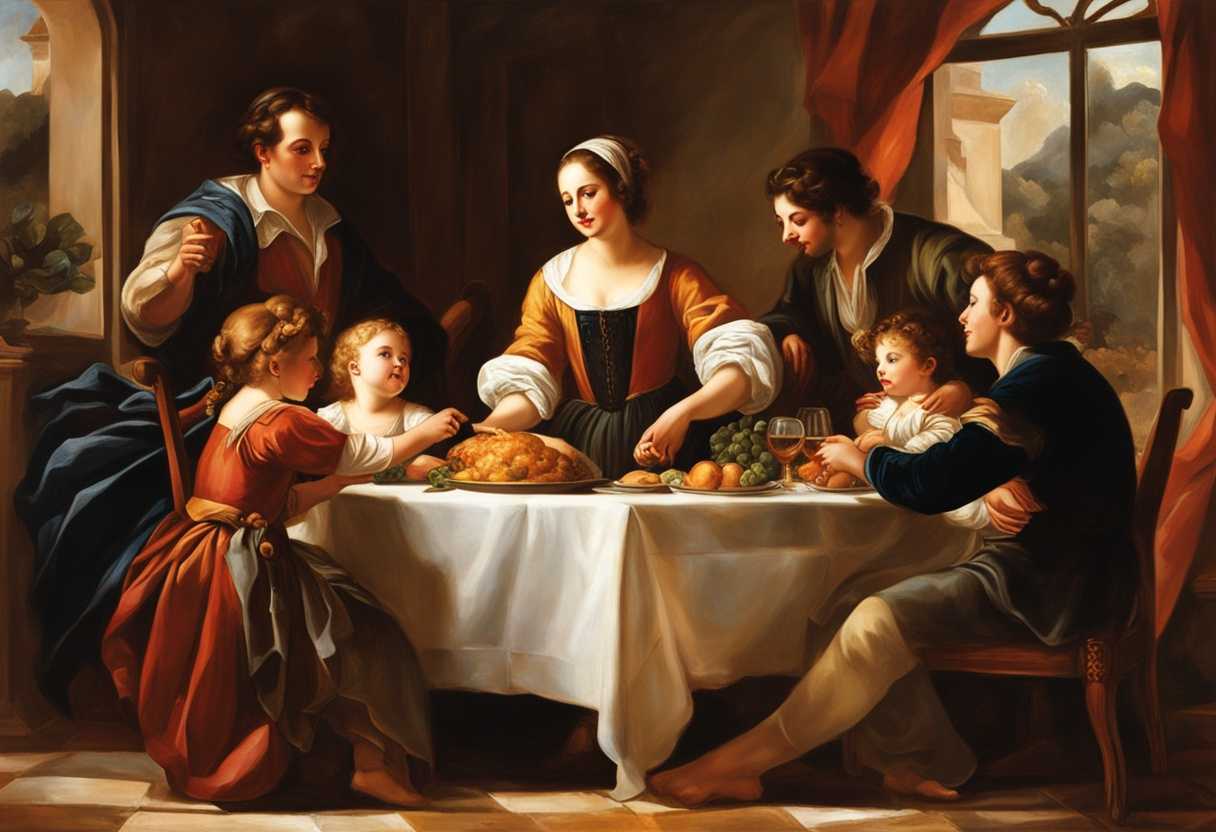
Setting the Scene for Leviticus 25:46
In Leviticus chapter 25, we find the Israelites encamped at the foot of Mount Sinai, having recently been freed from slavery in Egypt. Moses, the great leader chosen by God, is addressing the people, relaying the laws and commandments that God has given them. The scene is set in the vast desert, with the imposing presence of the mountain in the background and the Israelite camp spread out before it.
Among the crowd gathered to hear Moses speak are Aaron, the high priest, and his sons, who will later play a crucial role in the religious rituals of the Israelites. Also present are Joshua, Moses’ loyal assistant and future leader of the Israelites, and Miriam, Moses’ sister and a prophetess in her own right. The people are seated on the ground, eagerly listening as Moses explains the laws regarding the treatment of slaves and the importance of observing the Sabbath and the Year of Jubilee.
As Moses continues to speak, the sun begins to set, casting a warm glow over the desert landscape. The people are filled with a sense of awe and reverence as they realize the weight of the covenant they have entered into with God. The scene is one of solemnity and significance, as the Israelites prepare to embark on their journey to the Promised Land, guided by the laws and teachings given to them by God through Moses.
What is Leviticus 25:46 about?
Leviticus 25:46 highlights the importance of treating slaves with dignity and respect, rather than viewing them as mere property. This verse reflects the value of all individuals as human beings, deserving of fair treatment and consideration. It reminds us to uphold the principle of equality, recognizing the intrinsic worth of every person, regardless of their social status or circumstances. We are challenged to consider how we interact with others in our daily lives as we reflect on this verse. Do we treat people with kindness and compassion, regardless of their background or position? Are we conscious of our words and actions, ensuring that we uplift and support those around us? Leviticus 25:46 serves as a powerful reminder of our shared humanity and the responsibility we have to treat others with fairness and empathy. Let us seek to embody the spirit of this verse in our interactions with others, striving to emulate God’s love and compassion in all that we do. May we always remember the inherent worth of every individual and strive to create a world where all are treated with dignity and respect.
Understanding what Leviticus 25:46 really means
Leviticus 25:46, nestled within the Holiness Code of Leviticus, serves as a poignant reminder of the ethical guidelines set forth for the Israelites. This verse, situated in the chapter discussing the Year of Jubilee, delves into the treatment of slaves, drawing a distinction between Israelite and foreign slaves. The context of the Year of Jubilee, a period of liberation and restoration every 50 years, underscores the importance of justice and compassion in societal structures.
In conjunction with related passages such as Exodus 21:2-6 and Deuteronomy 15:12-15, Leviticus 25:46 forms a tapestry of ethical considerations regarding the treatment of slaves. These passages emphasize the release of Hebrew slaves after a designated period of service and advocate for generosity and fairness in their treatment. The New Testament echoes these sentiments in Galatians 3:28, highlighting the equality found in Christ that transcends societal distinctions like slave and free.
The relevance of Leviticus 25:46 extends beyond its historical context, challenging contemporary readers to reflect on how they interact with others, particularly the vulnerable and marginalized. It prompts introspection on issues of justice, mercy, and the inherent worth of every individual. In a modern context, this verse can be applied to pressing concerns such as human trafficking, labor rights, and broader social justice issues.
Consider a scenario where a landowner, inspired by Leviticus 25:46, undergoes a transformation in how they treat their workers. This anecdote illustrates the power of ancient texts to inspire positive change in individuals and communities, fostering a culture of fairness and compassion.
Delving into the meaningful phrases within Leviticus 25:46, we confront the challenging notion of treating individuals as property and the implications of such practices. The permanence of foreign slaves’ status contrasts starkly with the temporary servitude of Hebrew slaves, prompting reflection on the long-term impact of our actions on others’ lives. The directive to treat fellow Israelites with kindness and fairness resonates as a universal principle that extends to all humanity, urging us to embody compassion and equity in our interactions.
By unpacking the nuances of Leviticus 25:46 and its resonances with contemporary ethical dilemmas, we glean insights into the enduring relevance of ancient texts in shaping our moral compass. This verse serves as a beacon, guiding us towards a more just and compassionate society where the dignity and rights of all individuals are upheld and respected.
What does it mean to be owned by God?
To be owned by God means to be considered as His possession, His servant, and His responsibility. It signifies a close relationship with God where one’s life, choices, and actions are devoted to His will and guidance. Being owned by God implies a sense of belonging to Him entirely, with a recognition that He holds ultimate authority and power over one’s life. This ownership also entails God’s protection, provision, and care for His people, as a loving and just master looking out for His servants. The concept is specifically outlined in Leviticus 25:46 in a context where the Israelites are instructed to treat their fellow brothers as hired workers or temporary residents, and not as slaves. Instead, they are reminded that they belong to God, as He brought them out of Egypt to be His servants. This verse emphasizes the idea that the Israelites are owned by God, and thus they are to conduct themselves in ways that honor this special relationship with their Creator. Being owned by God is a reminder of the covenantal bond between Him and His people, wherein obedience and faithfulness are expected in return for His love and protection.
Application
Embrace the powerful message of Leviticus 25:46, let it stir your soul and steer your path. Stand firm as a beacon of light in a world that often feels dark and challenging, make a difference where it matters most. Will you rise up, championing the cause of the disadvantaged and downtrodden, showing kindness and fairness in every step you take?

Reverend Michael Johnson is an experienced Church Minister with a profound expertise in spirituality and guidance. With a serene presence and a compassionate heart, he has faithfully served his congregation for over 20 years, leading them on a spiritual journey towards inner peace and enlightenment. Reverend Johnson’s extensive knowledge of religious philosophies and profound understanding of human nature have made him a trusted confidant and mentor to many, as he seamlessly weaves his profound wisdom into life teachings. Reverend Johnson’s calming demeanor and empathetic nature continue to uplift and heal souls, nurturing a sense of unity and tranquility within his community.