
Ezekiel 45:18-20 is about the importance of observing God’s appointed times of feasts and sacrifices in order to honor and remember His faithfulness and provision for His people.
18 “Thus says the Lord God: In the first month, on the first day of the month, you shall take a bull from the herd without blemish, and purify the sanctuary.”
19 The priest shall take some of the blood of the sin offering and put it on the doorposts of the temple, the four corners of the ledge of the altar, and the posts of the gate of the inner court.
20 You shall do the same on the seventh day of the month for anyone who has sinned through error or ignorance; so you shall make atonement for the temple.
Setting the Scene for Ezekiel 45:18-20
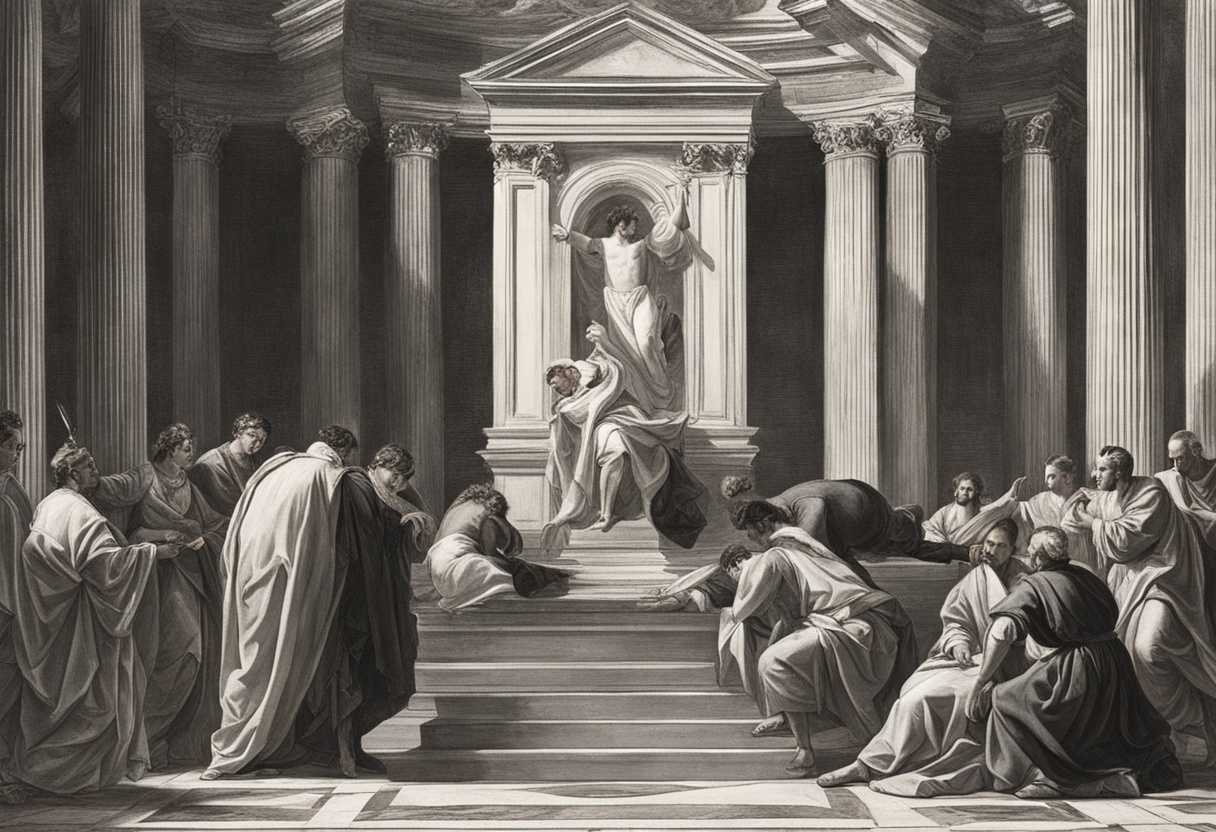
The scene in Ezekiel 45:18-20 takes place in the context of a vision that the prophet Ezekiel had regarding the future restoration of the temple and the worship practices of the Israelites. In this particular passage, Ezekiel is describing the instructions for the prince’s role in the offerings during the feasts of Passover and the Feast of Tabernacles.
The setting is the temple in Jerusalem, which has been rebuilt and restored according to God’s instructions. The prince, who is a prominent figure in the community, is present along with the priests and the people of Israel. They have gathered to celebrate the feasts as commanded by God.
The prince, priests, and people have come together to offer sacrifices and worship God during these important feasts. The atmosphere is one of reverence and joy as they follow the prescribed rituals and ceremonies. The temple is filled with the sounds of prayers, songs, and the offerings being made on the altar. It is a moment of unity and devotion as the community comes together to honor God and commemorate His faithfulness throughout their history.
What is Ezekiel 45:18-20 about?
A profound message about the importance of atonement and honoring God through special feasts is seen in Ezekiel 45:18-20. Through atonement offerings, the verse emphasizes the need for acknowledging our mistakes, seeking forgiveness, and restoring our relationship with God. This act of atonement is a reminder of our human imperfection and the need for divine grace and mercy in our lives. It teaches us the value of repentance and the significance of seeking reconciliation with God. Celebrating and expressing gratitude for His presence in our lives is highlighted by the mention of feasts dedicated to honoring God. These feasts serve as reminders of God’s love, faithfulness, and provision for His people. They provide a time for community gathering, worship, and thanksgiving, deepening our relationship with God and reinforcing our faith. We strengthen our spiritual connection with God and cultivate a sense of unity and reverence within our faith community by observing these feasts. So, let us reflect on the profound lessons in these verses and strive to deepen our understanding of atonement, gratitude, and celebration in our relationship with God.
Understanding what Ezekiel 45:18-20 really means
In Ezekiel 45:18-20, we delve into a segment of the prophet Ezekiel’s writings that focuses on the regulations for the temple and its services. This particular passage zooms in on the purification of the temple, a crucial aspect to uphold the holiness and sanctity of the dwelling place of God’s presence among His people. The phrase “On the first day of the first month” signifies a new beginning, emphasizing the significance of commencing the year with a clean slate, ready to embrace what lies ahead. It sets the tone for a fresh start, urging us to approach God with hearts purified and renewed.
The imagery of taking a young bull without defect to purify the sanctuary symbolizes the need for atonement and purification from sin. This act of offering a sin offering underscores the importance of acknowledging our shortcomings and seeking forgiveness to restore our relationship with God. The application of the blood of the sin offering on the doorposts of the temple echoes the covering and cleansing of sin, drawing parallels to the Passover in Exodus 12:7, where the blood protected the Israelites from judgment. It serves as a poignant reminder of the sacrificial nature of atonement and the cleansing power of God’s forgiveness.
The provision for unintentional sins, as outlined in the passage, showcases God’s grace and mercy towards His people. Just as the rituals in the temple catered to unintentional transgressions, God’s compassion extends to our inadvertent faults, highlighting His understanding of our human frailties. This grace-filled approach emphasizes the loving and forgiving nature of God, inviting us to approach Him with humility and contrition. The passage not only addresses the need for purification but also underscores the ongoing relevance of seeking forgiveness and maintaining a pure heart before God.
Drawing connections to related biblical passages such as Leviticus 16:29-30, Hebrews 9:22, and 1 John 1:9, we see a consistent theme of atonement, forgiveness, and cleansing throughout Scripture. These passages reinforce the necessity of the shedding of blood for forgiveness, the importance of confession for cleansing, and the overarching message of God’s faithfulness in forgiving our sins. They provide a broader context for understanding the significance of purification rituals and the continuous need for spiritual renewal in our lives.
In our contemporary context, Ezekiel 45:18-20 prompts us to reflect on the parallels between the purification of the temple and the spiritual cleansing required in our lives. Just as the temple needed to be purified to welcome God’s presence, we are called to cleanse our hearts and lives to make them fitting dwellings for the Holy Spirit. The timing of the purification at the beginning of the year encourages us to embrace new beginnings, seek renewal, and commit to a journey of spiritual growth. It serves as a poignant reminder of the grace and mercy that God extends to us, urging us to approach Him with humility, gratitude, and a desire for transformation.
In conclusion, Ezekiel 45:18-20 stands as a poignant reminder of the need for spiritual purification, the grace of God in forgiving our sins, and the call to maintain a pure and holy life before Him. It beckons us to regularly seek forgiveness, embrace new beginnings, and cultivate a heart that is receptive to God’s cleansing work. Just as the family diligently prepares their home to welcome an esteemed guest, let us diligently cleanse our hearts and lives to welcome the presence of God with reverence and joy.
How can rituals enhance our spiritual discipline?
Rituals can enhance our spiritual discipline by providing a structure and routine to our practice. Adhering to spiritual rituals can help us stay focused and committed to our faith, just as the rituals described in Ezekiel 45:18-20 were meant to be followed precisely and at specific times. Engaging in rituals regularly reminds us of our beliefs and values, reinforcing them in our daily lives. Rituals can create a sacred space and set apart time for us to connect with the divine. Our spiritual rituals can serve as a form of purification and renewal for our souls, just as the rituals in Ezekiel were meant to bring the people closer to God and cleanse them from sin. We can deepen our relationship with the divine and experience spiritual growth by participating in these practices with intention and sincerity.
Additionally, rituals often involve symbolic actions and words that carry deep spiritual meanings. We can internalize the lessons of each ritual and apply them to our lives by understanding the significance behind each ritual and engaging with it mindfully. Through this process of reflection and contemplation, rituals can become powerful tools for spiritual transformation and enlightenment.
Application
Just as we give our best at work or with our family, let’s give our all to God in worship. Let’s not just go through the motions, but show our reverence and obedience in everything we do. It’s time to wholeheartedly honor God with our actions and our hearts. Will you step up and deepen your commitment to worshiping God with sincerity and dedication?

Reverend Michael Johnson is an experienced Church Minister with a profound expertise in spirituality and guidance. With a serene presence and a compassionate heart, he has faithfully served his congregation for over 20 years, leading them on a spiritual journey towards inner peace and enlightenment. Reverend Johnson’s extensive knowledge of religious philosophies and profound understanding of human nature have made him a trusted confidant and mentor to many, as he seamlessly weaves his profound wisdom into life teachings. Reverend Johnson’s calming demeanor and empathetic nature continue to uplift and heal souls, nurturing a sense of unity and tranquility within his community.