
is about presenting an offering to the Lord with the purest intentions and the best quality of ingredients as a way to show reverence and devotion.
2 And he shall bring it to Aaron’s sons the priests, and shall take from it a handful of the fine flour and oil, with all of its frankincense, and the priest shall burn this as its memorial portion on the altar, a food offering with a pleasing aroma to the Lord.
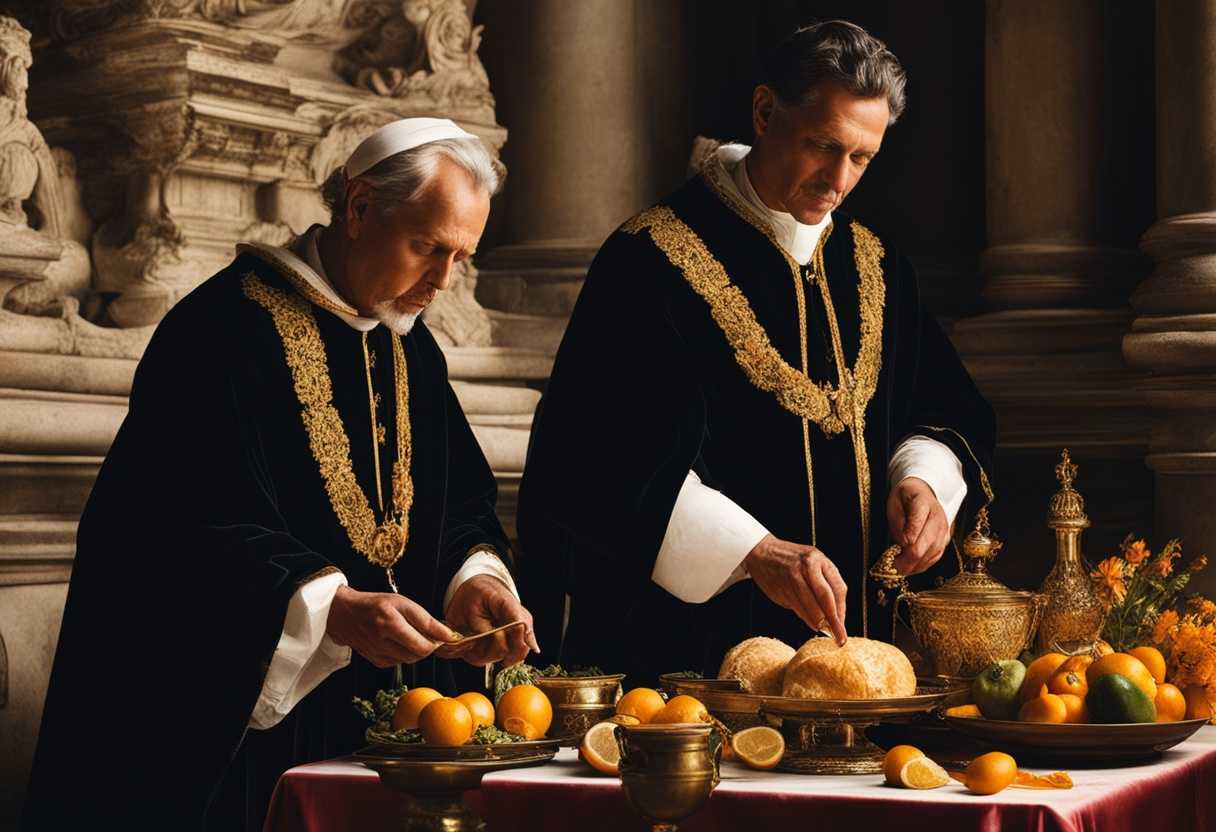
Setting the Scene for Leviticus 2:2
In Leviticus chapter 2, we find ourselves in the Tabernacle courtyard, a sacred space where the Israelites come to offer their sacrifices and offerings to the Lord. The scene is bustling with activity as priests and Levites go about their duties, preparing for the various rituals and ceremonies prescribed by God. The air is filled with the scent of burning incense and the sound of prayers being lifted up to heaven.
Among the crowd, we see Aaron, the high priest, overseeing the offerings brought by the people. He is dressed in his sacred garments, a symbol of his authority and holiness before the Lord. Alongside him are his sons, who assist in the rituals and help maintain the order of the Tabernacle. The people of Israel have gathered here, each with their own offerings of grain, oil, and frankincense, ready to present them to the Lord as a symbol of their devotion and gratitude.
As the sun begins to set, the courtyard is bathed in a warm golden light, casting a sense of peace and reverence over the scene. The people bow their heads in prayer as the priests lift up the offerings to the Lord, following the precise instructions laid out in Leviticus chapter 2. In this moment, the Israelites are reminded of their covenant with God, and the importance of obedience and faithfulness in their worship.
What is Leviticus 2:2 about?
The Bible discusses the specific requirements for offerings to the Lord in Leviticus 2:2. The prohibition against using yeast or honey symbolizes the importance of presenting offerings that are pure and untainted. Yeast is often associated with fermentation, which can represent corruption or sin, while honey, although sweet, can ferment if left for too long, altering its purity. God emphasizes the need for offerings that are free from impurities or decay by requiring offerings without yeast or honey. It also underscores the idea of giving God the best of what we have to offer, honoring Him with our sincerity and purity of heart.
Have you ever considered the intention behind the offerings we bring to God? This verse challenges us to reflect on the quality of our offerings and the state of our hearts when presenting them. Impurities can taint our intentions and the sincerity of our worship, just as yeast and honey can spoil and change over time. Leviticus 2:2 encourages us to approach God with reverence, offering Him our best and most sincere worship. It prompts us to consider the purity of our motives and the authenticity of our devotion when we come before the Lord.
Understanding what Leviticus 2:2 really means
Leviticus 2:2, nestled within the Old Testament book of Leviticus, serves as a poignant reminder of the intricate rituals and laws prescribed to the Israelites. This verse specifically delves into the realm of grain offerings, shedding light on the meticulous details required in presenting sacrifices to God. The imagery painted by the phrase “handful of the flour and oil, together with all the incense” encapsulates the essence of sustenance, anointing, and prayer intertwined in these offerings, symbolizing a holistic approach to worship.
Furthermore, the directive to “burn the memorial portion on the altar” symbolizes the act of surrendering the offering to God, a tangible display of reverence and dedication. This act of burning not only signifies the physical sacrifice but also embodies the spiritual surrender of one’s possessions and self to the divine. The notion of an “aroma pleasing to the Lord” underscores the significance of the heart’s condition in presenting offerings. It emphasizes that true worship stems from a place of authenticity and purity, transcending mere external actions.
Drawing parallels from related biblical passages such as Exodus 29:18 and Philippians 4:18, we witness a consistent theme of offerings being portrayed as fragrant and pleasing to God. This continuity between the Old and New Testaments underscores the enduring nature of sacrificial worship and its significance in the eyes of the divine. While the specifics of grain offerings may not directly apply to contemporary practices, the underlying principles of giving our best to God remain pertinent in our lives today.
In a modern context, the concept of offering extends beyond physical sacrifices to encompass our time, talents, and resources. Just as the Israelites presented their grain offerings with care and reverence, we are called to offer our lives as living sacrifices, holy and pleasing to God (Romans 12:1). The essence of worship lies not in the grandeur of our offerings but in the sincerity of our hearts, echoing the sentiment of the psalmist who declared, “The sacrifices of God are a broken spirit; a broken and contrite heart, O God, you will not despise” (Psalm 51:17).
In conclusion, Leviticus 2:2 beckons us to reflect on the essence of true worship and sacrificial giving. It serves as a timeless reminder that our offerings, whether tangible or intangible, should emanate from a place of genuine devotion and love. Just as a child’s simple drawing can deeply touch a parent’s heart, our offerings to God, when presented with sincerity and purity, hold immeasurable value in His sight. May we heed the call to offer ourselves wholeheartedly to the Lord, knowing that our sacrifices, when given with love, ascend as a pleasing aroma before Him.
What can we offer God that is pure?
According to Leviticus 2:2, we can offer to God a grain offering that is made with the finest flour, mixed with olive oil and frankincense. This offering must be presented to the Lord without yeast or honey, symbolizing purity and sincerity in our worship. The choice of the finest flour and the exclusion of yeast and honey emphasize the importance of bringing an offering that is not only of high quality but also undefiled and unadulterated. This verse teaches us that what we offer to God should be pure and untainted, reflecting our devotion and reverence towards Him. We can apply the principle of offering God what is pure in our own lives today by presenting Him with our best efforts, intentions, and worship. Our offerings to God should be sincere, heartfelt, and done with a spirit of purity, just as the grain offering required specific components to be considered acceptable. This means giving God our wholehearted worship, service, and obedience without any impurities or distractions that may hinder our relationship with Him. We demonstrate our desire to honor God with our best and most genuine selves by striving to offer Him what is pure in our thoughts, words, and actions. Leviticus 2:2 teaches us that God desires offerings that come from a place of purity and singleness of heart. We show our commitment to honoring Him with our best as we seek to offer Him what is pure in our lives, striving to cultivate a relationship with Him that is based on sincerity, integrity, and devotion. Whether it is through our worship, gifts, or service, let us remember to give God the purest offerings of our hearts, knowing that He delights in those who seek to honor Him in spirit and in truth.
Application
In the busy workplace of our lives, let’s remember to give our best to the eternal CEO above. Just as a devoted parent provides for their family with unwavering commitment, let us give our absolute dedication to God. Let’s strive for excellence in every task and cherish each moment as an opportunity to honor our faith. Will you commit to offering your utmost to the divine forces that guide us in our journeys?

Reverend Michael Johnson is an experienced Church Minister with a profound expertise in spirituality and guidance. With a serene presence and a compassionate heart, he has faithfully served his congregation for over 20 years, leading them on a spiritual journey towards inner peace and enlightenment. Reverend Johnson’s extensive knowledge of religious philosophies and profound understanding of human nature have made him a trusted confidant and mentor to many, as he seamlessly weaves his profound wisdom into life teachings. Reverend Johnson’s calming demeanor and empathetic nature continue to uplift and heal souls, nurturing a sense of unity and tranquility within his community.