
John 3:2-5 is about a conversation between Jesus and Nicodemus where Jesus explains the necessity of being born again through water and the Spirit to enter the kingdom of God, emphasizing the transformation and renewal that comes with spiritual rebirth.
2 This man came to Jesus by night and said to him, “Rabbi, we know that you are a teacher come from God, for no one can do these signs that you do unless God is with him.”
3 Jesus answered him, “Truly, truly, I say to you, unless one is born again he cannot see the kingdom of God.”
4 Nicodemus said to him, “How can a man be born when he is old? Can he enter a second time into his mother’s womb and be born?”
5 Jesus answered, “Truly, truly, I say to you, unless one is born of water and the Spirit, he cannot enter the kingdom of God.
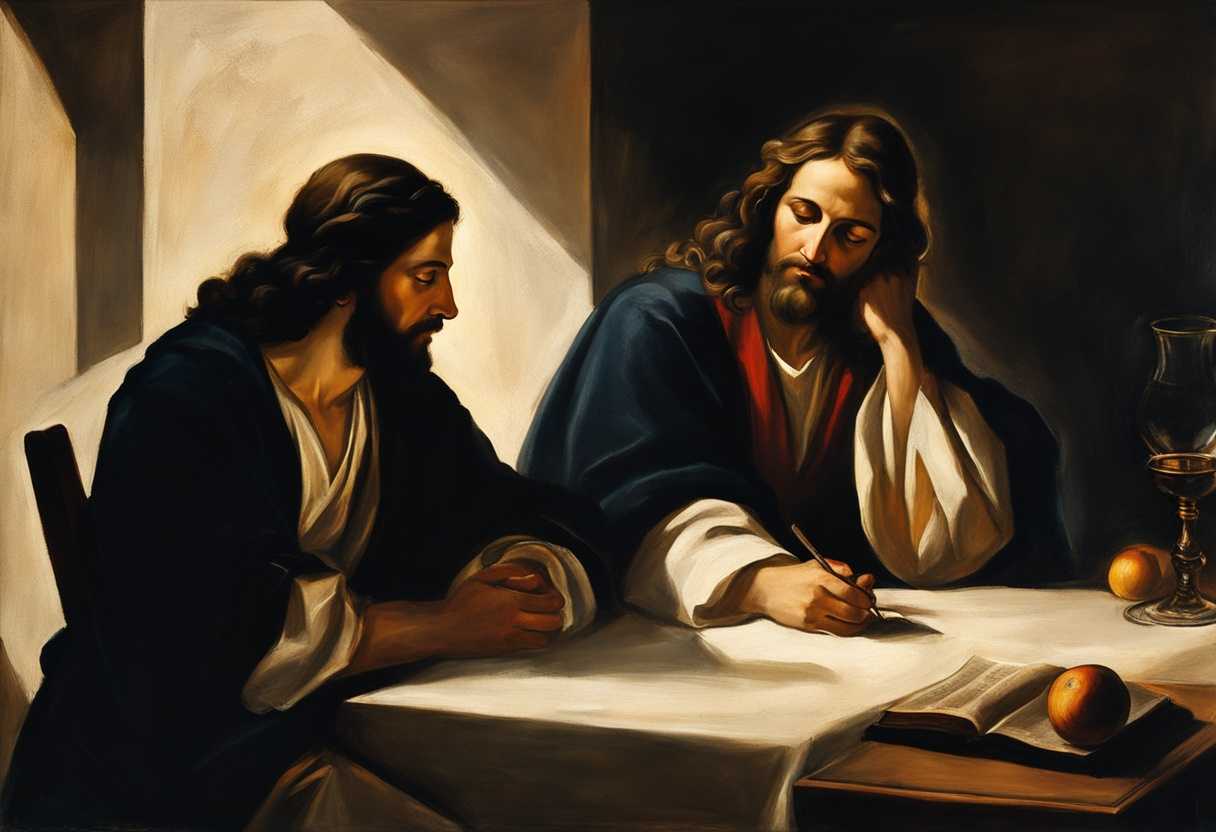
Setting the Scene for John 3:2-5
In John chapter 3, we find Nicodemus, a Pharisee and a member of the Jewish ruling council, seeking out Jesus under the cover of night. The scene is set in Jerusalem, likely in a quiet corner or secluded area where Nicodemus can speak with Jesus privately. Nicodemus, a respected religious leader, approaches Jesus with curiosity and a desire to understand more about his teachings and the kingdom of God.
As Nicodemus engages in conversation with Jesus, the night air is cool and still around them, with the soft glow of torches illuminating their faces. Jesus, the Son of God, imparts profound wisdom to Nicodemus, explaining the concept of being born again in the Spirit. The weight of the moment hangs in the air as Nicodemus grapples with the idea of spiritual rebirth and the transformative power of faith in Jesus. The exchange between these two figures, one a learned Pharisee and the other a humble yet powerful teacher, is a pivotal moment in the Gospel of John, highlighting the themes of spiritual renewal and the coming kingdom of God.
What is John 3:2-5 about?
Jesus is explaining the concept of being “born again” through water and the Spirit to Nicodemus in this verse. This metaphorical language is used by Jesus to illustrate the spiritual rebirth or transformation that occurs when someone accepts Him as their Savior. The water symbolizes purification and cleansing, representing the washing away of sin and the old self. The Spirit represents the Holy Spirit, who empowers and guides believers in their new life in Christ.
Have you ever felt a desire for a fresh start or a new beginning in your life? Being “born again” spiritually marks a new beginning in our relationship with God, just as a physical birth marks the beginning of a new life. Through this transformation, we are made new, our sins are forgiven, and we are given the gift of eternal life through faith in Jesus Christ. This verse challenges us to consider the importance of this spiritual rebirth in our lives and invites us to experience the transformative power of God’s love and grace.
Understanding what John 3:2-5 really means
In the Gospel of John, we encounter a fascinating dialogue between Nicodemus, a Pharisee, and Jesus, where Nicodemus seeks understanding under the veil of night. This clandestine meeting sets the stage for a profound conversation about the concept of being “born again,” a pivotal theme in Christian theology. Nicodemus’ nighttime visit symbolizes his initial lack of understanding and perhaps his fear of being associated with Jesus in the public eye. It reflects how many individuals today also seek truth and spiritual enlightenment in private, away from the scrutiny and judgment of others.
As Nicodemus addresses Jesus as “Rabbi,” he acknowledges Jesus’ divine authority and the miraculous works He performs. This recognition of Jesus’ divine origin is a crucial first step towards spiritual growth, as highlighted in the Scriptures when Jesus is described as teaching with unparalleled authority, unlike the scribes. Understanding and accepting divine authority are foundational to deepening one’s faith and relationship with God.
Jesus’ statement to Nicodemus that “no one can see the kingdom of God unless they are born again” introduces the profound concept of spiritual rebirth, a central tenet of Christian belief. This idea of being born anew in the spirit is echoed in the writings of Paul, emphasizing that those in Christ are made into new creations. It underscores the necessity of inner transformation and renewal, emphasizing that true faith goes beyond mere external observance of religious practices.
Nicodemus’ perplexity at the notion of being born again when one is old underscores the challenge of comprehending spiritual truths from a purely human perspective. The Scriptures affirm this difficulty, stating that the natural person does not readily accept the things of the Spirit of God. Many individuals today grapple with similar struggles, attempting to rationalize or understand spiritual concepts solely through human reasoning, often falling short of grasping the depth of divine truths.
Jesus further elucidates that entering the kingdom of God requires being born of water and the Spirit, signifying the dual nature of spiritual rebirth through baptism and the indwelling of the Holy Spirit. This dual rebirth is emphasized in the Scriptures, illustrating how God saves us through the washing of rebirth and renewal by the Holy Spirit. The significance of both baptism and the empowering presence of the Holy Spirit in the life of a believer is paramount in Christian faith and practice.
The relevance of this passage to contemporary audiences is profound. The concept of being “born again” remains central to understanding Christian salvation and transformation. In a world where many seek fresh starts and new beginnings, the idea of spiritual rebirth resonates deeply with individuals longing for a profound change in their lives. Sharing anecdotes of individuals who have experienced radical transformations after embracing the concept of being “born again” can vividly illustrate the transformative power of faith and the Holy Spirit.
In conclusion, the dialogue between Nicodemus and Jesus in John 3:2-5 underscores the necessity of recognizing Jesus’ divine authority, the importance of spiritual rebirth, and the transformative role of the Holy Spirit in the life of a believer. Readers are encouraged to reflect on their spiritual journey, ponder the profound implications of being “born again,” and consider the transformative power of faith in their own lives.
What does it mean to be born again?
To be born again means to experience a spiritual rebirth that comes from a personal transformation and renewal of the heart and mind. It is a process of surrendering to God, acknowledging one’s need for forgiveness, and accepting Jesus Christ as Lord and Savior. This new birth signifies a new beginning and a fresh start in one’s relationship with God, leading to a life of faith, obedience, and spiritual growth.
Through this new birth, individuals are cleansed of their sins, become children of God, and receive the gift of eternal life. This transformation is brought about by the work of the Holy Spirit, who convicts, guides, and empowers believers to live a life that is pleasing to God. Being born again is not merely a physical or ritualistic act, but a profound spiritual awakening that results in a deep relationship with God and a new perspective on life. It is a journey of continual growth, learning, and becoming more like Christ.
Application
Friends, remember Nicodemus seeking answers from Jesus, just like we seek solutions in our busy lives. Approach Jesus with that same thirst for understanding. Let His teachings be the GPS for your spiritual journey. Turn to Him for a powerful rebirth and let faith guide your daily steps. Are you ready to deepen your relationship with Christ and renew your spirit?

Reverend Michael Johnson is an experienced Church Minister with a profound expertise in spirituality and guidance. With a serene presence and a compassionate heart, he has faithfully served his congregation for over 20 years, leading them on a spiritual journey towards inner peace and enlightenment. Reverend Johnson’s extensive knowledge of religious philosophies and profound understanding of human nature have made him a trusted confidant and mentor to many, as he seamlessly weaves his profound wisdom into life teachings. Reverend Johnson’s calming demeanor and empathetic nature continue to uplift and heal souls, nurturing a sense of unity and tranquility within his community.