
John 7:31 is about how many people believed in Jesus because of His teachings and miracles, but some were skeptical and hesitant to fully embrace Him as the Messiah.
31 Yet many of the people believed in him. They said, “When the Christ appears, will he do more signs than this man has done?”
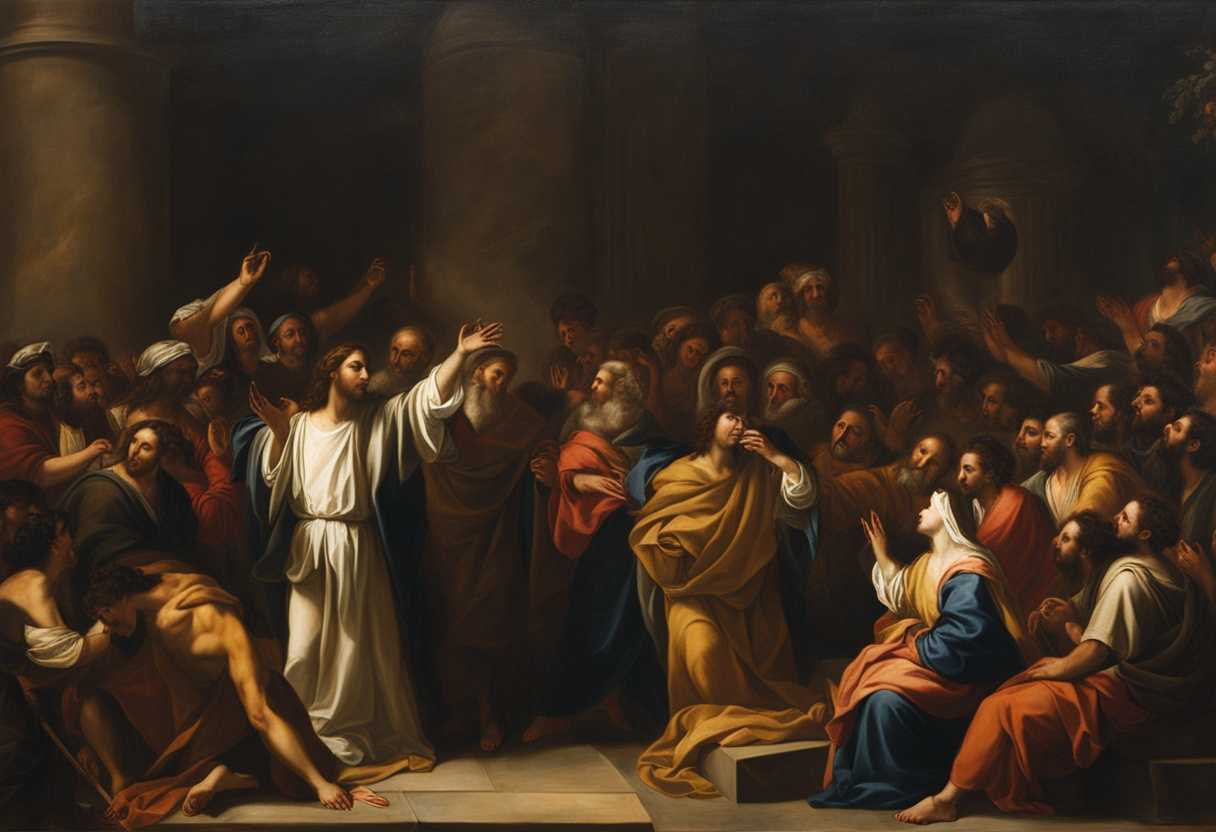
Setting the Scene for John 7:31
In John chapter 7, we find Jesus teaching in the temple during the Feast of Tabernacles. The scene is bustling with people from all over Jerusalem who have come to celebrate the festival. The air is filled with the sounds of worship and the smell of offerings being made at the temple.
Among the crowd are Pharisees and religious leaders who are skeptical of Jesus and his teachings. They are engaged in heated debates with Jesus, questioning his authority and challenging his claims. Despite the opposition, there are also many who are drawn to Jesus, intrigued by his wisdom and the miracles he performs.
In the midst of this tension, there are ordinary people who are seeking truth and hope in the midst of their daily struggles. They listen intently to Jesus, hoping to find answers to their questions and solace for their weary souls. The scene is a mix of curiosity, conflict, and conviction as Jesus continues to proclaim the good news of the kingdom of God.
What is John 7:31 about?
This verse highlights a fundamental aspect of the Christian faith – the acknowledgment of Jesus as the Messiah. Believers firmly believe that Jesus is the chosen one, the savior promised in the scriptures. This recognition shapes their entire worldview and way of life, as they follow his teachings and example. At the same time, the verse acknowledges that not everyone shares this belief. There are those who question or even deny Jesus’ identity as the Messiah. This contrast invites us to reflect on the significance of faith and the diversity of beliefs in the world.
Have you ever thought about what it means to acknowledge Jesus as the Messiah? What impact does this belief have on your life and how you interact with others? How do you navigate conversations with those who have different perspectives on Jesus’ identity? These are complex questions that require deep reflection and understanding. Contemplating this verse reminds us of the importance of faith, the diversity of beliefs, and the need for respectful dialogue and mutual understanding.
Understanding what John 7:31 really means
In the midst of the vibrant setting of the Feast of Tabernacles, John 7:31 captures a pivotal moment in Jesus’ ministry, where His teachings and miracles evoke varied responses from the crowd. The verse reveals a crucial division among the people: while some remained skeptical and opposed Jesus, many others were swayed by His words and deeds, leading them to believe in Him. This dichotomy mirrors the enduring tension between faith and doubt that continues to shape human responses to the divine.
The phrase “Many of the people believed in him” resonates with a profound sense of conviction and transformation. It signifies a shift in perspective, where individuals move from uncertainty to faith, from skepticism to trust. This transformation is not merely intellectual but deeply spiritual, as belief in Jesus transcends mere acknowledgment of His works to a profound recognition of His divine nature and salvific mission.
The rhetorical question posed in the latter part of the verse, “When the Christ appears, will he do more signs than this man has done?” underscores the extraordinary nature of Jesus’ miracles. It challenges the audience to contemplate the significance of these signs in identifying Jesus as the long-awaited Messiah. The signs and wonders performed by Jesus were not merely displays of power but profound revelations of His identity and mission, pointing to a reality beyond the physical realm.
Drawing parallels to other biblical passages, such as John 20:30-31, Matthew 11:4-5, and Acts 2:22, reinforces the theme of Jesus’ miracles as compelling evidence of His divine nature. These passages affirm the inseparable connection between Jesus’ miraculous works and His messianic identity, inviting readers to ponder the profound implications of these signs for their own faith journey.
In a contemporary context, John 7:31 challenges believers to reflect on the evidence of Jesus’ divinity in their lives. Just as the people in Jesus’ time had to discern the truth of His identity amidst skepticism, modern readers are called to examine the compelling witness of Jesus’ life, teachings, and miracles. This verse prompts individuals to confront their own doubts and uncertainties, inviting them to embrace the transformative power of Jesus’ message with unwavering faith.
By contemplating the narrative of John 7:31 and its broader implications, readers are encouraged to deepen their faith, grapple with the enduring relevance of Jesus’ miracles, and confront the perennial tension between belief and skepticism. Like the individuals in the crowd at the Feast of Tabernacles, contemporary believers are invited to discern the signs of God’s presence in their midst, to trust in the transformative power of Jesus’ message, and to embrace a faith that transcends doubt and uncertainty.
How can we truly believe in Jesus?
To truly believe in Jesus means to understand that He is the Son of God who came to earth to save us from our sins. It is not just about acknowledging His existence or historical significance, but about having faith in His divinity and the salvation He offers. We believe in Jesus by trusting in His teachings, following His example, and surrendering our lives to Him.
Believing in Jesus also means developing a personal relationship with Him through prayer, studying the Bible, and participating in Christian fellowship. It involves a deep conviction in His redemptive work on the cross and the hope of eternal life that He promises to those who believe. True belief in Jesus transforms our hearts and minds, leading us to live according to His will and share His love with others. To believe in Jesus ultimately means placing our full trust and confidence in Him as our savior and Lord. It is a faith that goes beyond intellectual assent to a heartfelt commitment to follow Him wholeheartedly. We receive the gift of salvation and the assurance of a restored relationship with God by believing in Jesus in this way.
Application
You know how important it is to support your family and excel at work. Just as you stand firm in those commitments, stand firm in your belief in Jesus Christ as the Savior. Share this truth like you’d share a crucial project update or a family milestone—boldly and with conviction. Will you step up and spread the good news of Jesus to those who need it most?

Reverend Michael Johnson is an experienced Church Minister with a profound expertise in spirituality and guidance. With a serene presence and a compassionate heart, he has faithfully served his congregation for over 20 years, leading them on a spiritual journey towards inner peace and enlightenment. Reverend Johnson’s extensive knowledge of religious philosophies and profound understanding of human nature have made him a trusted confidant and mentor to many, as he seamlessly weaves his profound wisdom into life teachings. Reverend Johnson’s calming demeanor and empathetic nature continue to uplift and heal souls, nurturing a sense of unity and tranquility within his community.