
John 1:1-19 is about the proclamation of Jesus as the eternal Word of God, who brings light and life to the world and is testified to by John the Baptist as the promised Messiah.
1 In the beginning was the Word, and the Word was with God, and the Word was God.
2 He was in the beginning with God.
3 All things were made through him, and without him was not any thing made that was made.
4 In him was life, and the life was the light of men.
5 The light shines in the darkness, and the darkness has not overcome it.
6 There was a man sent from God, whose name was John.
7 He came as a witness, to bear witness about the light, that all might believe through him.
8 He was not the light, but came to bear witness about the light.
9 The true light, which gives light to everyone, was coming into the world.
10 He was in the world, and the world was made through him, yet the world did not know him.
11 He came to his own, and his own people did not receive him.
12 But to all who did receive him, who believed in his name, he gave the right to become children of God,
13 who were born, not of blood nor of the will of the flesh nor of the will of man, but of God.
14 And the Word became flesh and dwelt among us, and we have seen his glory, glory as of the only Son from the Father, full of grace and truth.
15 (John bore witness about him, and cried out, “This was he of whom I said, ‘He who comes after me ranks before me, because he was before me.’”)
16 For from his fullness we have all received, grace upon grace.
17 For the law was given through Moses; grace and truth came through Jesus Christ.
18 No one has ever seen God; the only God, who is at the Father’s side, he has made him known.
19 And this is the testimony of John, when the Jews sent priests and Levites from Jerusalem to ask him, “Who are you?”
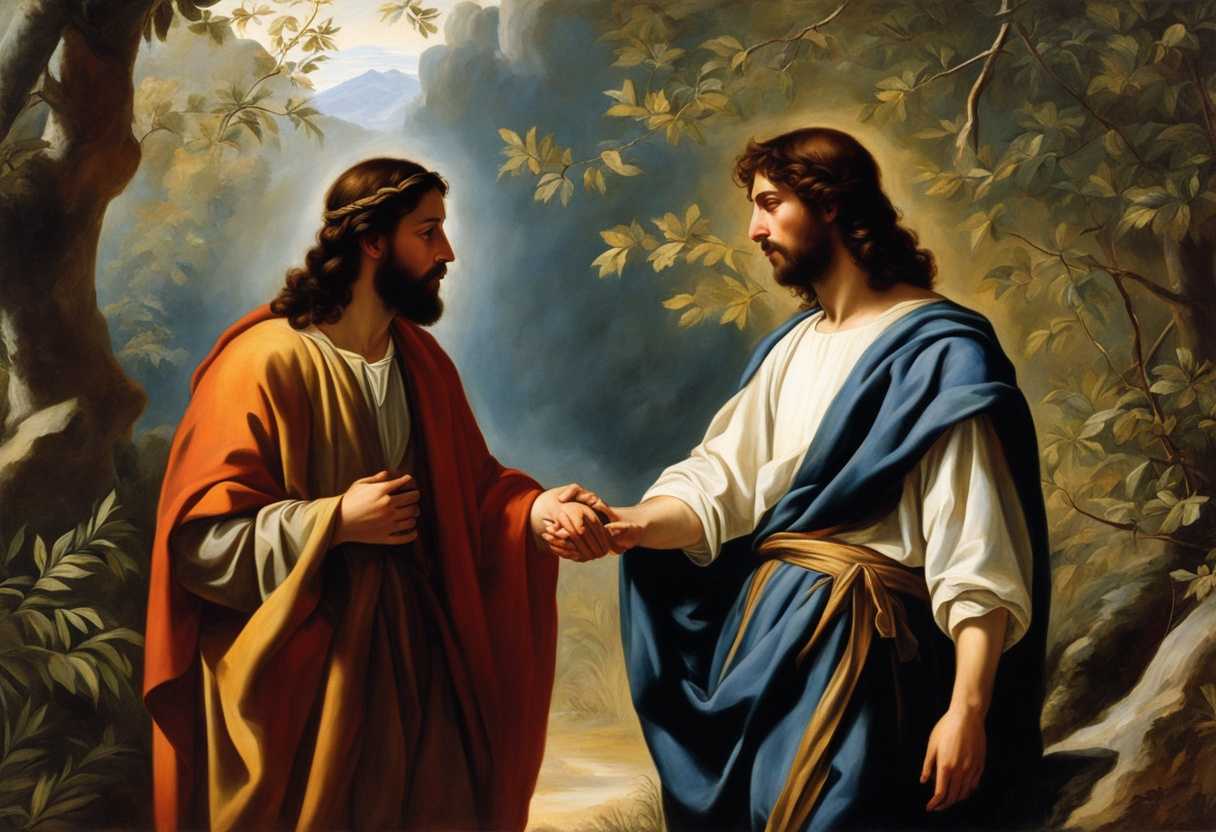
Setting the Scene for John 1:1-19
The scene in John chapter 1 opens with John the Baptist standing by the Jordan River, preaching to a crowd of people who have come to hear his message of repentance and preparation for the coming Messiah. The river flows gently in the background, its waters reflecting the warm sunlight of the Judean wilderness. John’s voice carries across the open space, drawing in listeners from near and far.
Among the crowd are curious onlookers, devout Jews seeking spiritual renewal, and even some Pharisees and priests who have come to see what this unconventional preacher is all about. The atmosphere is charged with anticipation and expectation as John proclaims, “I am the voice of one crying out in the wilderness, ‘Make straight the way of the Lord!’” The people are captivated by his words, wondering if perhaps he might be the long-awaited prophet or even the Messiah himself.
As the scene unfolds, we see John baptizing those who respond to his call for repentance, immersing them in the waters of the Jordan as a symbol of their desire to turn away from sin and be cleansed. The air is filled with a sense of urgency and excitement, as everyone present senses that something significant is about to happen. Little do they know that their lives are about to intersect with the one whom John is preparing the way for – Jesus, the Lamb of God who will take away the sins of the world.
What is John 1:1-19 about?
The concept of Jesus as the eternal Word of God is presented in this profound and captivating verse from the Gospel of John. Here, “Word” is used to convey the idea that Jesus is the divine message of God made visible and tangible to humanity. John emphasizes the importance of Jesus as the ultimate expression and revelation of God’s will and essence among us by describing Jesus as the Word.
Have you ever considered the depth of meaning behind the term “Word of God”? It signifies not just a message spoken but a message embodied in a person. John is inviting us to contemplate the very essence of Jesus as the perfect representation of God’s love, grace, and truth by declaring Jesus as the eternal Word of God. This verse challenges us to see Jesus not only as a historical figure but as the timeless and universal manifestation of God’s presence in our lives. We are called to engage with Jesus in a profound and personal way that transcends mere words by recognizing him as the Word of God.
Understanding what John 1:1-19 really means
The Gospel of John opens with a profound theological statement about the nature of Jesus Christ, establishing His divinity and role in creation. To reveal Jesus as the eternal Word of God, who became flesh to bring light and life to humanity. This phrase establishes the pre-existence of Christ, indicating that He was present before creation, echoing Genesis 1:1, linking Jesus to the act of creation. “The Word was with God, and the Word was God” emphasizes the intimate relationship between Jesus (the Word) and God, affirming His divine nature. Jesus is portrayed as the source of both physical and spiritual life, bringing enlightenment and truth to humanity, in him was life, and that life was the light of all mankind. The light shines in the darkness, and the darkness has not overcome it signifies the triumph of Jesus over evil and ignorance, offering hope and salvation.
In Genesis 1:1-3, the creation account, where God speaks the world into existence, parallels the idea of Jesus as the Word through whom all things were made. Colossians 1:15-17 describes Jesus as the image of the invisible God and the agent of creation, reinforcing His divine role. Hebrews 1:1-3 depicts Jesus as the radiance of God’s glory and the exact representation of His being, sustaining all things by His powerful word. Understanding Jesus’ Divinity in a world where the identity of Jesus is often questioned, this passage affirms His divine nature and eternal existence. In times of darkness and despair, recognizing Jesus as the light that cannot be overcome offers hope and guidance, source of Light and Life. Knowing that Jesus, the Word, became flesh to dwell among us emphasizes God’s desire for a personal relationship with humanity, Personal Relationship with God.
Imagine a lighthouse standing firm on a rocky shore, its light piercing through the darkest storm. Sailors lost at sea look to this light for direction and safety. Similarly, in our lives, we often face storms of uncertainty, fear, and doubt. Just as the lighthouse provides a beacon of hope, Jesus, the eternal Word, shines in our darkness, guiding us safely to the shore of God’s love and truth. This story illustrates how Jesus’ presence and teachings can guide us through life’s challenges, offering us clarity and purpose. John 1:1-19 introduces Jesus as the eternal Word, the source of life and light, who triumphs over darkness, inviting us to deepen our understanding of His divine nature and to seek His light in our daily lives. Reflect on how Jesus, as the Word, has brought light into your life. Consider ways you can share this light with others, offering hope and guidance in a world that often feels dark and uncertain.
What does it mean to witness to Christ?
To witness to Christ means to testify to who He is, acknowledging His divinity and spreading the message of His life, teachings, death, and resurrection. John the Baptist, someone sent from God, testifies about the light, which is Jesus Christ, in John 1:1-19. We are called to reflect His light in the world by witnessing to Christ, sharing the good news of salvation with others through our words, actions, and way of life.
Furthermore, witnessing to Christ involves living in a way that is aligned with His teachings and values. It means embodying love, compassion, forgiveness, and humility in all that we do. We are called to point others to Christ through our words and deeds, leading them to encounter the Savior and experience His transforming power in their lives, just as John the Baptist did when he recognized Him as the Lamb of God. To witness to Christ ultimately calls us to reflect His light in a world that desperately needs it. It is about proclaiming the truth of who Jesus is and inviting others to come to know Him personally. We participate in the work of spreading the Gospel and building God’s kingdom here on earth by sharing the love and truth of Christ with others.
Application
Think of your life’s journey as a demanding project or a bustling household. Christ is the true light, the guiding star in the chaos. Let His light shape your words, actions, and decisions, bringing clarity and hope to your workplace and home. You’re called to share this light, spreading love and grace in a world that desperately needs it. Are you ready to step up and be the beacon of His light?

Reverend Michael Johnson is an experienced Church Minister with a profound expertise in spirituality and guidance. With a serene presence and a compassionate heart, he has faithfully served his congregation for over 20 years, leading them on a spiritual journey towards inner peace and enlightenment. Reverend Johnson’s extensive knowledge of religious philosophies and profound understanding of human nature have made him a trusted confidant and mentor to many, as he seamlessly weaves his profound wisdom into life teachings. Reverend Johnson’s calming demeanor and empathetic nature continue to uplift and heal souls, nurturing a sense of unity and tranquility within his community.