
John 12:23-36 is about Jesus using the metaphor of a grain of wheat dying to bring forth much fruit to signify his impending death and resurrection as a way to glorify God and draw people to him through his sacrificial love.
23 And Jesus answered them, “The hour has come for the Son of Man to be glorified.
24 Truly, truly, I say to you, unless a grain of wheat falls into the earth and dies, it remains alone; but if it dies, it bears much fruit.
25 Whoever loves his life loses it, and whoever hates his life in this world will keep it for eternal life.
26 If anyone serves me, he must follow me; and where I am, there will my servant be also. If anyone serves me, the Father will honor him.
27 “Now is my soul troubled. And what shall I say? ‘Father, save me from this hour’? But for this purpose I have come to this hour.”
28 Father, glorify your name.” Then a voice came from heaven: “I have glorified it, and I will glorify it again.”
29 The crowd that stood there and heard it said that it had thundered. Others said, “An angel has spoken to him.”
30 Jesus answered, “This voice has come for your sake, not mine.
31 Now is the judgment of this world; now will the ruler of this world be cast out.
32 And I, when I am lifted up from the earth, will draw all people to myself.”
33 He said this to show by what kind of death he was going to die.
34 So the crowd answered him, “We have heard from the Law that the Christ remains forever. How can you say that the Son of Man must be lifted up? Who is this Son of Man?”
35 So Jesus said to them, “The light is among you for a little while longer. Walk while you have the light, lest darkness overtake you. The one who walks in the darkness does not know where he is going.
36 While you have the light, believe in the light, that you may become sons of light.”
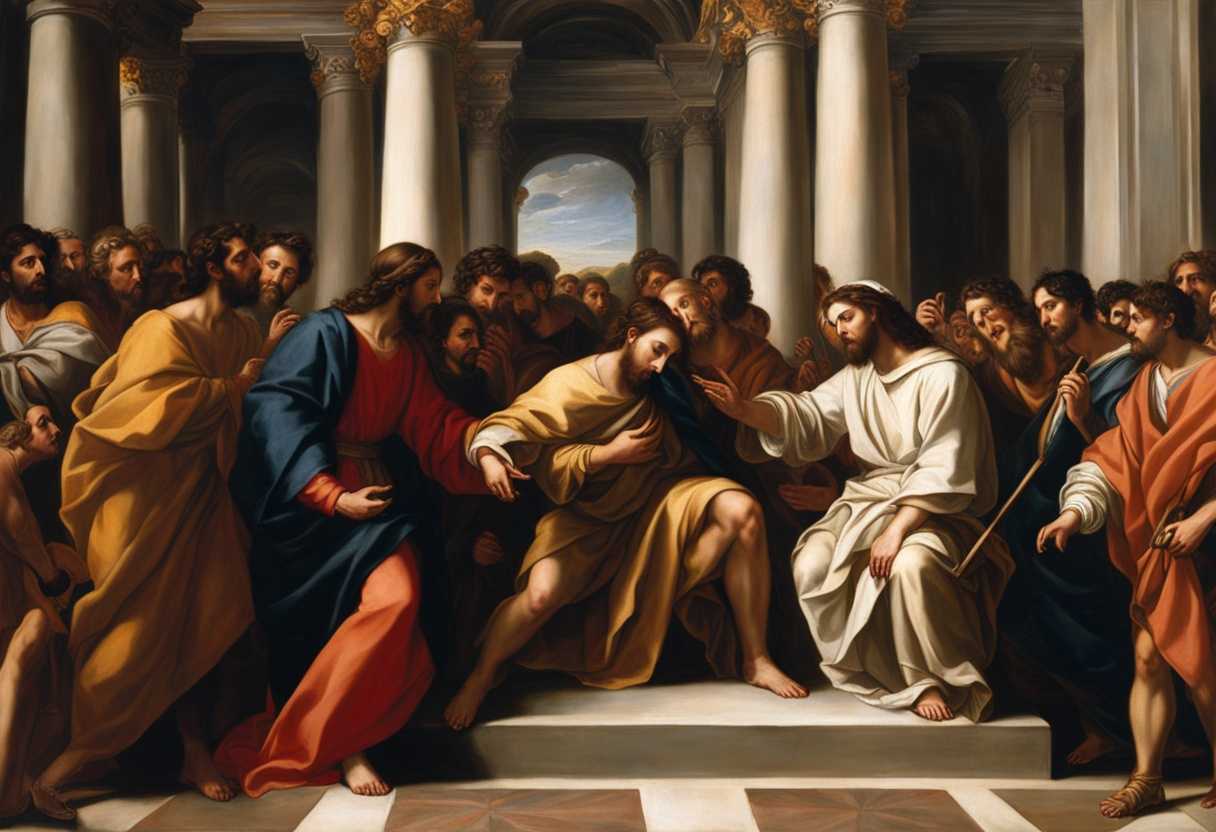
Setting the Scene for John 12:23-36
In John chapter 12, we find Jesus in the final days leading up to his crucifixion. The scene takes place in Bethany, at the home of Mary, Martha, and Lazarus. Jesus is reclining at the table with his disciples, including Judas Iscariot, who would later betray him. The atmosphere is tense as Jesus speaks about his impending death, knowing the time has come for him to fulfill his purpose on earth.
Mary, the sister of Lazarus, enters the room with an alabaster jar of expensive perfume, which she pours on Jesus’ feet and then wipes with her hair. The fragrance fills the room, and Judas questions the extravagance of the act, suggesting the perfume could have been sold to help the poor. However, Jesus defends Mary, commending her for preparing him for his burial.
As the evening progresses, a crowd gathers outside the house, drawn by the news of Jesus raising Lazarus from the dead. Jesus speaks to the people, foretelling his death and urging them to believe in him as the light of the world. The tension mounts as Jesus confronts the disbelief of some, knowing that his time on earth is drawing to a close.
What is John 12:23-36 about?
Jesus in this verse foreshadows his upcoming death but also emphasizes the importance of following his teachings. Jesus is preparing his followers for the challenges they will face and the sacrifices that may be required in their journey of faith by predicting his own death. It serves as a reminder that despite the difficulties ahead, they must continue to walk in the light of his teachings, spreading love, compassion, and forgiveness in the world.
Imagine the weight of Jesus’ words as he speaks about his own death and the impact it must have had on his disciples. It must have been a profound moment, urging them to reflect on the significance of his teachings and the mission they were called to fulfill. Through this verse, Jesus is encouraging his followers to stay steadfast in their beliefs, even in the face of adversity, and to continue spreading his message of love and salvation to all. As we reflect on this verse, let us remember the power of Jesus’ teachings and the sacrifice he made for all of humanity. How can we embody the light of Christ in our own lives, sharing his message of love and compassion with those around us? Let us take inspiration from Jesus’ words and strive to walk in his light, even in the midst of challenges and hardships.
Understanding what John 12:23-36 really means
In John 12:23-36, we find Jesus speaking about His impending death and the profound significance it holds. This passage marks a crucial moment in Jesus’ ministry, as it is part of His final public teaching before His crucifixion.
“The hour has come for the Son of Man to be glorified.” Here, Jesus refers to the appointed time for His crucifixion, resurrection, and glorification. His death is not a moment of defeat but a moment of glory, fulfilling God’s divine plan. It signifies the ultimate victory over sin and death.
Jesus uses the metaphor of a grain of wheat falling into the earth and dying to illustrate the principle of sacrifice leading to greater good. Just as the grain of wheat must die to bear much fruit, Jesus’ sacrificial death brings salvation to many. This highlights the transformative power of sacrifice in bringing about abundant blessings.
“Whoever loves his life loses it, and whoever hates his life in this world will keep it for eternal life.” This paradoxical statement emphasizes the call to self-denial and discipleship. It challenges us to prioritize spiritual values over worldly pursuits, recognizing that true life and fulfillment come from following Christ wholeheartedly.
“And I, when I am lifted up from the earth, will draw all people to myself.” Jesus’ reference to being “lifted up” alludes to His crucifixion and subsequent exaltation. Through His sacrificial death, Jesus extends a universal invitation to salvation, drawing all people to Himself. This underscores the inclusive nature of God’s redemptive plan for humanity.
In Philippians 2:8-11, we see Jesus’ humility and exaltation, reinforcing the theme of glorification through sacrifice. Matthew 16:24-25 echoes the message of self-denial and taking up one’s cross to follow Jesus. Isaiah 53:10-12 prophesies the suffering servant, aligning with Jesus’ role as the sacrificial lamb.
Today, this passage remains relevant as it challenges us to embrace a counter-cultural approach of self-sacrifice and service to others. It offers hope to those facing trials, reminding them that suffering can lead to greater good and ultimate glorification. It encourages us to shift our focus from temporary worldly gains to eternal values.
Consider the story of an individual who left a lucrative career to serve in a mission field, embodying the principle of losing one’s life to find it. Their sacrifice bore much fruit, bringing positive impacts to the community they served. This narrative exemplifies the transformative power of sacrificial living.
In conclusion, John 12:23-36 teaches us about the glory found in sacrifice, the call to discipleship, and the hope of eternal life. Let us reflect on these lessons and consider how we can apply them in our own lives, seeking to glorify God through our actions and choices.
How can we die to self to bear fruit?
We can die to self in order to bear fruit by surrendering our own desires, ambitions, and wills to prioritize God’s plans for our lives. This involves putting aside our own selfish desires and submitting to God’s leading and direction, even when it may be difficult or goes against our personal preferences. By dying to self in this way, God works in and through us to produce fruit that glorifies Him.
Additionally, dying to self also involves crucifying our own sinful nature and allowing the Holy Spirit to transform us from the inside out. This process requires humility, obedience, and a willingness to let go of control in order to allow God to shape and mold us according to His purposes. We can experience spiritual growth and bear fruit in our lives that reflects the character of Christ as we continuously yield ourselves to God’s will and seek to live in alignment with His Word. Choosing to follow His ways above our own is ultimately a daily practice of self-denial and surrender to God. We make room for the Holy Spirit to work in us and through us by putting to death our own fleshly desires and crucifying our selfish ambitions, producing fruit that testifies to the transformative power of God in our lives. We can bear fruit that brings glory to God and points others to Him by embracing this process of dying to self.
Application
Think of your life as a journey, balancing work, family, and your faith. Remember the incredible sacrifice Jesus made; it’s like a guiding light. Don’t let that light be hidden under the busyness of daily routines. Speak out and act with love, reflecting His truth in every corner of your life. Are you willing to let your light shine and illuminate the world around you? How will you make His love visible today?

Reverend Michael Johnson is an experienced Church Minister with a profound expertise in spirituality and guidance. With a serene presence and a compassionate heart, he has faithfully served his congregation for over 20 years, leading them on a spiritual journey towards inner peace and enlightenment. Reverend Johnson’s extensive knowledge of religious philosophies and profound understanding of human nature have made him a trusted confidant and mentor to many, as he seamlessly weaves his profound wisdom into life teachings. Reverend Johnson’s calming demeanor and empathetic nature continue to uplift and heal souls, nurturing a sense of unity and tranquility within his community.