
Matthew 16:1 is about the Pharisees and Sadducees testing Jesus by asking for a sign from heaven, showing their lack of faith and understanding of Jesus’ true nature as the Messiah.
1 And the Pharisees and Sadducees came, and to test him they asked him to show them a sign from heaven.
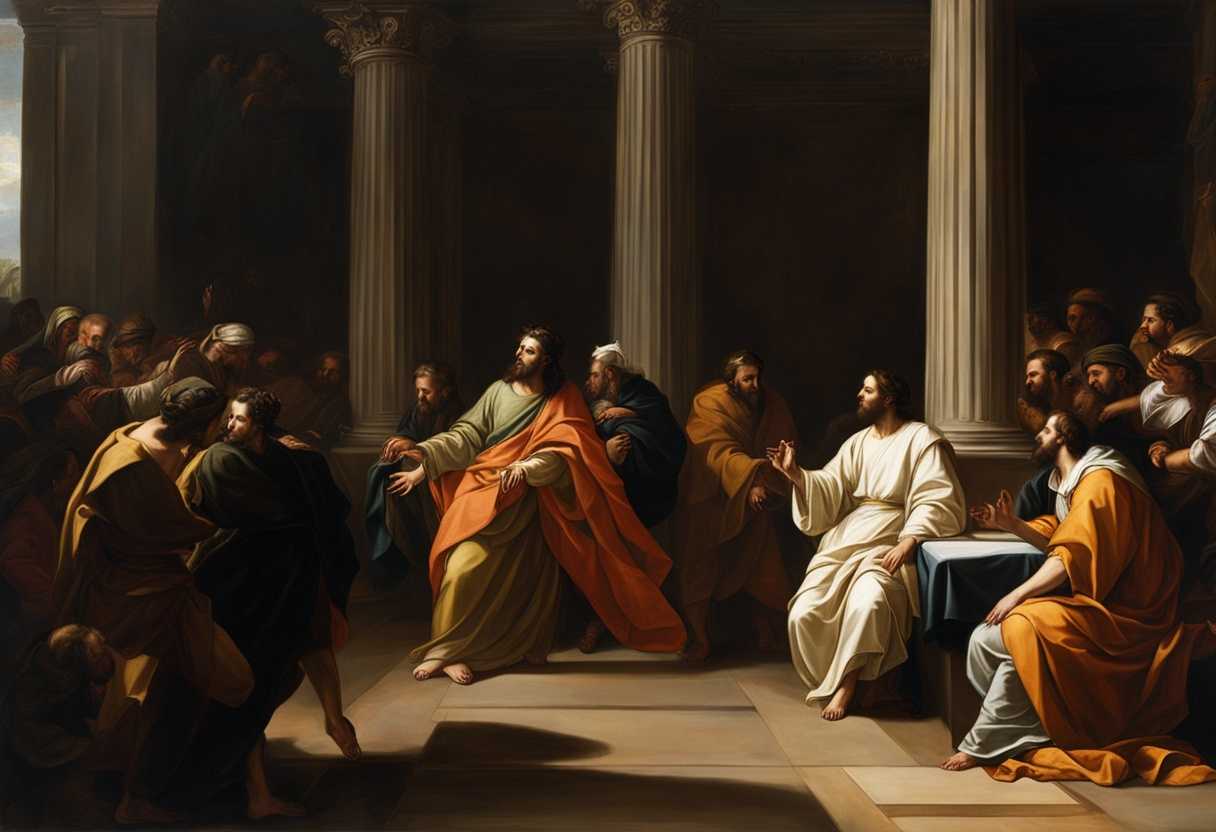
Setting the Scene for Matthew 16:1
In Matthew chapter 16, we find Jesus and his disciples in the region of Magadan, on the eastern shore of the Sea of Galilee. The scene is set against the backdrop of a bustling marketplace, with vendors selling their wares and locals going about their daily activities. The disciples, including Peter, James, and John, are gathered around Jesus as he teaches them about the kingdom of heaven.
The disciples had been traveling with Jesus for some time, witnessing his miracles and hearing his teachings. They had just come from the region of Dalmanutha, where Jesus had healed a blind man, and were now seeking some quiet time away from the crowds to reflect on his words. As they sit together, Jesus begins to speak to them about the religious leaders of the time, warning them to beware of their teachings and hypocrisy.
The sun is beginning to set, casting a warm glow over the group as they listen intently to Jesus’ words. The disciples are eager to learn from their beloved teacher, hanging on his every word as he imparts wisdom and guidance. In this moment, surrounded by the sights and sounds of the marketplace, a profound lesson is being shared that will shape the disciples’ understanding of their faith and their mission in the world.
What is Matthew 16:1 about?
The Pharisees and Sadducees, who were religious leaders of the time, are trying to challenge Jesus by asking for a sign of His authority in this verse. This request is not coming from a genuine desire to believe in Jesus but rather as a way to test Him and undermine His credibility. The Pharisees and Sadducees were known for their strict adherence to traditional laws and beliefs, and they were threatened by Jesus’ teachings which challenged their authority and interpretations of the scriptures. They were essentially questioning Jesus’ ability to perform miracles and prove His divinity by asking for a sign. However, Jesus sees through their intentions and refuses to give them a sign, knowing that their hearts are hardened and they are not truly seeking to believe in Him. This verse serves as a reminder of the importance of genuine faith and the futility of testing God in order to satisfy our doubts or desires for validation. Jesus’ response challenges us to reflect on our intentions when seeking signs or miracles, urging us to seek Him with a sincere and open heart rather than trying to test or manipulate Him.
Understanding what Matthew 16:1 really means
In the Gospel of Matthew, specifically in chapter 16, we encounter a poignant interaction between Jesus and the Pharisees and Sadducees, prominent religious figures of that era. To truly grasp the significance of this verse, it is crucial to delve into the historical and cultural backdrop surrounding the Pharisees and Sadducees, understanding their roles and beliefs in the context of Jesus’ teachings.
Jesus’ response to the Pharisees and Sadducees in this passage echoes his previous encounters with religious leaders who demanded signs as proof of his authority. In Matthew 12:38-39, Jesus emphasizes the primacy of faith over the desire for miraculous demonstrations. This theme is further explored in John 4:48, where Jesus highlights humanity’s inclination to seek tangible evidence before believing in spiritual truths. The apostle Paul also addresses this in 1 Corinthians 1:22-23, underscoring the contrast between seeking signs and embracing the message of the cross.
The relevance of this verse extends to contemporary society, where the quest for empirical evidence often overshadows the essence of faith. In a world driven by skepticism and scientific inquiry, the call to believe without always seeing resonates deeply. Consider a scenario where someone constantly demands signs to validate the love of their family; they might overlook the everyday gestures of care and affection that truly signify love. Similarly, fixating on miraculous signs can blind us to the subtle yet profound ways in which God works in our lives daily.
The mention of the Pharisees and Sadducees in the verse symbolizes more than just historical figures; they embody attitudes of legalism and doubt that persist today. Their attempt to test Jesus with a request for a heavenly sign reveals a deeper spiritual truth about the nature of faith. By coming to Jesus not in genuine belief but to challenge him, they exemplify a mindset closed to the possibility of divine revelation. Their focus on external manifestations of power overlooks the transformative power of God’s kingdom within the heart.
As we ponder on this verse, we are prompted to nurture a faith that transcends the need for visible signs and wonders, anchoring ourselves in the unwavering presence and promises of God. It beckons us to look beyond the superficial and recognize the profound spiritual realities woven into the fabric of our daily experiences. Just as Jesus urged the Pharisees and Sadducees to discern the signs of the times, we are called to discern the subtle yet profound workings of God in our lives, trusting in His guidance and provision.
Do we recognize the signs of the times?
Jesus rebukes the Pharisees and Sadducees in this verse for not recognizing the signs of the times. He is implying that they should have been able to discern the spiritual climate and understand the prophetic significance of the events happening around them. They were missing out on the opportunity to understand and respond to God’s will for them by not recognizing the signs. We, as followers of Christ, are also called to be aware of the signs of the times and to discern the spiritual significance of the world around us. This involves being alert to the movements of God and the ways in which He is working in the world. We can better align ourselves with God’s purposes and be faithful in following His will for our lives by being attuned to the signs of the times.
Therefore, let us strive to be like the sons of Issachar who understood the times and knew what God’s people should do. We can recognize the signs of the times and respond faithfully to God’s leading in our lives by studying the Scriptures, praying for discernment, and staying connected to the Holy Spirit.
Application
Think of your life as a busy city street, full of noise and endless tasks. In the hustle, it’s easy to miss the quiet signals from God. Instead of demanding flashy neon signs, can you trust in His perfect timing and guidance, just as you trust the traffic lights to keep you safe? Deepen your faith, rely on His wisdom, and embrace His plan without needing constant reassurances. Will you let go of the need for signs and have faith instead?

Reverend Michael Johnson is an experienced Church Minister with a profound expertise in spirituality and guidance. With a serene presence and a compassionate heart, he has faithfully served his congregation for over 20 years, leading them on a spiritual journey towards inner peace and enlightenment. Reverend Johnson’s extensive knowledge of religious philosophies and profound understanding of human nature have made him a trusted confidant and mentor to many, as he seamlessly weaves his profound wisdom into life teachings. Reverend Johnson’s calming demeanor and empathetic nature continue to uplift and heal souls, nurturing a sense of unity and tranquility within his community.