
Matthew 2:13-18 is about the fulfillment of prophecy as Jesus’ family flees to Egypt, reminiscent of Israel’s exodus, to escape the violence of King Herod’s massacre of the infants in Bethlehem, highlighting Jesus as the new Moses and the ultimate savior of God’s people.
13 Now when they had departed, behold, an angel of the Lord appeared to Joseph in a dream and said, “Rise, take the child and his mother, and flee to Egypt, and remain there until I tell you, for Herod is about to search for the child, to destroy him.”
14 And he rose and took the child and his mother by night and departed to Egypt.
15 and remained there until the death of Herod. This was to fulfill what the Lord had spoken by the prophet, “Out of Egypt I called my son.”
16 Then Herod, when he saw that he had been tricked by the wise men, became furious, and he sent and killed all the male children in Bethlehem and in all that region who were two years old or under, according to the time that he had ascertained from the wise men.
17 Then was fulfilled what was spoken by the prophet Jeremiah:
18 “A voice was heard in Ramah,
weeping and loud lamentation,
Rachel weeping for her children;
she refused to be comforted,
because they are no more.”
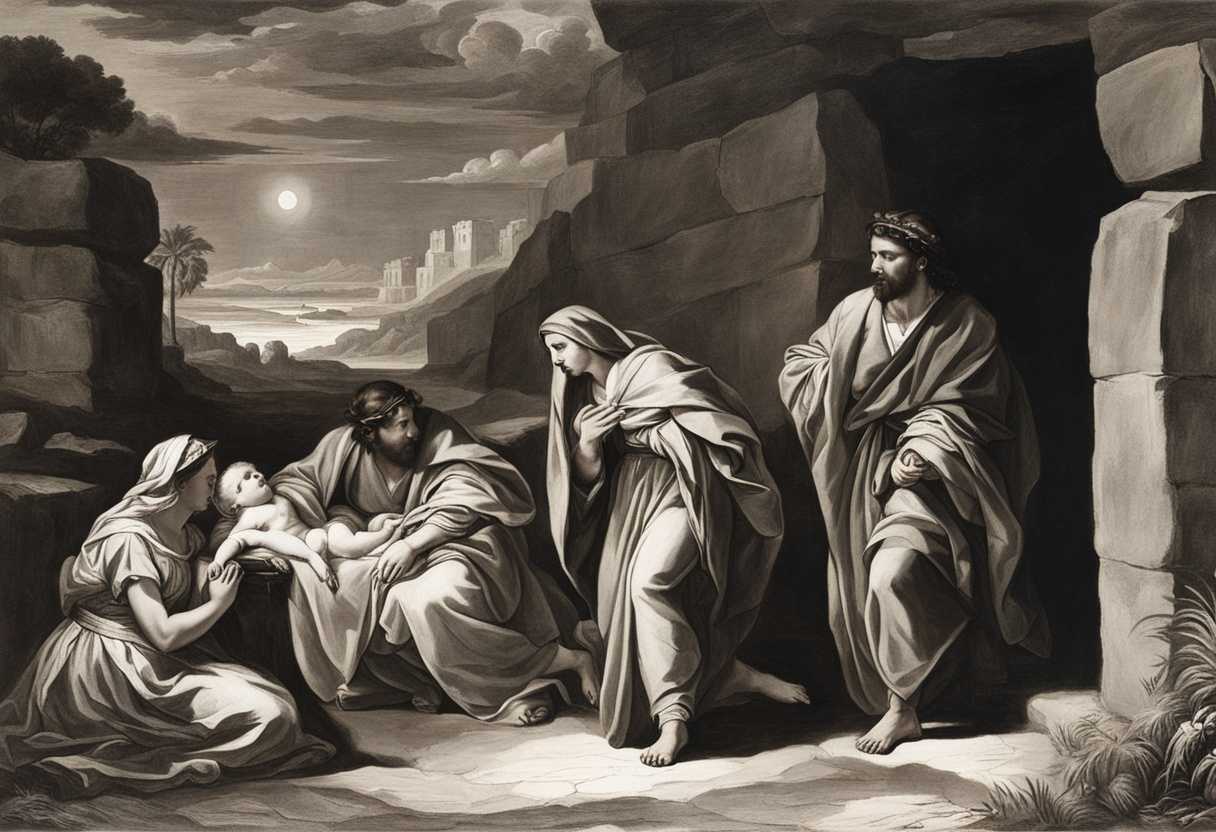
Setting the Scene for Matthew 2:13-18
The scene described in Matthew 2:13-18 takes place in Bethlehem, a small town in Judea, shortly after the birth of Jesus. King Herod, feeling threatened by the news of the birth of a new king of the Jews, orders the massacre of all male children in Bethlehem who are two years old and under. Joseph, Mary, and the infant Jesus are warned in a dream by an angel to flee to Egypt to escape the wrath of Herod.
In this tense and heartbreaking moment, Joseph and Mary hastily gather their belongings and take Jesus under the cover of night to seek refuge in Egypt. The journey is long and arduous, filled with uncertainty and fear as they flee from the ruthless king’s soldiers. The surroundings are dark and foreboding, with the cries of grieving mothers echoing through the streets of Bethlehem as Herod’s decree is carried out.
As Joseph, Mary, and Jesus find safety in Egypt, the weight of the tragedy that has befallen their fellow families in Bethlehem hangs heavy in the air. The scene is a stark reminder of the harsh realities of the world into which the Son of God has been born, setting the stage for the unfolding of the divine plan of salvation.
What is Matthew 2:13-18 about?
This verse depicts a dark and tragic event in the story of Jesus’ birth, highlighting the ruthless actions of King Herod in his quest to maintain his power and control. It showcases the lengths to which some individuals are willing to go to preserve their authority, even at the cost of innocent lives. The massacre of the infants in Bethlehem is a stark reminder of the consequences of unchecked greed, fear, and jealousy in the pursuit of power. Let us reflect on this verse and ponder the significance of this event in the larger narrative of Jesus’ life. How does this act of violence speak to the themes of persecution, oppression, and the vulnerability of the innocent? What does it reveal about the fragility of power and the darkness that can consume those who are consumed by their own ambition? The birth of Jesus signifies the triumph of light over darkness, good over evil, and the promise of redemption and salvation, emerging as hope amidst the tragedy.
Understanding what Matthew 2:13-18 really means
In Matthew 2:13-18, we witness a poignant account of Joseph, Mary, and the infant Jesus fleeing to Egypt to escape King Herod’s ruthless decree to slaughter all male children in Bethlehem under the age of two. This narrative not only underscores the divine protection over Jesus but also fulfills Old Testament prophecies, showcasing the intricate tapestry of God’s sovereign plan unfolding through history. The appearance of an angel to Joseph in a dream signifies divine intervention and guidance, a recurring theme in biblical narratives where dreams serve as a conduit for God’s communication of His will to His people.
The urgency and peril of the situation are palpable in the command for Joseph to take the child and his mother and escape to Egypt. This directive underscores the imminent threat to Jesus’ life posed by Herod’s sinister intentions. The parallel drawn between Israel’s exodus from Egypt and Jesus’ return from the same land, as referenced in Hosea 11:1, highlights the continuity of God’s redemptive work throughout history. Moreover, the poignant imagery of Rachel weeping for her children, echoing Jeremiah 31:15, encapsulates the profound sorrow and loss experienced by the mothers in Bethlehem, resonating with the broader theme of suffering and lamentation.
The relevance of this passage extends beyond its historical context, speaking to timeless truths about divine protection, obedience to God’s guidance, and the fulfillment of His promises. It serves as a poignant reminder that God is intricately involved in our lives, offering guidance and shelter even amidst the storms of uncertainty and danger. The narrative of the Holy Family’s flight to Egypt finds resonance in the modern-day experiences of refugees and displaced individuals, urging us to cultivate compassion and solidarity with those facing peril and displacement in our world today.
Consider a family compelled to flee their homeland due to political upheaval, akin to the Holy Family’s flight to Egypt. Despite leaving behind their possessions and security, their unwavering trust in God’s providence leads them to find refuge and eventually rebuild their lives. This contemporary parallel underscores the enduring relevance of Matthew 2:13-18, emphasizing the significance of faith and reliance on God’s unfolding plan even in the midst of adversity and upheaval. Ultimately, this passage serves as a poignant testament to God’s faithfulness, urging us to trust in His guidance, extend compassion to the vulnerable, and embrace His promises with unwavering faith.
How can we discern and follow God’s guidance?
God guides Joseph through dreams in the passage to protect Jesus from King Herod’s intentions to harm Him. This illustrates a key way in which we can discern and follow God’s guidance – through prayerful communication with Him. We too can seek God in prayer, asking for wisdom and guidance in our decisions, just as Joseph prayed and received direction through dreams.
Another aspect highlighted in this passage is obedience to God’s instructions. Joseph didn’t hesitate to act upon the guidance he received, immediately taking his family to safety in Egypt. This teaches us the importance of being attentive to God’s voice and obediently following His leading, even if it means going against our own plans or desires.
Furthermore, the passage reminds us of the sovereignty and trustworthiness of God’s plans. Even when circumstances seem uncertain or dangerous, we can trust that God is in control and will guide us towards His will. We can discern and follow God’s guidance in our lives by staying close to Him in prayer, being obedient to His leading, and trusting in His providence.
Application
Think about how you protect your family from life’s chaos – now extend that to your community. Just as Joseph shielded baby Jesus from danger, we must fight injustice and shelter the vulnerable around us. They depend on us like our family depends on us. Will you step up and be that guardian today?

Reverend Michael Johnson is an experienced Church Minister with a profound expertise in spirituality and guidance. With a serene presence and a compassionate heart, he has faithfully served his congregation for over 20 years, leading them on a spiritual journey towards inner peace and enlightenment. Reverend Johnson’s extensive knowledge of religious philosophies and profound understanding of human nature have made him a trusted confidant and mentor to many, as he seamlessly weaves his profound wisdom into life teachings. Reverend Johnson’s calming demeanor and empathetic nature continue to uplift and heal souls, nurturing a sense of unity and tranquility within his community.