
2 Samuel 6:1-23 is about the consequences of approaching the holiness of God without the proper reverence and obedience, highlighting the importance of humility and respect in worship.
1 David again gathered all the chosen men of Israel, thirty thousand.
2 And David arose and went with all the people who were with him from Baale-judah to bring up from there the ark of God, which is called by the name of the Lord of hosts who sits enthroned on the cherubim.
3 And they carried the ark of God on a new cart and brought it out of the house of Abinadab, which was on the hill. And Uzzah and Ahio, the sons of Abinadab, were driving the new cart.
4 And they brought it with the ark of God from the house of Abinadab, which was on the hill. And Uzzah and Ahio, the sons of Abinadab, were driving the new cart,
5 And David and all the house of Israel were making merry before the Lord, with songs and lyres and harps and tambourines and castanets and cymbals.
6 And when they came to the threshing floor of Nacon, Uzzah put out his hand to the ark of God and took hold of it, for the oxen stumbled.
7 And the anger of the Lord was kindled against Uzzah, and God struck him down there because of his error, and he died there beside the ark of God.
8 And David was angry because the Lord had burst forth against Uzzah. And that place is called Perez-uzzah, to this day.
9 And David was afraid of the Lord that day, and he said, “How can the ark of the Lord come to me?”
10 So David was not willing to take the ark of the Lord into the city of David. But David took it aside to the house of Obed-edom the Gittite.
11 And the ark of the Lord remained in the house of Obed-edom the Gittite three months, and the Lord blessed Obed-edom and all his household.
12 And it was told King David, “The Lord has blessed the household of Obed-edom and all that belongs to him, because of the ark of God.” So David went and brought up the ark of God from the house of Obed-edom to the city of David with rejoicing.
13 And when those who bore the ark of the Lord had gone six steps, he sacrificed an ox and a fattened animal.
14 And David danced before the Lord with all his might. And David was wearing a linen ephod.
15 So David and all the house of Israel brought up the ark of the Lord with shouting and with the sound of the horn.
16 As the ark of the Lord came into the city of David, Michal the daughter of Saul looked out of the window and saw King David leaping and dancing before the Lord, and she despised him in her heart.
17 And they brought in the ark of the Lord and set it in its place, inside the tent that David had pitched for it. And David offered burnt offerings and peace offerings before the Lord.
18 And when David had finished offering the burnt offerings and the peace offerings, he blessed the people in the name of the Lord of hosts.
19 And distributed among all the people, the whole multitude of Israel, both men and women, a cake of bread, a portion of meat, and a cake of raisins to each one. Then all the people departed, each to his house.
20 And David returned to bless his household. But Michal the daughter of Saul came out to meet David and said, “How the king of Israel honored himself today, uncovering himself today before the eyes of his servants’ female servants, as one of the vulgar fellows shamelessly uncovers himself!”
21 And David said to Michal, “It was before the Lord, who chose me above your father and above all his house, to appoint me as prince over Israel, the people of the Lord—and I will make merry before the Lord.
22 I will make myself yet more contemptible than this, and I will be abased in your eyes.
23 And Michal the daughter of Saul had no child to the day of her death.
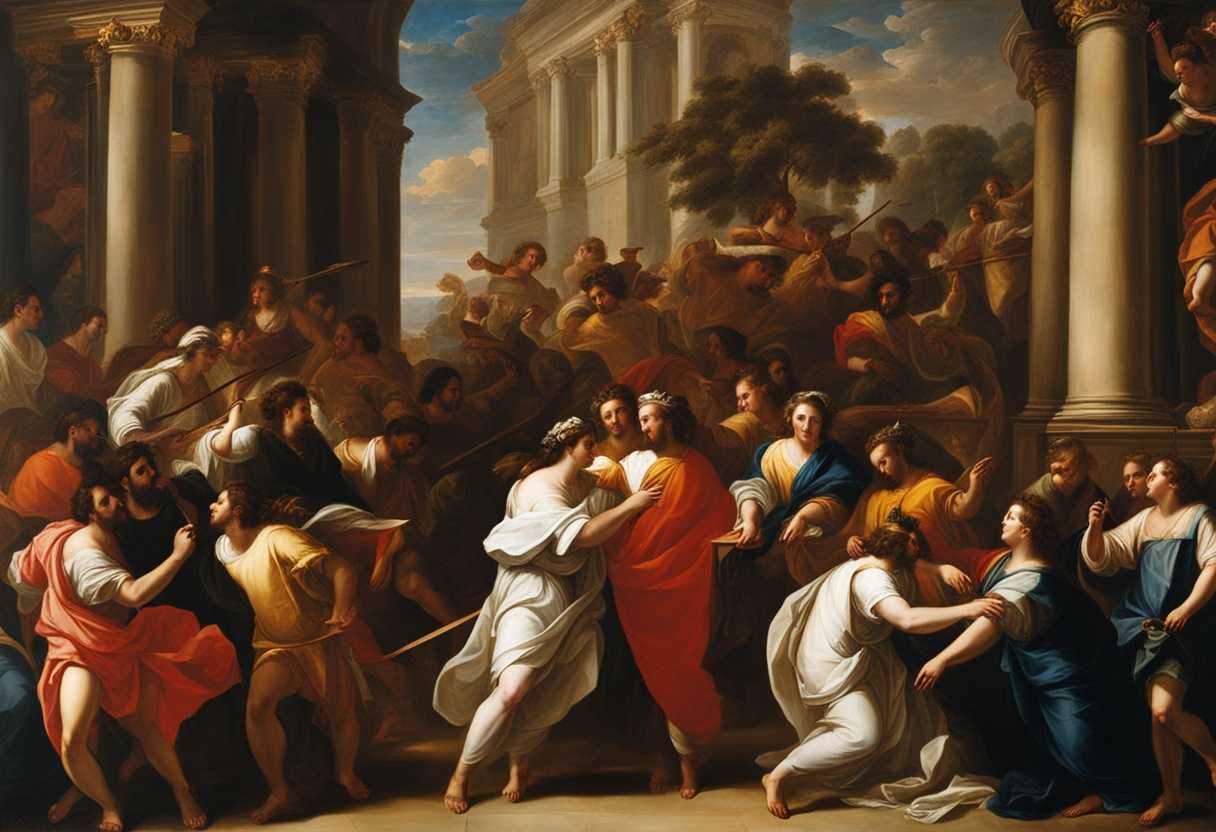
Setting the Scene for 2 Samuel 6:1-23
In 2 Samuel chapter 6, the scene is set in the city of Jerusalem, the newly established capital of Israel under King David’s reign. The city is bustling with activity as people from all over the kingdom have gathered to witness a significant event – the bringing of the Ark of the Covenant to Jerusalem. King David, known for his deep reverence for God, has organized a grand procession to accompany the Ark on its journey to the city.
The procession is a sight to behold, with priests, Levites, and musicians leading the way, playing instruments and singing praises to the Lord. King David himself is at the forefront, dressed in royal robes and dancing with all his might before the Lord. The streets are lined with onlookers, cheering and celebrating as the Ark, a symbol of God’s presence among His people, is brought into the city.
As the procession makes its way towards Jerusalem, the joy and excitement are palpable in the air. The sound of trumpets fills the streets, and the people join in the singing and dancing, caught up in the momentous occasion. It is a time of great rejoicing and thanksgiving as the Ark is finally brought to its rightful place in the city of David, marking a significant moment in the history of Israel.
What is 2 Samuel 6:1-23 about?
Isn’t it powerful to see David, a king full of authority, humility, and devotion, dancing with such joy and exuberance before the Lord? This verse captures a beautiful moment of worship and intimacy between David and God. It shows us the importance of bringing our whole selves before the Lord in worship, without holding back. David’s actions remind us of the genuine and unrestrained worship that God desires from His people.
David’s act of bringing the Ark of the Covenant to Jerusalem represents a symbolic union between God’s presence and His people. It signifies the central role that God plays in David’s life and reign as king. This verse inspires us to examine our own worship practices and consider how we can approach God with the same level of passion and reverence. It challenges us to worship God not out of obligation, but out of a deep love and gratitude for who He is and all He has done for us.
Understanding what 2 Samuel 6:1-23 really means
In 2 Samuel 6, we witness a pivotal moment in Israel’s history as King David endeavors to bring the Ark of the Covenant to Jerusalem. This sacred artifact symbolized God’s presence and covenant with Israel, making its relocation a significant event. As David gathers the chosen men of Israel, we see a display of unity and collective effort under his leadership, emphasizing the importance of coming together in faith.
One of the key themes in this passage is the tragic incident involving Uzzah, who, with good intentions, reached out to steady the Ark and lost his life. This event underscores the holiness and untouchable nature of God’s presence, reminding us of the need for reverence in our approach to the divine. Conversely, David’s exuberant dance before the Lord showcases genuine joy and reverence in worship, inspiring believers to express their devotion wholeheartedly.
The contrasting reactions of Michal, Saul’s daughter, and David further highlight the importance of understanding and respecting diverse expressions of faith. While Michal scorned David’s worship, her judgment serves as a caution against critiquing others’ heartfelt devotion. This narrative prompts us to reflect on our own attitudes towards worship and the need to cultivate a spirit of acceptance and understanding within our faith communities.
Drawing parallels from related biblical passages such as Exodus 25:10-22, 1 Chronicles 13:9-10, and Psalm 150:4, we gain a deeper insight into the significance of the Ark, the consequences of irreverence, and the encouragement to worship God authentically. These scriptures provide a foundation for understanding the sacredness of God’s presence and the call to approach Him with humility and awe.
In our contemporary context, the story of Uzzah serves as a reminder of the importance of holiness and reverence in our relationship with God. David’s uninhibited worship challenges us to engage in authentic worship, free from fear or inhibition. Additionally, Michal’s reaction prompts us to examine our own biases and preconceptions, urging us to embrace the diversity of worship expressions within our faith communities.
Reflecting on these themes and lessons, we are encouraged to deepen our understanding of worship, reverence, and unity in our faith communities. Just as my congregation learned to appreciate diverse forms of worship through a member’s dance, we are reminded to approach God with sincerity and openness, honoring Him with our whole being. May we learn from David’s example of joyful worship and strive to cultivate a spirit of acceptance and understanding in our worship practices.
How can we approach God with reverence and obedience?
We can approach God with reverence and obedience by recognizing His holiness and sovereignty. We should also approach God with a humble heart and respect for who He is, just as King David approached the ark of the Lord with reverence and fear. David showed obedience by following God’s instructions and seeking to honor Him in his actions. We should obey God’s commands and strive to live in a way that is pleasing to Him.
Approaching God with reverence and obedience also involves acknowledging our own unworthiness and the need for His grace and mercy. While God is holy and just, He is also loving and forgiving. We demonstrate our obedience and reliance on His grace by humbling ourselves before Him and seeking His guidance and forgiveness. We can worship God with genuine joy and gratitude for His presence in our lives, just as David danced before the Lord with all his might. Obedience flows from a heart that is surrendered to God in our approach to Him. It is not merely about following rules or rituals, but about cultivating a relationship of love and trust with our Creator. We can honor God and experience the fullness of His blessings in our lives by humbling ourselves before Him, seeking His guidance, and living in obedience to His word.
Application
Imagine juggling the demands of work and family. Now picture letting go of that stress and dancing freely, feeling pure joy. David danced before God with every ounce of his strength—no reservations, no distractions. This is your invitation. Worship with passion, embrace authenticity, and honor God with your whole heart. Can you surrender everything to truly worship God with all your might?

Reverend Michael Johnson is an experienced Church Minister with a profound expertise in spirituality and guidance. With a serene presence and a compassionate heart, he has faithfully served his congregation for over 20 years, leading them on a spiritual journey towards inner peace and enlightenment. Reverend Johnson’s extensive knowledge of religious philosophies and profound understanding of human nature have made him a trusted confidant and mentor to many, as he seamlessly weaves his profound wisdom into life teachings. Reverend Johnson’s calming demeanor and empathetic nature continue to uplift and heal souls, nurturing a sense of unity and tranquility within his community.