
Matthew 15:32-39 is about Jesus showing compassion and demonstrating his miraculous power by feeding a large crowd with only a few loaves of bread and fish, emphasizing that he is the source of spiritual nourishment for all people.
32 Then Jesus called his disciples to him and said, “I have compassion on the crowd because they have been with me now three days and have nothing to eat. And I am unwilling to send them away hungry, lest they faint on the way.”
33 And the disciples said to him, “Where are we to get enough bread in such a desolate place to feed so great a crowd?”
34 And Jesus said to them, “How many loaves do you have?” They said, “Seven, and a few small fish.”
35 And directing the crowd to sit down on the ground,
36 he took the seven loaves and the fish, and having given thanks he broke them and gave them to the disciples, and the disciples gave them to the crowds.
37 And they all ate and were satisfied. And they took up seven baskets full of the broken pieces left over.
38 And those who ate were four thousand men, besides women and children.
39 And after sending away the crowds, he got into the boat and went to the region of Magadan.
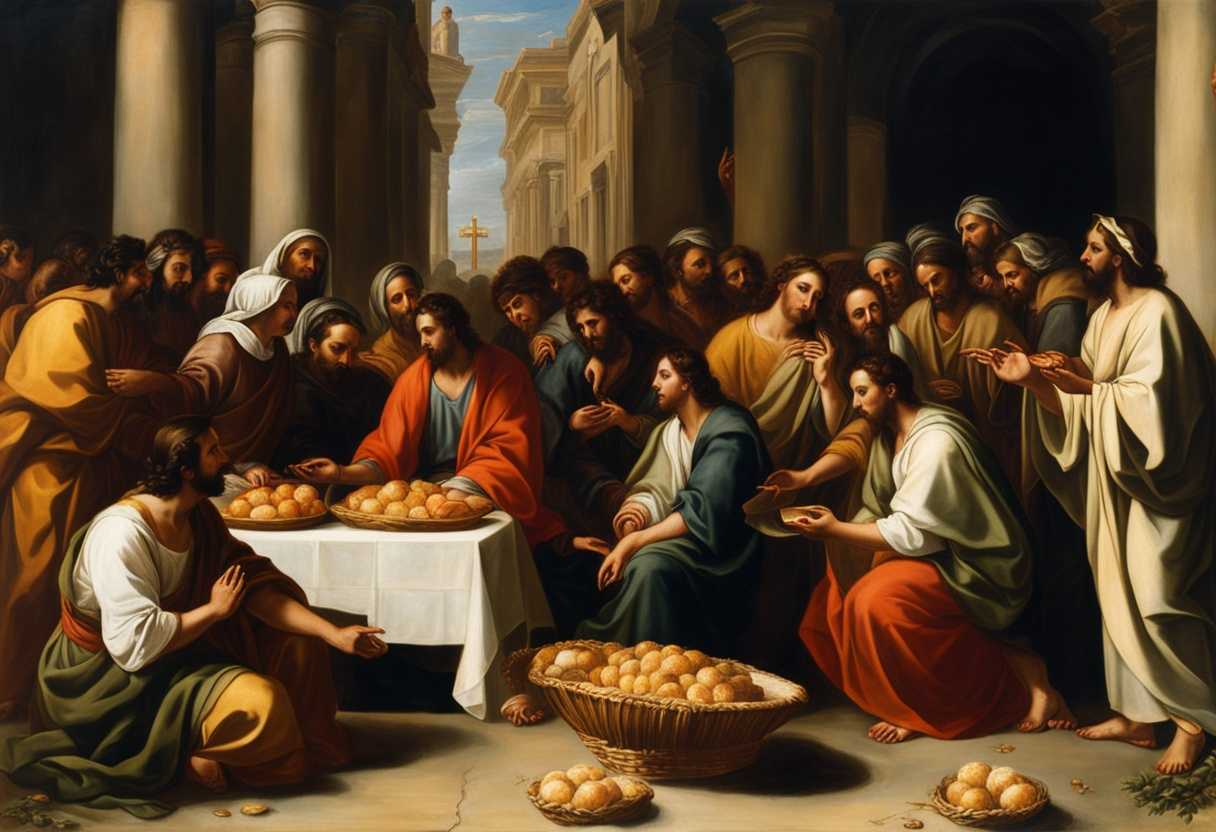
Setting the Scene for Matthew 15:32-39
In Matthew chapter 15, we find Jesus in the midst of a large crowd of people who have been following Him for days, eager to hear His teachings and witness His miracles. The scene is set in a remote area near the Sea of Galilee, where the crowd has gathered to be with Jesus. Among the crowd are the disciples, who have been faithfully serving alongside Jesus, witnessing His compassion and power firsthand.
As the day wears on, Jesus becomes aware of the physical needs of the people around Him. They have been with Him for three days, and their food supplies are running low. Jesus, filled with compassion for the hungry crowd, decides to perform another miracle. With just a few loaves of bread and fish, He miraculously feeds the entire crowd of over four thousand people, demonstrating His power and provision in a tangible way.
The disciples are amazed as they distribute the food and witness the abundance that comes from the hands of Jesus. This miraculous feeding serves as a powerful reminder of Jesus’ compassion, generosity, and ability to meet the needs of His people in ways that surpass human understanding. The scene is one of awe and wonder as the crowd experiences the miraculous provision of Jesus in their midst.
What is Matthew 15:32-39 about?
Jesus performs yet another miraculous act of feeding a large crowd with just a few loaves of bread and fish in this powerful verse from the Bible. It is a profound demonstration of Jesus’ compassion, generosity, and divine power. Imagine the awe and wonder of the people witnessing this incredible event unfold before their eyes. How could seven loaves and a few fish possibly be enough to feed such a vast multitude of 4,000 people? This verse challenges us to have faith in the extraordinary ways in which God can provide for our needs and surpass our expectations.
Through this miracle, Jesus is not only meeting a physical need by providing food for the hungry crowd but also showing that he is the ultimate provider who can abundantly supply all that we require. This verse reminds us of the importance of trusting in God’s abundance and ability to work miracles in our lives, even in the midst of scarcity or impossibility. It prompts us to reflect on our own faith and reliance on God’s provision in times of need. Jesus can also work miracles in our lives, multiplying blessings and provisions beyond what we could imagine, just as he multiplied the loaves and fish to feed the multitude.
Understanding what Matthew 15:32-39 really means
Jesus’ ministry was not only about teaching and healing but also about showing deep compassion for those in need. In the account of feeding the 4,000 in Matthew 15:32-39, we see Jesus moved by the hunger of the crowd that had been with Him for three days. His words, “I have compassion for these people,” reveal His heart for both their physical and spiritual well-being. This highlights the importance of empathy in our interactions with others, reminding us to see beyond immediate needs to the deeper longings of the human soul.
The dedication of the crowd is evident as they stayed with Jesus for three days, hungering for His words despite having nothing to eat. This commitment to seeking spiritual nourishment challenges us to reflect on our own priorities and the lengths to which we are willing to go in pursuit of God’s presence. Jesus’ question to the disciples, “How many loaves do you have?” not only sets the stage for the miracle but also teaches us about the role of faith and participation in God’s miraculous work. It prompts us to consider what resources we have, no matter how meager they may seem, and to trust in God’s ability to multiply them for His purposes.
The miraculous feeding of the 4,000 serves as a powerful demonstration of God’s abundant provision. The fact that everyone ate and was satisfied speaks to the overflowing generosity of God, who not only meets our needs but exceeds them beyond measure. The seven basketfuls of leftovers symbolize the boundless grace and goodness of God, reminding us that His blessings are not limited by human constraints but are limitless and abundant.
This passage resonates with us today in various ways. It challenges us to embody Jesus’ compassion in a world often marked by apathy and self-centeredness. It encourages us to have faith in God’s provision, even when circumstances seem dire and resources appear scarce. The emphasis on community and sharing in the miracle underscores the importance of coming together, pooling our resources, and supporting one another in times of need.
In our modern context, the story of the feeding of the 4,000 can find parallels in acts of kindness and generosity within communities facing adversity. Just as a small church sharing its limited resources can lead to abundance for all in need, our collective efforts rooted in faith and compassion can bring about miracles of provision and grace. By following the example set by Jesus in this passage, we can cultivate a spirit of empathy, trust in God’s abundance, and a commitment to communal support that reflects the love and generosity of our Heavenly Father.
How can we trust God to provide for us?
The passage in Matthew 15:32-39 shows us how Jesus provided for a large crowd of people who had been with Him for three days without food. Jesus took the meager offering of a few loaves and fishes and multiplied it to feed a multitude of people in this story. This miracle underscores the truth that God is able to provide for our needs in ways that surpass human understanding or logic. We can trust God to provide for us by looking at this passage, knowing that He is not limited by our circumstances or resources. He can multiply our efforts and resources to meet our needs just as Jesus multiplied the loaves and fishes to feed the crowd. We can have faith that God sees our needs and is able to provide for us in ways that go beyond what we can imagine or comprehend.
When we trust God to provide for us, we are reminded of His faithfulness and provision throughout history. This passage encourages us to have faith in God’s ability to supply all our needs according to His riches and glory. We can rest assured that God is our ultimate provider and that He will take care of us as we continue to put our trust in Him.
Application
Imagine you’re juggling work deadlines and family obligations, feeling stretched thin. In Matthew 15:32-39, Jesus fed the four thousand with just seven loaves and a few fish, showing extraordinary compassion and provision. In the same way, we can trust that there is always more than enough to go around. Will you trust in this promise and extend your hand to others in need?

Reverend Michael Johnson is an experienced Church Minister with a profound expertise in spirituality and guidance. With a serene presence and a compassionate heart, he has faithfully served his congregation for over 20 years, leading them on a spiritual journey towards inner peace and enlightenment. Reverend Johnson’s extensive knowledge of religious philosophies and profound understanding of human nature have made him a trusted confidant and mentor to many, as he seamlessly weaves his profound wisdom into life teachings. Reverend Johnson’s calming demeanor and empathetic nature continue to uplift and heal souls, nurturing a sense of unity and tranquility within his community.