
John 21:20-23 is about John clarifying that Jesus’ comment about him not dying was not a promise of immortality, but rather a statement that he might live to see Jesus’ return, emphasizing the importance of following Jesus faithfully regardless of one’s future.
20 Peter turned and saw the disciple whom Jesus loved following them, the one who also had leaned back against him during the supper and had said, “Lord, who is it that is going to betray you?”
21 When Peter saw him, he said to Jesus, “Lord, what about this man?”
22 Jesus said to him, “If it is my will that he remain until I come, what is that to you? You follow me!”
23 So the saying spread abroad among the brothers that this disciple was not to die; yet Jesus did not say to him that he was not to die, but, “If it is my will that he remain until I come, what is that to you?”
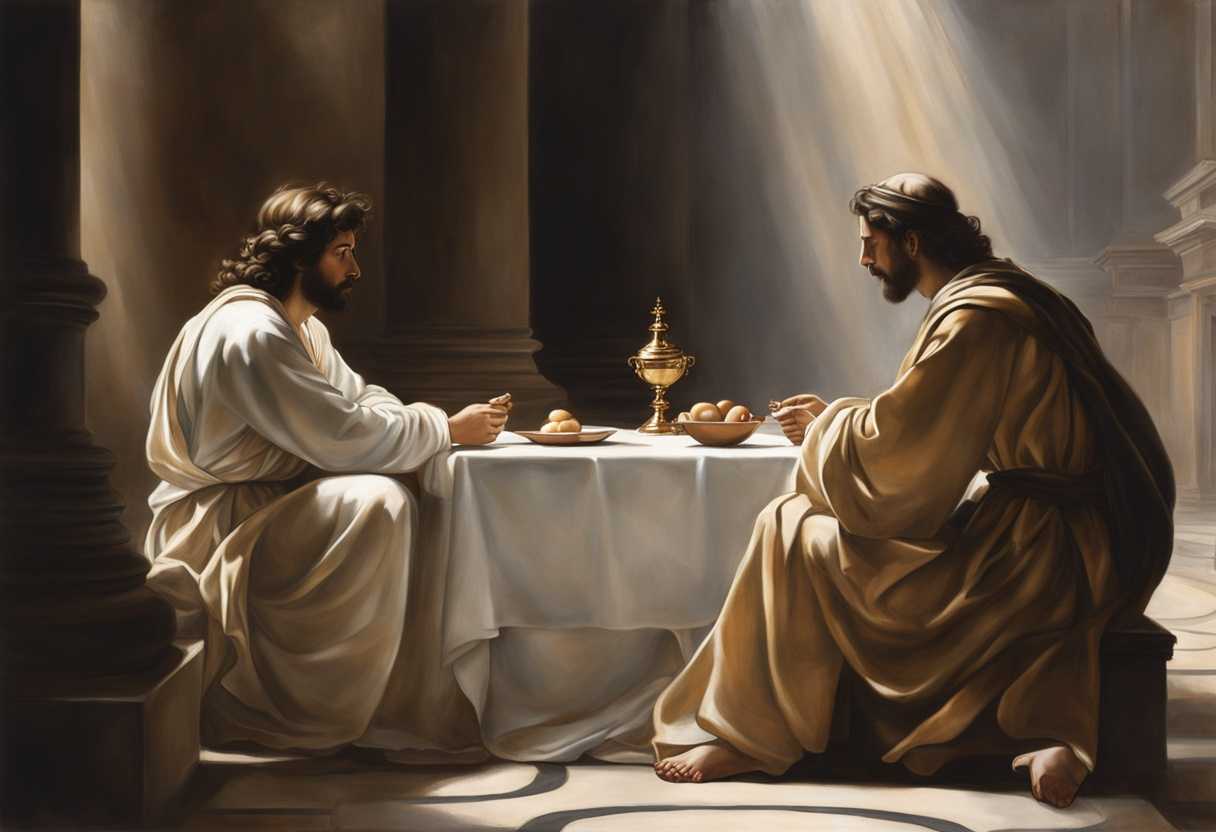
Setting the Scene for John 21:20-23
The scene in John chapter 21 takes place by the Sea of Galilee, where Jesus has appeared to his disciples after his resurrection. The disciples are gathered together, including Peter, John, and a few others. They have just finished a meal with Jesus, during which he had a profound conversation with Peter about love and service.
As they sit by the sea, Peter notices John following them and asks Jesus, “Lord, what about him?” Peter is curious about John’s fate and what role he will play in the future. Jesus responds enigmatically, “If I want him to remain alive until I return, what is that to you? You must follow me.” This exchange highlights the unique relationships Jesus had with each of his disciples and the different paths they would take in spreading his message.
The setting is serene, with the gentle lapping of the waves against the shore and the warm sun casting a golden glow over the group. The disciples are filled with a mix of awe, confusion, and anticipation as they continue to grapple with the reality of Jesus’ resurrection and the mission he has entrusted to them.
What is John 21:20-23 about?
Jesus advises Peter on the importance of focusing on one’s own journey and not being distracted by comparing oneself to others in this verse. Jesus emphasizes the significance of staying committed to one’s own path of faith and not getting caught up in comparing one’s progress to that of others by instructing Peter to “Follow me.”
How often do we find ourselves looking at others and feeling inadequate or envious of their journeys? Jesus reminds us through this verse that our focus should be on our individual relationship with Him and our personal growth in faith. Instead of being preoccupied with comparing ourselves to others, we should strive to walk in alignment with God’s will and purpose for our lives.
Jesus’ words to Peter serve as a powerful reminder for all of us to stay focused on our own spiritual journey and trust in God’s plan for us. Let us fix our eyes on following Him wholeheartedly, knowing that He has a unique and wonderful purpose for each of us, and let us not be swayed by comparisons or distractions.
Understanding what John 21:20-23 really means
In John 21:20-23, we find a poignant interaction between Jesus, Peter, and the disciple whom Jesus loved, traditionally believed to be John. This passage takes place after Jesus’ resurrection, with Peter having just been reinstated by Jesus following his three denials. Jesus had given Peter a specific mission to “feed my sheep,” highlighting the importance of Peter’s role in the early church. As Peter and Jesus converse, Peter notices John following them and inquires about his fate, to which Jesus responds with a powerful message of individual focus and obedience.
Peter’s question, “Lord, what about him?” reflects a common human tendency to compare oneself with others, seeking reassurance or validation in the paths of those around us. Jesus’ response, “If it is my will that he remain until I come, what is that to you?” underscores the need for each disciple to stay focused on their own journey and calling, rather than being consumed by comparisons or distractions. This emphasis on personal responsibility and obedience is a timeless lesson that resonates with believers today.
The broader biblical context reinforces this message of individual commitment and accountability in following Christ. Passages like Matthew 16:24, Hebrews 12:1-2, and Romans 14:12 all emphasize the importance of personal faith, perseverance, and accountability in one’s spiritual walk. These verses serve as guiding principles for believers to stay steadfast in their relationship with God and to trust in His unique plan for their lives.
In a contemporary context marked by social media and constant comparison, the lesson from John 21:20-23 remains relevant and crucial. It serves as a gentle reminder to focus on our own spiritual journey and calling, rather than being swayed by the successes or failures of others. Just as each runner in a marathon has a distinct pace and strategy, we are called to run our race with perseverance, fixing our eyes on Jesus and trusting in His guidance for our lives.
Ultimately, Jesus’ directive to Peter, “You follow me!”, encapsulates the essence of individual discipleship and obedience. By heeding this command and embracing our unique paths in faith, we can find fulfillment, peace, and purpose in our walk with God. Let us take to heart the timeless wisdom of this passage, striving to follow Jesus wholeheartedly and trusting in His perfect plan for each of us.
How should we respond to God’s unique callings?
We should respond to God’s unique callings with obedience and trust. Each of us is called to serve God in our own specific way, just as Peter was called to follow Jesus in his own unique way. It is important for us to listen for God’s voice and direction in our lives, and to follow His plan for us with faith and humility.
When God calls us to a specific task or mission, we should not compare ourselves to others or be distracted by what others are called to do. Instead, we should focus on our own relationship with God and be faithful to the path He has set before us. We can fulfill our purpose and bring glory to His name by trusting in His guidance and following His callings.
Application
Think of your faith journey like your career: everyone’s path is different, and comparison can just distract you from your own goals. Just as you focus on your work and family, put that same energy into your personal relationship with God. Each person’s spiritual journey is unique and designed specifically for them. Don’t get caught up in the social media highlight reels of others’ lives. What steps will you take today to deepen your faith without looking sideways?

Reverend Michael Johnson is an experienced Church Minister with a profound expertise in spirituality and guidance. With a serene presence and a compassionate heart, he has faithfully served his congregation for over 20 years, leading them on a spiritual journey towards inner peace and enlightenment. Reverend Johnson’s extensive knowledge of religious philosophies and profound understanding of human nature have made him a trusted confidant and mentor to many, as he seamlessly weaves his profound wisdom into life teachings. Reverend Johnson’s calming demeanor and empathetic nature continue to uplift and heal souls, nurturing a sense of unity and tranquility within his community.