
Genesis 8:1-5 is about God remembering Noah and all the animals on the ark by causing a wind to blow over the earth to recede the waters, leading to the gradual subsiding of the flood.
1 But God remembered Noah and all the beasts and all the livestock that were with him in the ark. And God made a wind blow over the earth, and the waters subsided.
2 The fountains of the deep and the windows of the heavens were closed, the rain from the heavens was restrained,
3 The waters receded from the earth continually. At the end of 150 days the waters had abated.
4 And in the seventh month, on the seventeenth day of the month, the ark came to rest on the mountains of Ararat.
5 The waters continued to recede until the tenth month; in the tenth month, on the first day of the month, the tops of the mountains were seen.
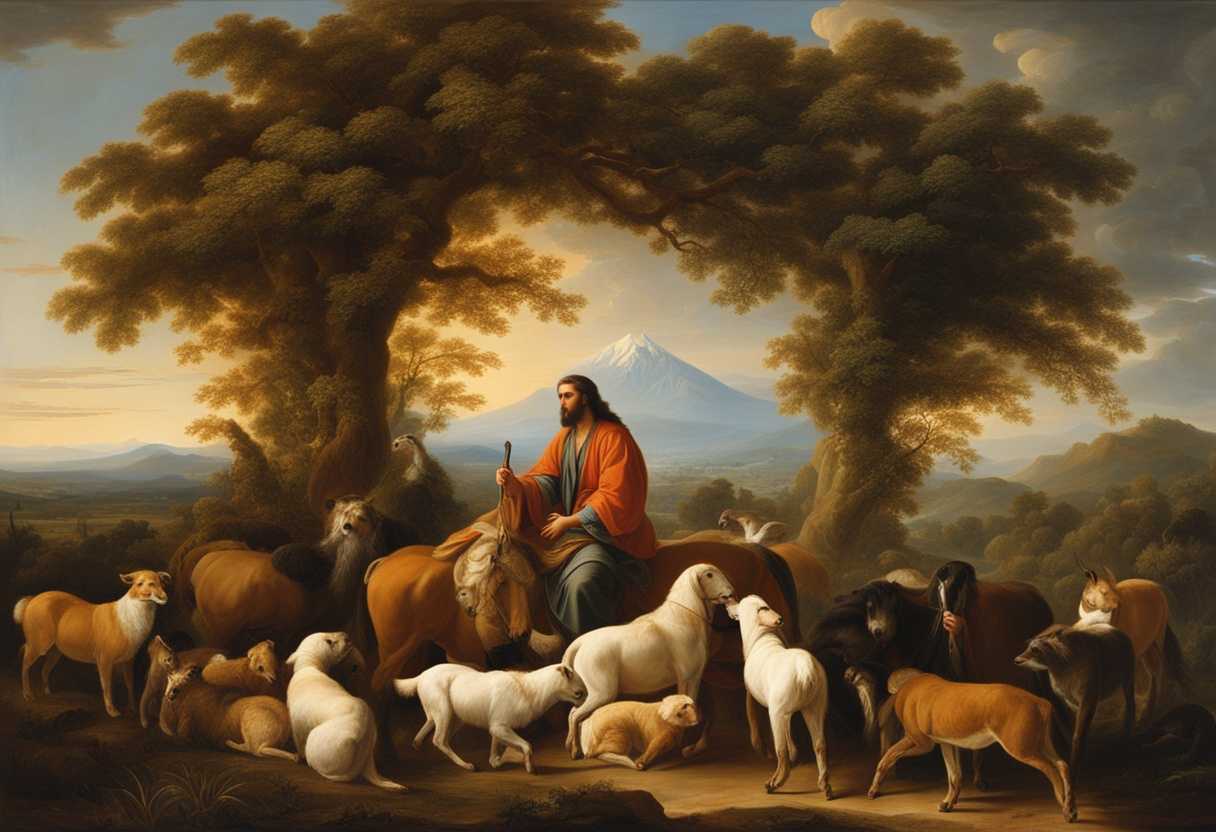
Setting the Scene for Genesis 8:1-5
After the great flood that lasted for forty days and forty nights, the waters began to recede from the earth. Noah, his wife, his three sons (Shem, Ham, and Japheth), and their wives had been on the ark for over a year. As the ark came to rest on the mountains of Ararat, the family eagerly awaited the moment when they could finally step out onto dry land once again.
The scene is one of anticipation and relief as the ark settles on the mountain peak, surrounded by the vast expanse of water that had covered the earth. The sun breaks through the clouds, casting a warm glow over the scene as Noah opens the window of the ark to release a raven, hoping to find out if the waters had receded enough for the bird to find a place to rest. The family gathers around, their faces filled with hope and gratitude as they witness the first signs of new life and the promise of a fresh start for humanity.
What is Genesis 8:1-5 about?
This verse captures a powerful moment in the story of Noah’s Ark, where after enduring a great flood, God remembers Noah and begins to bring about a new beginning. It symbolizes hope, restoration, and renewal after a period of trial and challenge. Just imagine the relief and gratitude Noah must have felt as he saw the floodwaters recede and the mountaintops reappear, a sign that the worst was over and a new chapter was about to begin.
Have you ever experienced a difficult situation where it felt like the challenges would never end? This verse reminds us that even in our darkest moments, God remembers us and has the power to bring about change and restore what was lost. It is a reminder to have faith, to trust in the process of renewal, and to cling to hope even in the midst of adversity. Just like the mountaintops emerging from the receding floodwaters, there is always a glimmer of light at the end of the tunnel, signaling that a new beginning is on the horizon.
Understanding what Genesis 8:1-5 really means
In Genesis 8:1-5, we witness a pivotal moment following the Great Flood, where God’s remembrance of Noah signifies a shift from judgment to renewal. The phrase “God remembered Noah” encapsulates God’s unwavering faithfulness, indicating His active involvement in bringing about change. This act of remembrance leads to the gradual receding of the waters, symbolizing a deliberate process of restoration rather than an abrupt transformation. As the waters recede steadily from the earth, we are reminded of the patience and intentionality with which God works in our lives, bringing about renewal in His perfect timing.
The image of the ark coming to rest on the mountains of Ararat serves as a powerful symbol of a new beginning and a place of safety and stability after a period of turmoil. Just as the ark provided refuge for Noah and his family, God offers us a place of security and hope amidst life’s storms. This narrative echoes themes of faith, obedience, and God’s enduring promises, as seen in related passages such as Psalm 105:8, Isaiah 54:9-10, and Hebrews 11:7.
The relevance of this passage to people today is profound. It reminds us that just as God remembered Noah in his time of need, He is mindful of our circumstances and actively working towards our restoration in times of trial. The gradual restoration depicted in the receding waters teaches us the value of patience and trust in God’s timing, especially in a world that often demands instant results. The ark resting on Ararat symbolizes the hope of new beginnings after adversity, offering comfort to those facing challenges and uncertainties.
To illustrate this message, consider a family experiencing a financial crisis, losing their home and feeling abandoned. Through small acts of kindness and gradual improvements, they find hope and eventually a new beginning. This narrative mirrors Noah’s journey, highlighting God’s unseen work in leading us towards renewal and stability even in our darkest moments. Genesis 8:1-5 serves as a poignant reminder of God’s faithfulness, the importance of patience, and the promise of new beginnings, encouraging us to trust in His plans for restoration, even when the outcomes are not immediately visible.
How can we trust in God’s promises?
We can trust in God’s promises because His faithfulness and sovereignty are demonstrated throughout the Bible. God fulfills His promise to Noah by remembering him and causing the waters to recede after the great flood in the passage from Genesis 8:1-5. This event shows us that God is true to His word and that His promises will always come to pass at the appointed time. We can have confidence in God’s promises for our present and future by reflecting on the ways in which He has been faithful in the past.
Furthermore, we can trust in God’s promises because of His unchanging nature. The character of God remains constant, and He is not a man that He should lie. This means that every promise He makes is sure to be fulfilled because He is perfect in all His ways. Meditating on this truth can help us find assurance and peace in knowing that God’s promises are certain and unwavering, no matter the circumstances we may face. Placing our trust in God’s promises ultimately requires faith and reliance on His goodness and wisdom. Even when we cannot see how a promise will come to fruition, we can rest in the knowledge that God’s plans are perfect and that He is working all things together for our good. We can confidently hold onto His promises by surrendering our doubts and fears to Him, knowing that He is faithful to do what He has said He will do.
Application
Just as God remembered Noah in the ark, He will remember us in the storms of our lives. Let’s hold onto our faith like a sturdy anchor in rough seas, knowing that His promises never falter. Embrace His faithfulness as a guiding light through the darkest of times. Will you stand strong in your faith, unwavering and resolute, as God gracefully steers you through life’s tempests?

Reverend Michael Johnson is an experienced Church Minister with a profound expertise in spirituality and guidance. With a serene presence and a compassionate heart, he has faithfully served his congregation for over 20 years, leading them on a spiritual journey towards inner peace and enlightenment. Reverend Johnson’s extensive knowledge of religious philosophies and profound understanding of human nature have made him a trusted confidant and mentor to many, as he seamlessly weaves his profound wisdom into life teachings. Reverend Johnson’s calming demeanor and empathetic nature continue to uplift and heal souls, nurturing a sense of unity and tranquility within his community.