
Proverbs 23:29-35 is about the consequences of excessive drinking, warning against the destructive nature of intoxication and urging readers to avoid the temptation of overindulgence in alcohol.
29 Who has woe? Who has sorrow?
Who has strife? Who has complaining?
Who has wounds without cause?
Who has redness of eyes?
30 Those who tarry long over wine; those who go to try mixed wine.
31 Do not look at wine when it is red, when it sparkles in the cup and goes down smoothly.
32 In the end it bites like a serpent and stings like an adder.
33 Your eyes will see strange things, and your heart utter perverse things.
34 You will be like one who lies down in the midst of the sea, like one who lies on the top of a mast.
35 “They struck me,” you will say, “but I was not hurt; they beat me, but I did not feel it. When shall I awake? I must have another drink.”
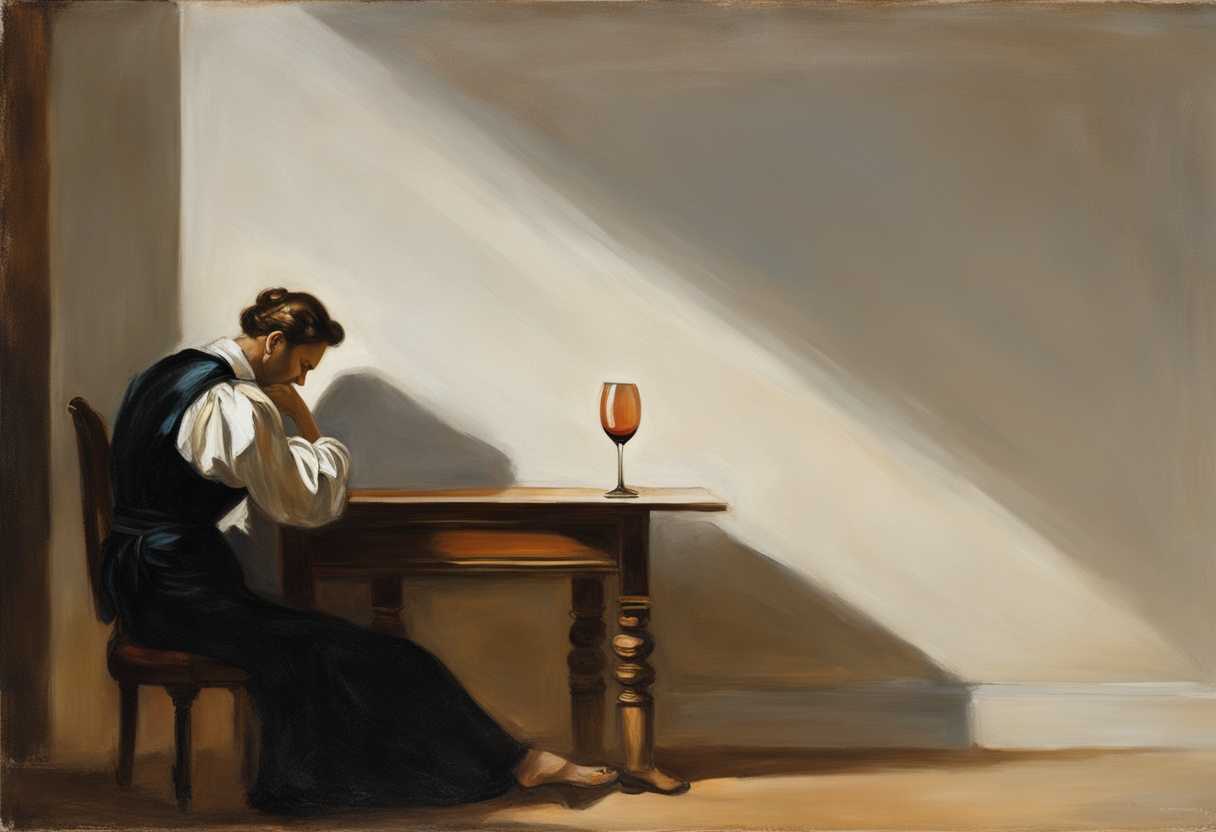
Setting the Scene for Proverbs 23:29-35
In Proverbs 23:29-35, the scene is set in a dimly lit tavern in a bustling city. The air is thick with the smell of alcohol and the sound of raucous laughter fills the room. At a corner table, a group of men are gathered, their faces flushed from drink and their voices growing louder with each passing moment. Among them is a man named John, who had come to the tavern seeking solace from his troubles. Beside him sits his friend Peter, who had reluctantly accompanied him, concerned for his well-being.
As the night wears on, the men continue to drink heavily, their inhibitions fading away with each glass of wine. John, in particular, begins to lose control, his speech slurred and his movements unsteady. Peter watches with growing unease, knowing that his friend is on a dangerous path. The other men at the table cheer John on, encouraging him to drink more and more.
In the midst of the revelry, a sense of sadness hangs in the air, as the men drown their sorrows in alcohol, seeking temporary escape from their troubles. The scene serves as a cautionary tale, a reminder of the destructive power of excessive drinking and the importance of moderation, as highlighted in the wisdom of Proverbs chapter 23.
What is Proverbs 23:29-35 about?
Have you ever witnessed someone under the influence of alcohol, their actions erratic and their speech slurred? Proverbs 23:29-35 serves as a cautionary tale, highlighting the negative outcomes of excessive drinking. Through vivid imagery, the passage paints a picture of the destructive nature of alcohol abuse, emphasizing how it can lead to sorrow, strife, and physical ailments. We, as educators, have a duty to guide our students towards making informed and responsible choices. We can use this verse to spark discussions on the importance of moderation and self-control when it comes to alcohol consumption. We can encourage our students to think critically about the impact of their actions and the importance of prioritizing their well-being by reflecting on the consequences outlined in Proverbs. This passage ultimately reminds us of the significance of making wise decisions and the ripple effect that our choices can have on ourselves and those around us.
Understanding what Proverbs 23:29-35 really means
Proverbs 23:29-35 delves into the perils and repercussions of indulging in excessive drinking and intoxication, serving as a poignant reminder of the wisdom literature’s practical guidance within the Bible. The passage opens with probing questions, “Who has woe? Who has sorrow?” setting the stage for a discourse on the detrimental effects of alcohol abuse. It then goes on to inquire, “Who has strife? Who has complaints?” shedding light on the emotional and relational turmoil often intertwined with immoderate drinking. Furthermore, the mention of “needless bruises” and “bloodshot eyes” underscores the physical toll that alcohol can exact on one’s body, painting a vivid picture of the harm it can inflict.
In parallel with Proverbs 23:29-35, Ephesians 5:18 cautions against the pitfalls of drunkenness, juxtaposing it with the life-affirming presence of the Holy Spirit. This stark contrast emphasizes the destructive nature of excessive drinking and the spiritually enriching alternative of being filled with the Spirit. Similarly, Galatians 5:19-21 categorizes drunkenness as one of the “acts of the flesh,” warning of the spiritual ramifications for those who persist in such behaviors. This linkage underscores the enduring relevance of the passage’s message in highlighting the spiritual consequences of a lifestyle marked by overindulgence in alcohol.
The themes of alcohol abuse and addiction addressed in Proverbs 23:29-35 resonate as strongly today as they did in ancient times. Despite societal glamorization of drinking, the fallout—be it fractured relationships, health issues, or emotional turmoil—remains unchanged. This passage thus stands as a timeless cautionary tale, urging individuals to seek healthier coping mechanisms for life’s challenges and avoid the pitfalls of excessive drinking.
Illustrating the passage’s wisdom, consider the narrative of John, a man ensnared by alcohol addiction. His struggles led to job loss, marital breakdown, and estrangement from his children. Only upon seeking help and turning to his faith did John commence the journey of rebuilding his life. His story mirrors the stark warnings encapsulated in Proverbs 23:29-35, vividly portraying the real-world consequences of disregarding such sage advice.
In conclusion, Proverbs 23:29-35 serves as a stark admonition against the dangers of intemperate drinking, urging individuals to steer clear of the pitfalls of alcohol abuse and embrace a more enriching, Spirit-guided existence. This passage prompts introspection into our own habits, encouraging us to make choices that foster peace, well-being, and spiritual fulfillment in our lives.
How does alcohol consumption affect spiritual awareness?
Alcohol consumption can negatively affect spiritual awareness as described in the verse because it can lead to distorted perceptions and clouded judgment. Alcohol can cause one to see strange things and have mixed-up thoughts, which can hinder one’s ability to stay grounded in spiritual truth. Additionally, consuming alcohol in excess can lead to a lack of self-control and a focus on worldly pleasures rather than spiritual growth.
Furthermore, alcohol can also dull the senses and create a barrier between an individual and their spiritual awareness. The verse highlights how alcohol can lead to physical ailments and a lack of clarity in one’s mind, both of which can inhibit a person’s ability to connect with their spiritual side. Excessive drinking may cause individuals to become more preoccupied with worldly desires and less attuned to the deeper truths and insights that spirituality offers. Alcohol consumption can ultimately diminish one’s spiritual awareness and hinder their spiritual growth.
Application
Let’s rewrite it:
Dear friend, consider the risks of indulging in excessive alcohol as highlighted in Proverbs 23:29-35. It’s like walking a tightrope between work and family, where one misstep could lead to chaos. Let’s pledge to make smart choices, safeguarding our well-being and integrity. Will you join in this journey of self-care and respect for our bodies, temples of our inner light and strength?

Reverend Michael Johnson is an experienced Church Minister with a profound expertise in spirituality and guidance. With a serene presence and a compassionate heart, he has faithfully served his congregation for over 20 years, leading them on a spiritual journey towards inner peace and enlightenment. Reverend Johnson’s extensive knowledge of religious philosophies and profound understanding of human nature have made him a trusted confidant and mentor to many, as he seamlessly weaves his profound wisdom into life teachings. Reverend Johnson’s calming demeanor and empathetic nature continue to uplift and heal souls, nurturing a sense of unity and tranquility within his community.