
Luke 22:14-15 is about Jesus sharing a final meal with his disciples before his crucifixion, symbolizing the establishment of a new covenant through his body and blood, which would bring salvation to humanity.
14 And when the hour came, he reclined at table, and the apostles with him.
15 And he said to them, “I have earnestly desired to eat this Passover with you before I suffer.
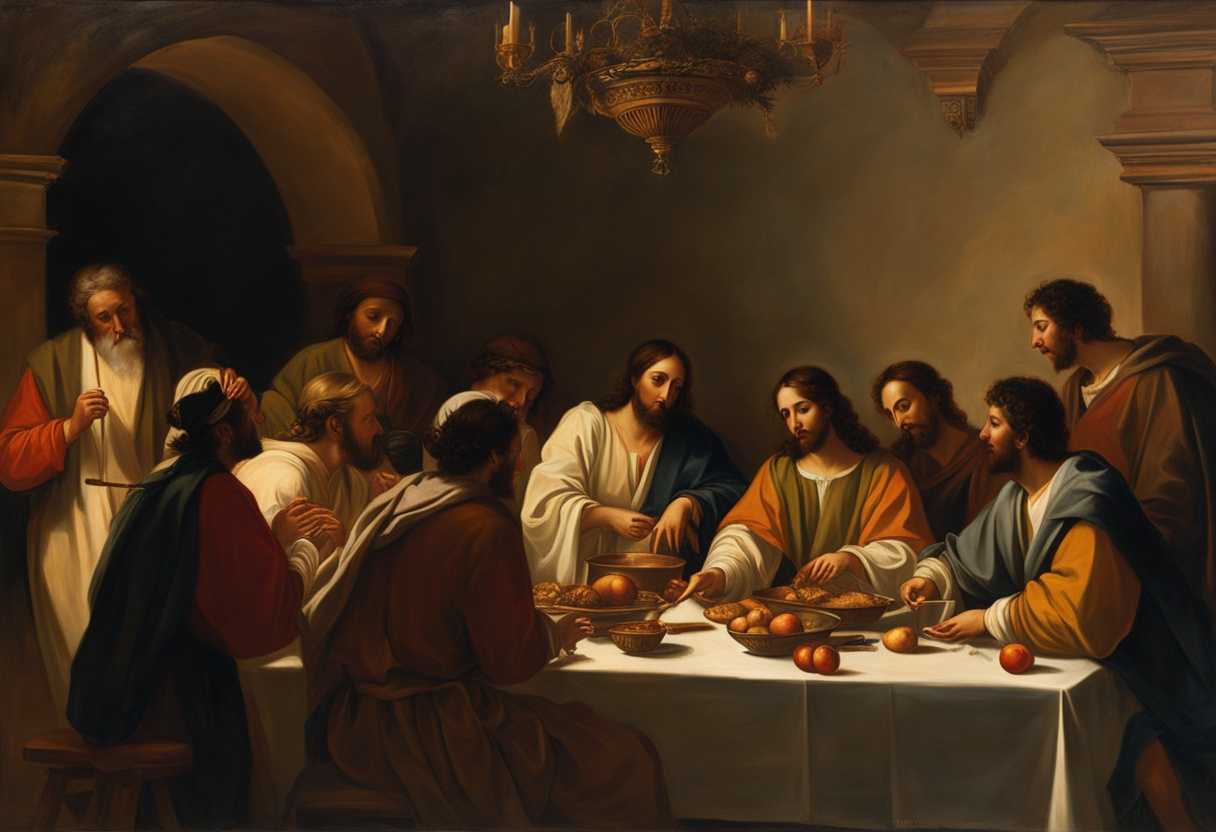
Setting the Scene for Luke 22:14-15
In Luke chapter 22, we find Jesus and his twelve disciples gathered together in an upper room in Jerusalem to celebrate the Passover meal. The room is dimly lit by oil lamps, casting a warm glow over the group as they recline around a low table laden with unleavened bread, bitter herbs, and wine. The disciples, including Peter, John, James, and Judas Iscariot, are dressed in simple robes, their faces reflecting a mix of anticipation and confusion as they sense the weight of the moment.
Jesus, the central figure in the room, sits at the head of the table, his eyes filled with compassion and sorrow. He knows what is to come, the betrayal and crucifixion that await him, but he also knows the significance of this final meal with his closest companions. As they share in the traditional Passover rituals, Jesus takes a moment to bless the bread and wine, offering them to his disciples as symbols of his body and blood, soon to be broken and shed for the salvation of all.
The atmosphere in the room is heavy with emotion, a mixture of love, loyalty, and impending tragedy. The disciples are unaware of the full extent of what is about to unfold, but Jesus, in his infinite wisdom, is preparing them for the trials that lie ahead. As they partake of the bread and wine, they are participating in a sacred moment that will forever change the course of history.
What is Luke 22:14-15 about?
Jesus symbolically shares bread and wine with his disciples at what is known as the Last Supper in this powerful moment from the Bible. This act represents the deep connection he has with his followers and foreshadows the sacrifice he is about to make for the sins of humanity. Jesus is not only nourishing them physically but also spiritually, preparing them for the trials that lie ahead by sharing this meal.
Have you ever experienced a bond so strong that mere words were not enough to express your feelings? Think about the significance of this act for Jesus – knowing the path that awaited him, he chose to share this meal with his beloved disciples, leaving them with a lasting symbol of his love and sacrifice. This verse reminds us of the importance of communion and fellowship, as well as the profound impact of selfless acts of love and service. As we delve into the meaning of this verse, let us contemplate the depth of Jesus’ love and sacrifice for humanity. How does this act of sharing a meal with his disciples resonate with you on a personal level? The symbolism of the bread and wine represents Jesus’ body and blood, serving as a powerful reminder of his ultimate sacrifice. May this verse inspire us to emulate Jesus’ example of love, compassion, and selflessness in our own lives.
Understanding what Luke 22:14-15 really means
In the Gospel of Luke, we find Jesus at a pivotal moment, preparing to share the Last Supper with His disciples. This meal holds immense significance in Christian tradition, symbolizing the sacrificial love and unity that Jesus embodied. As the hour appointed by God arrives, Jesus reclines at the table with His apostles, setting the stage for a moment of intimate fellowship and unity. The scene captures a profound sense of anticipation and purpose as Jesus expresses His earnest desire to partake in this Passover meal before His impending suffering.
The key phrases in this passage carry deep meanings that resonate with believers across time. “When the hour came” signifies a divine timing, highlighting the fulfillment of God’s plan unfolding before their eyes. Jesus’ act of reclining at the table with His apostles speaks to the closeness and camaraderie shared among them, emphasizing the importance of unity in the face of challenges. His poignant statement about desiring this Passover with His disciples before His suffering underscores the depth of emotion and significance attached to this momentous occasion.
Drawing parallels with other biblical passages enriches our understanding of the Last Supper’s profound symbolism. The institution of the Passover in Exodus finds its fulfillment in Jesus’ actions, revealing a continuity of God’s redemptive plan throughout history. Paul’s recounting of the Last Supper in 1 Corinthians underscores its enduring importance for the early church, emphasizing the need for believers to partake in remembrance and unity. In John’s account of Jesus washing the disciples’ feet, we witness a powerful demonstration of servanthood and love, echoing the sacrificial nature of Jesus’ impending sacrifice.
The relevance of this verse extends beyond its historical context, speaking directly to the hearts of believers today. In a world marked by division and discord, the call to unity and fellowship resonates deeply, urging Christians to come together in love and solidarity. The themes of anticipation and fulfillment remind us to trust in God’s timing and providence, even in the face of uncertainty and suffering. Above all, the Last Supper serves as a poignant reminder of Jesus’ ultimate sacrifice and boundless love for humanity, inspiring us to emulate His example in our daily lives.
Consider a family gathering for a momentous meal, much like Thanksgiving, where anticipation and preparation mirror the significance of the occasion. Just as such gatherings foster unity and reflection among loved ones, the Last Supper unites believers in remembrance and gratitude for Jesus’ sacrificial love. As we reflect on this verse, let us be reminded of the profound depth of Jesus’ love, His willingness to sacrifice for our redemption, and the imperative of fostering fellowship and unity within the body of Christ. May we seek to embody the love and unity exemplified by Jesus, drawing strength and inspiration from His enduring legacy.
What does it mean to truly serve others?
To truly serve others means to humbly offer one’s time, resources, and abilities for the well-being of others without expecting anything in return. It involves putting the needs of others before one’s own desires and showing love, compassion, and kindness to those in need. One reflects the love and grace of God and participates in His work of bringing healing and reconciliation to the world by serving others with a genuine heart and a selfless attitude. Jesus exemplifies true service in Luke 22:14-15 by taking on the role of a servant despite being the Son of God. He willingly serves his disciples by humbly washing their feet, demonstrating that true greatness comes from serving others. This act of humility and service not only embodies the essence of Christian discipleship but also sets a powerful example for all believers to follow in serving others with love and grace.
Application
Gather around, dear friend, and unite with your fellow believers like Jesus did with His disciples. Let the bonds of faith intertwine as you share in communion and strengthen your connection with the body of Christ. Now is the time to come together, to break bread, and to elevate each other in the modern world. Will you answer the call to unity and togetherness with your brothers and sisters in Christ?

Reverend Michael Johnson is an experienced Church Minister with a profound expertise in spirituality and guidance. With a serene presence and a compassionate heart, he has faithfully served his congregation for over 20 years, leading them on a spiritual journey towards inner peace and enlightenment. Reverend Johnson’s extensive knowledge of religious philosophies and profound understanding of human nature have made him a trusted confidant and mentor to many, as he seamlessly weaves his profound wisdom into life teachings. Reverend Johnson’s calming demeanor and empathetic nature continue to uplift and heal souls, nurturing a sense of unity and tranquility within his community.