
1 Samuel 4:12-18 is about the fulfillment of a prophecy as the captured Ark of the Covenant symbolizes the departure of God’s presence from the Israelites due to their disobedience and the loss of Eli’s sons in battle reflects the consequences of their sin.
12 A man of Benjamin ran from the battle line and came to Shiloh the same day, with his clothes torn and with dirt on his head.
13 When he arrived, Eli was sitting on his seat by the road watching, for his heart trembled for the ark of God. And when the man came into the city and told the news, all the city cried out.
14 And when Eli heard the sound of the outcry, he said, “What is this uproar?” Then the man hurried and came and told Eli.
15 Now Eli was ninety-eight years old and his eyes were set so that he could not see.
16 And the man said to Eli, “I am he who has come from the battle; I fled from the battle today.” And he said, “How did it go, my son?”
17 He who brought the news answered and said, “Israel has fled before the Philistines, and there has also been a great defeat among the people. Your two sons also, Hophni and Phinehas, are dead, and the ark of God has been captured.”
18 As soon as he mentioned the ark of God, Eli fell over backward from his seat by the side of the gate, and his neck was broken and he died, for the man was old and heavy. He had judged Israel forty years.
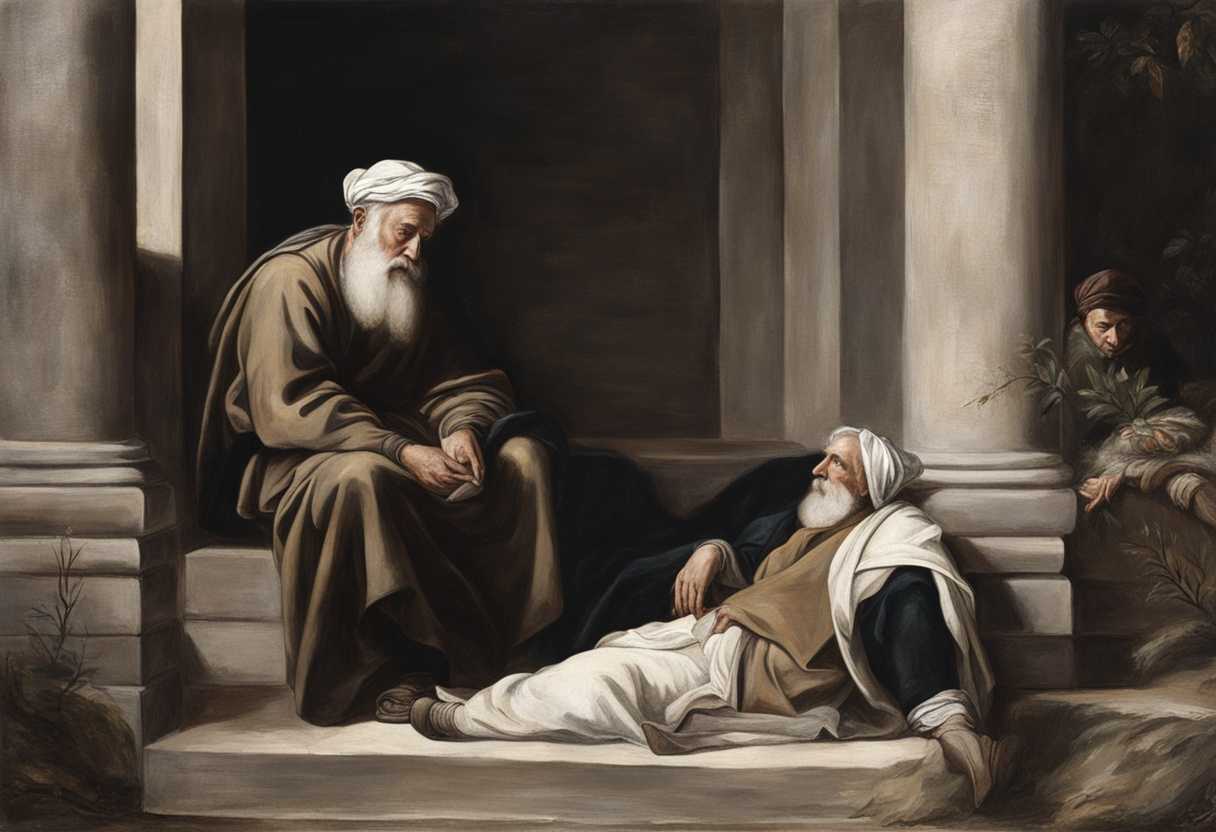
Setting the Scene for 1 Samuel 4:12-18
The scene in 1 Samuel chapter 4 is set during a tumultuous time in ancient Israel. The Philistines had engaged in battle with the Israelites, resulting in a devastating defeat for the Israelites. In the aftermath of the battle, a messenger arrives at Shiloh, where the tabernacle of the Lord is located, to deliver the news of the defeat to Eli, the high priest, and judge of Israel.
Eli, an elderly and blind man, is anxiously awaiting news about the battle, as his two sons, Hophni and Phinehas, were also fighting alongside the Israelite army. The messenger informs Eli of the defeat, the death of his sons, and the capture of the Ark of the Covenant by the Philistines. The news is so shocking that it causes Eli to fall backward off his seat, breaking his neck and dying instantly.
The surroundings in Shiloh are somber and chaotic, with the people mourning the loss of their loved ones and the capture of the Ark, which was a sacred symbol of God’s presence among the Israelites. The defeat at the hands of the Philistines serves as a turning point in the history of Israel, leading to a period of turmoil and uncertainty as they grapple with the consequences of their actions and the loss of divine protection.
What is 1 Samuel 4:12-18 about?
The capture of the ark and the death of Eli’s sons in battle portray a profound moment of loss and devastation for the Israelites in this verse. The ark was a sacred symbol of God’s presence among the people, and its capture symbolized a significant rupture in their relationship with God. The death of Eli’s sons, who were also priests, further exacerbates the tragedy, signaling a loss of leadership and spiritual guidance for the community. Reflecting on this verse prompts us to consider the consequences of disobeying God’s commands and the impact of our actions on our relationship with Him. It challenges us to contemplate the importance of upholding our responsibilities and moral values, especially in times of challenge and temptation. Through the story of the capture of the ark and the death of Eli’s sons, we are urged to reflect on the fragility of human power and the necessity of humility and obedience before God.
What lessons can we draw from the story of the capture of the ark and the death of Eli’s sons? How can we apply these lessons to our own lives and relationships with others? Reflecting on the significance of this verse can inspire us to strive for righteousness, accountability, and faithfulness in our actions, even in the face of adversity and temptation. Let us ponder on the profound message conveyed in this verse and seek to align our values and actions with God’s will.
Understanding what 1 Samuel 4:12-18 really means
The passage in 1 Samuel 4:12-18 paints a vivid picture of the aftermath of a significant battle between the Israelites and the Philistines. It captures the moment when the Ark of the Covenant is captured, and the news of this loss reaches Eli, the high priest. The scene is set with a man from Benjamin running to Shiloh, his torn clothes and dirt-covered head signaling the deep mourning and distress accompanying the grave tidings he brings. This visual imagery immediately conveys the weight of the situation and the impact it will have on the people.
Eli, sitting anxiously by the road, symbolizes the spiritual concern he holds for the Ark of God. His trembling heart reflects not just a fear of physical loss but a deep-rooted worry about the spiritual state of Israel and the presence of God among His chosen people. When Eli hears about the Ark’s capture, his reaction is drastic. He falls backward, breaking his neck and dying instantly. This sudden and tragic end to Eli’s life signifies a pivotal moment of judgment and transition for Israel, marking the consequences of their disobedience and neglect of God’s commands.
The passage is intertwined with prophecies and messages from God, foretelling the downfall of Eli’s house due to the sins of his sons and his own failures. These additional biblical passages, such as 1 Samuel 2:27-36 and 1 Samuel 3:11-14, provide a broader context for understanding the gravity of the events unfolding in 1 Samuel 4:12-18. They emphasize the importance of obedience, faithfulness, and the repercussions of spiritual negligence.
In a contemporary context, this narrative serves as a poignant reminder of the significance of faithfulness and the severe outcomes that can result from disregarding God’s commands. It underscores the crucial role of spiritual vigilance and the impact of leadership on a community’s spiritual well-being. Just as Eli’s story prompts reflection on leadership and accountability, it challenges us to assess our own lives and consider where we may be falling short in our responsibilities or failing to uphold God’s standards.
To illustrate this point further, envision a scenario where a community leader’s neglect leads to a significant loss for the community. Whether it be a coach failing to discipline their team resulting in a championship defeat or a spiritual leader neglecting their duties, the consequences are profound. These anecdotes parallel the narrative in 1 Samuel, emphasizing the importance of integrity, accountability, and the far-reaching effects of our actions on those around us.
As we contemplate the implications of this passage, we are encouraged to examine our lives, identify areas of neglect or disobedience, and recommit ourselves to walking faithfully with God. Let this story serve as a call to renew our dedication to God, to lead with integrity, and to be vigilant in upholding our spiritual responsibilities. By internalizing the lessons from 1 Samuel 4:12-18, we can deepen our understanding of the consequences of neglecting our spiritual duties and the importance of remaining steadfast in our faith.
What are the consequences of ignoring God’s presence?
When individuals disregard or neglect God’s presence, they risk experiencing spiritual distance and a lack of divine intervention in their lives. The people of Israel faced defeat, loss, and tragedy as a result of ignoring God’s presence in the verse. The absence of God’s favor and protection led to a devastating defeat in battle, symbolizing the repercussions of turning away from God.
Furthermore, ignoring God’s presence can lead to a sense of spiritual emptiness and loneliness. It can result in a lack of guidance, wisdom, and peace that comes from being in relationship with God. Individuals today may find themselves in turmoil and facing challenges when they choose to disregard God’s presence in their lives, just as the people in the verse faced dire circumstances when they ignored God. Ignoring God’s presence can ultimately extend consequences beyond individual lives to affect entire communities and societies. Without acknowledging God and seeking His guidance, people can stray from His ways, leading to moral decay, division, and unrest. Recognizing and honoring God’s presence is essential for experiencing His blessings, protection, and guidance in all aspects of life.
Application
Take a moment to ponder the story in 1 Samuel 4:12-18. Are we overlooking our own wrongdoings like Eli, or are we standing strong in faith like the nameless wife? Let’s choose righteousness over sin, confront our shortcomings, and stay steadfast in our beliefs, no matter the challenges we encounter. Will you embrace this challenge and take steps to strengthen your relationship with God today?

Reverend Michael Johnson is an experienced Church Minister with a profound expertise in spirituality and guidance. With a serene presence and a compassionate heart, he has faithfully served his congregation for over 20 years, leading them on a spiritual journey towards inner peace and enlightenment. Reverend Johnson’s extensive knowledge of religious philosophies and profound understanding of human nature have made him a trusted confidant and mentor to many, as he seamlessly weaves his profound wisdom into life teachings. Reverend Johnson’s calming demeanor and empathetic nature continue to uplift and heal souls, nurturing a sense of unity and tranquility within his community.