
Revelation 5:6-14 is about the glorious and triumphant vision of the Lamb of God, Jesus Christ, who is worthy to receive power, wealth, wisdom, strength, honor, glory, and praise from all creation for eternity.
6 And between the throne and the four living creatures and among the elders I saw a Lamb standing, as though it had been slain, with seven horns and with seven eyes, which are the seven spirits of God sent out into all the earth.
7 And he went and took the scroll from the right hand of him who was seated on the throne.
8 And when he had taken the scroll, the four living creatures and the twenty-four elders fell down before the Lamb, each holding a harp, and golden bowls full of incense, which are the prayers of the saints.
9 And they sang a new song, saying, “Worthy are you to take the scroll and to open its seals, for you were slain, and by your blood you ransomed people for God from every tribe and language and people and nation,
10 and you have made them a kingdom and priests to our God, and they shall reign on the earth.”
11 Then I looked, and I heard around the throne and the living creatures and the elders the voice of many angels, numbering myriads of myriads and thousands of thousands,
12 saying with a loud voice, “Worthy is the Lamb who was slain, to receive power and wealth and wisdom and might and honor and glory and blessing!”
13 And I heard every creature in heaven and on earth and under the earth and in the sea, and all that is in them, saying, “To him who sits on the throne and to the Lamb be blessing and honor and glory and might forever and ever!”
14 And the four living creatures said, “Amen!” and the elders fell down and worshiped.
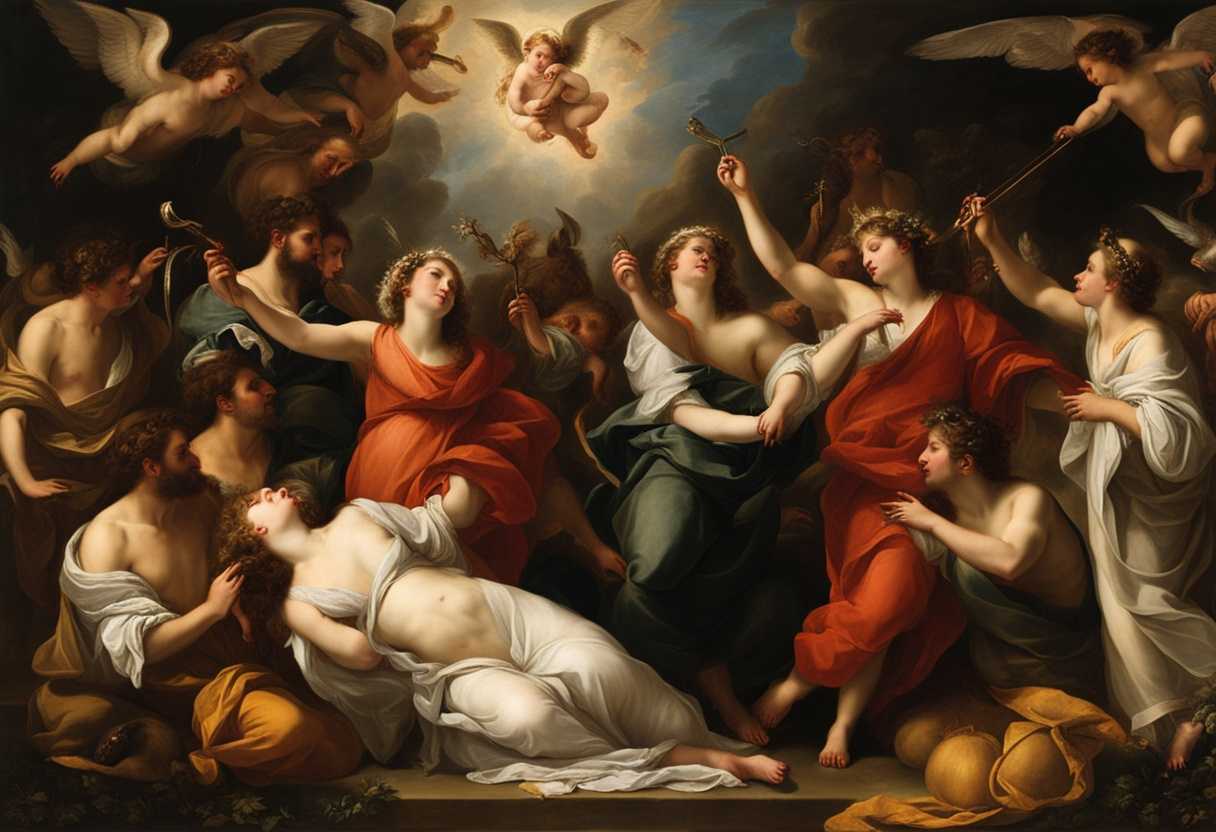
Setting the Scene for Revelation 5:6-14
In Revelation chapter 5, the scene opens in the throne room of heaven. The room is filled with a radiant light, emanating from the majestic throne at the center. Surrounding the throne are four living creatures and twenty-four elders, all adorned in white robes and wearing golden crowns. The atmosphere is charged with a sense of awe and reverence as the elders bow down before the throne, holding golden bowls of incense which are the prayers of God’s people.
At the center of attention is the Lamb who appears as if it had been slain, standing in the midst of the throne and the four living creatures. This Lamb is none other than Jesus Christ, the Savior of the world. His presence exudes power and humility, a stark contrast to the conquering Lion of Judah that He is also known as. The Lamb takes a scroll from the right hand of the one seated on the throne, initiating a momentous event in the heavenly realms.
As the Lamb takes the scroll, the twenty-four elders fall down before Him, each holding a harp and golden bowls full of incense, which are the prayers of the saints. They begin to sing a new song, praising the Lamb for His sacrificial act that redeemed humanity. The scene is filled with heavenly beings, all joining in the chorus of worship and adoration for the Lamb who is worthy to receive power, wealth, wisdom, strength, honor, glory, and praise. The throne room resounds with the voices of countless angels, elders, and living creatures, all united in worship of the Lamb who was slain and who now reigns forevermore.
What is Revelation 5:6-14 about?
This verse speaks to the reverence and adoration given to the Lamb, symbolizing Jesus Christ who sacrificed himself for the salvation of humanity. The act of being slain represents the ultimate sacrifice made by Jesus, demonstrating his unwavering love and commitment to humanity. Believers acknowledge and honor the profound sacrifice and teachings of Christ by worshiping the Lamb who was slain, seeking to emulate his example of love, selflessness, and compassion in their own lives.
Through this verse, we are reminded of the eternal nature of Jesus’ power and glory. The emphasis on forever highlights the everlasting impact and significance of Christ’s sacrifice, teachings, and divinity. Believers, by worshiping the Lamb who was slain, not only pay homage to Jesus’ sacrifice on the cross but also acknowledge his eternal reign and authority over all creation. This verse serves as a powerful reminder of the central role of Jesus in Christian faith and the enduring impact of his life, death, and resurrection on believers’ lives.
Understanding what Revelation 5:6-14 really means
Introduction
The Book of Revelation, attributed to the apostle John, is a prophetic vision unveiling the culmination of God’s plan for the world. Within this apocalyptic text, John’s vision of the heavenly throne room provides a glimpse into the divine realm and the worship surrounding God’s throne.
Verse Breakdown and Commentary
In verse 6, John sees a Lamb standing, as though it had been slain, a powerful image symbolizing Jesus as the sacrificial Lamb who bore the sins of humanity. This depiction echoes John 1:29, where Jesus is proclaimed as the Lamb of God who takes away the sin of the world, emphasizing the profound significance of Christ’s sacrifice for our redemption.
Moving to verse 7, the Lamb takes the scroll from the right hand of the one seated on the throne, signifying Jesus’ authority and divine right to execute God’s plan. This act parallels Daniel 7:13-14, where the Son of Man receives dominion and glory, underscoring the sovereignty of Jesus and encouraging believers to trust in His divine plan.
As the four living creatures and twenty-four elders fall down before the Lamb in verse 8, we are reminded of Philippians 2:10, where every knee bows at the name of Jesus. This universal worship acknowledges Jesus’ divinity and calls us to honor and revere Him in our daily lives.
Verse 9 introduces a new song sung by the heavenly beings, symbolizing the new covenant and the fulfillment of God’s promises. This echoes Psalm 96:1’s call to sing a new song to the Lord, inspiring us to celebrate the transformative work of Christ in our lives.
In verse 10, believers are described as a kingdom and priests to God, reflecting 1 Peter 2:9’s imagery of a royal priesthood. This identity shift highlights our role as representatives of God’s kingdom, urging us to live out our calling with purpose and dedication.
The vast multitude in verses 11-12, comprising myriads of myriads and thousands of thousands, emphasizes the grandeur of the heavenly worship. This multitude, akin to Hebrews 12:22’s innumerable angels, underscores the supreme worth of Jesus and the majesty of God’s kingdom.
Verse 13 expands the scope of worship to every creature in heaven, on earth, under the earth, and in the sea, echoing Psalm 148’s call for all creation to praise the Lord. This universal worship underscores Jesus’ lordship over all creation and challenges us to acknowledge His sovereignty in every aspect of our lives.
In the final verse, the elders fall down and worship, mirroring Revelation 4:10’s depiction of continual worship in the heavenly realm. This ongoing adoration of Jesus by the heavenly beings serves as a model for a lifestyle characterized by worship and reverence for God.
Relevance to People Today
These verses hold profound relevance for believers today. They remind us to trust in Jesus’ sovereignty amidst life’s uncertainties, prioritize worship and reverence for Him, and embrace our new identity and purpose as part of God’s kingdom.
Anecdote
Consider the story of an individual who, struggling with feelings of worthlessness, discovered newfound hope and purpose by embracing their identity as a child of God. Recognizing their role in God’s kingdom transformed their perspective and renewed their sense of purpose.
Conclusion
In conclusion, the imagery and worship depicted in Revelation 5:6-14 invite us to reflect on the significance of Jesus’ sacrifice, His sovereignty, and our role in God’s kingdom. May we be inspired to trust in Christ, prioritize worship, and live out our identity as representatives of God’s kingdom in the world today.
What does true worship of God look like?
True worship of God is characterized by acknowledging His greatness and sovereignty. Those who truly worship God will bow down before Him, recognizing His authority and power over all creation. They will offer praise and honor to Him, acknowledging His worthiness to receive glory and honor. True worship involves humbling oneself before God, recognizing His majesty and worthiness of all praise.
Furthermore, true worship involves a deep sense of awe and reverence for God. Those who worship Him with sincerity and purity of heart will lift their voices in adoration and exaltation, declaring His greatness and praising His name. True worship is not merely a formality or ritualistic practice, but a genuine, heartfelt expression of love and reverence for God. Believers in true worship will fill their lives with gratitude and thanksgiving for God’s blessings and grace. They will not hesitate to offer sacrifices of praise and thanksgiving, demonstrating their love and devotion to God. True worship is a lifestyle that reflects a heart that is fully devoted to God, seeking to honor and glorify Him in all things.
Application
Let us draw inspiration from Revelation 5:6-14, where the Lamb is celebrated by all of creation. Picture a symphony of praise echoing through the heavens. Let’s allow this heavenly worship to ignite a fire in our own lives, at work and at home. Let us join in this cosmic chorus, lifting our voices and hearts in worship to the One who is deserving of all praise. How will you choose to honor and glorify the Lamb today?

Reverend Michael Johnson is an experienced Church Minister with a profound expertise in spirituality and guidance. With a serene presence and a compassionate heart, he has faithfully served his congregation for over 20 years, leading them on a spiritual journey towards inner peace and enlightenment. Reverend Johnson’s extensive knowledge of religious philosophies and profound understanding of human nature have made him a trusted confidant and mentor to many, as he seamlessly weaves his profound wisdom into life teachings. Reverend Johnson’s calming demeanor and empathetic nature continue to uplift and heal souls, nurturing a sense of unity and tranquility within his community.