
Deuteronomy 5:24-27 is about the Israelites expressing their fear of God’s majesty and power, and Moses acting as an intermediary between the people and God to convey divine instructions and reassure them.
24 And you said, ‘Behold, the Lord our God has shown us his glory and greatness, and we have heard his voice out of the midst of the fire. This day we have seen God speak with man, and man still live.
25 Now therefore why should we die? For this great fire will consume us. If we hear the voice of the Lord our God any more, we shall die.
26 For who is there of all flesh, that has heard the voice of the living God speaking out of the midst of fire as we have, and has still lived?
27 Go near and hear all that the Lord our God will say, and speak to us all that the Lord our God will speak to you, and we will hear and do it.’
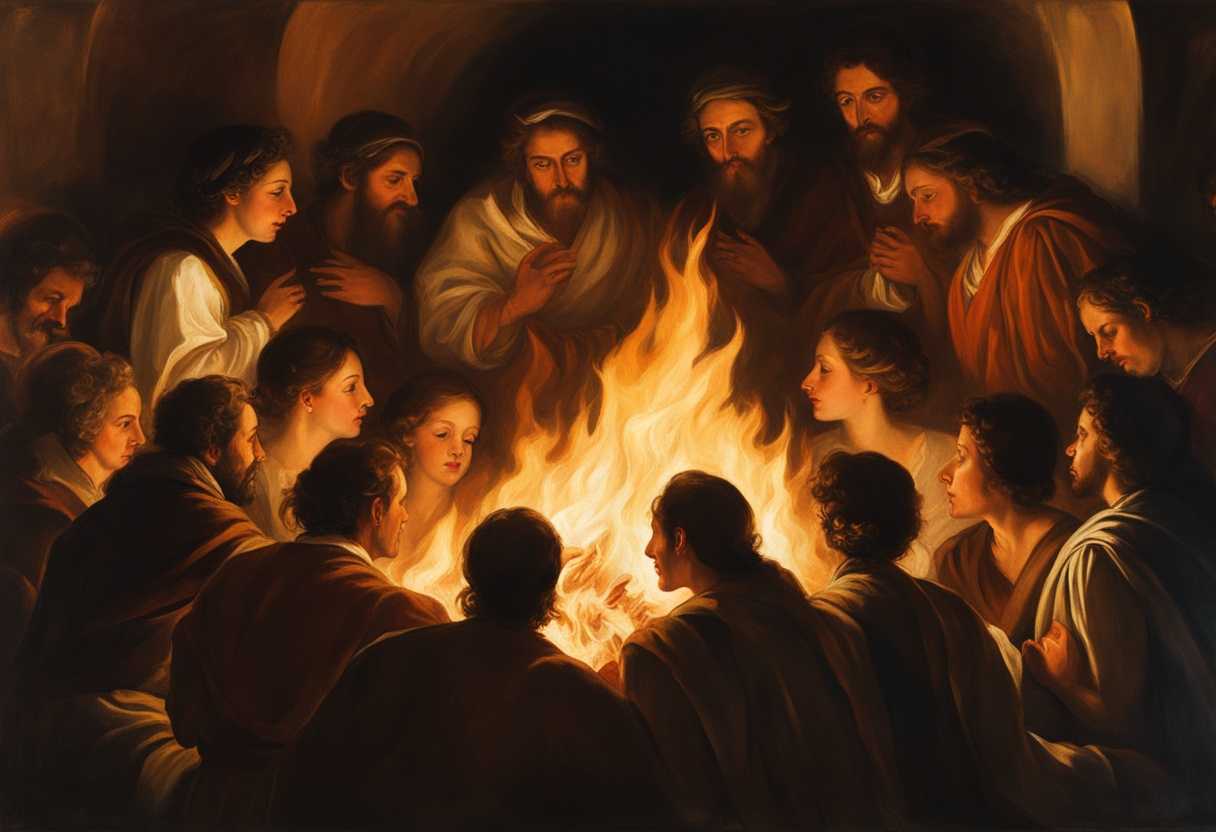
Setting the Scene for Deuteronomy 5:24-27
In Deuteronomy chapter 5, we find the Israelites in the wilderness after their exodus from Egypt. The scene is set at the foot of Mount Sinai, where Moses has ascended to receive the Ten Commandments from God. The Israelites, weary from their journey and in awe of the power of God, are gathered at the base of the mountain, eagerly awaiting Moses’ return.
Among the crowd are familiar names such as Aaron, Miriam, and Joshua, along with the rest of the Israelite community. They had witnessed the plagues in Egypt, the parting of the Red Sea, and now find themselves in the presence of God’s glory at Mount Sinai. The atmosphere is charged with anticipation and reverence as they prepare to receive the commandments that will guide their lives and relationship with God.
The surroundings are awe-inspiring, with the majestic Mount Sinai towering above them and the desert stretching out into the distance. The Israelites are encamped around the mountain, their tents forming a makeshift community in the wilderness. The air is filled with a sense of holiness and expectation as they await the words that will shape their faith and identity as God’s chosen people.
What is Deuteronomy 5:24-27 about?
The verse you’re referring to highlights a profound moment in the journey of the Israelites. Imagine standing at the foot of a mighty mountain, hearing the voice of God thundering down from the clouds. The awe and fear they felt as they witnessed the power of God’s presence must have been overwhelming. They recognized their own limitations and imperfections in the presence of such divine greatness in that moment.
They turned to Moses, their leader, to act as an intermediary between them and God. This act reveals both their reverence for God and their understandable fear of direct communion with the divine. Through Moses, they sought a connection with God, a way to bridge the gap between their humanity and God’s holiness. This moment teaches us about the complex nature of faith – the highs of encountering the power of the divine, and the humbling recognition of our own inadequacy in its presence. We can ask ourselves: How do we approach our own encounters with the divine as we reflect on this verse? Do we fully appreciate the awe-inspiring power of God in our lives, or do we sometimes forget the depth of His presence? Just like the Israelites, we may find ourselves seeking a mediator to help us navigate our relationship with God. Let us remember to approach Him with reverence and humility, recognizing His greatness while also trusting in His love and mercy.
Understanding what Deuteronomy 5:24-27 really means
Deuteronomy 5:24-27 takes us back to the awe-inspiring moment when the Israelites stood before Mount Sinai, trembling at the sight of God’s glory and majesty. The people were overwhelmed by the power and holiness of the Lord, recognizing His voice speaking to them from the midst of the fire. In their fear, they turned to Moses, pleading for him to be their intermediary, fearing that the intensity of God’s presence would consume them. This passage vividly portrays the tension between the Israelites’ desire to draw near to God and their awareness of their own unworthiness in His sight.
“The LORD our God has shown us his glory and his majesty” encapsulates the profound impact of encountering the divine presence. It serves as a reminder of the reverence and respect due to God, whose holiness surpasses human comprehension. The Israelites’ plea, “Why should we die? This great fire will consume us,” reflects their deep-seated fear of the consequences of approaching a holy God with their sinful nature laid bare. Their request for Moses to listen to God on their behalf and relay His commands underscores their need for a mediator, someone to bridge the gap between them and the Almighty.
This passage resonates with believers today, emphasizing the importance of recognizing God’s holiness and the need for a mediator. For Christians, Jesus Christ serves as the ultimate mediator between humanity and God, offering grace and reconciliation. Just as the Israelites trusted Moses to convey God’s words, we are called to trust in Jesus as our advocate before the Father. This reliance on Jesus transforms our relationship with God, allowing us to approach Him with confidence and assurance, knowing that His grace covers our shortcomings.
In our daily lives, we can reflect on the reverence we show towards God and His majesty. Are there areas where we need to deepen our understanding of His holiness and sovereignty? By acknowledging Jesus as our mediator, we acknowledge His role in reconciling us to God and providing a way for us to draw near to Him. This recognition should impact how we approach prayer, worship, and obedience to God’s word, knowing that we have a High Priest who intercedes for us.
Just as the Israelites listened and obeyed God’s commands through Moses, we are called to heed the teachings of Jesus and follow His example. This involves a commitment to studying scripture, seeking guidance from spiritual leaders, and aligning our lives with God’s will. By embracing Jesus as our mediator and following His teachings, we can navigate the complexities of life with faith and obedience, trusting in the guidance provided through His word and the Holy Spirit.
How can we respond to God’s presence in adversity?
When we experience adversity and sense the presence of God, we can respond by acknowledging His power and sovereignty. We can find comfort and strength in knowing that God is with us in all circumstances, guiding us and providing for our needs. This can give us the confidence to face challenges with faith and courage, trusting in His plan for our lives. We can also respond to God’s presence in times of adversity by seeking His guidance and wisdom. Through prayer and reflection on His word, we can gain clarity and understanding about the situation we are facing. We can find peace and direction in the midst of difficulties by aligning our hearts and minds with God’s will.
Furthermore, we can respond to God’s presence in adversity by surrendering our fears and anxieties to Him. We can release our burdens and find a sense of peace and rest in God’s presence by placing our trust in His faithfulness and love. This surrender allows us to experience His comfort and reassurance, knowing that He is always with us, no matter what challenges we may be facing.
Application
Just as we strive for success in our careers and happiness with our loved ones, let us also seek to honor and obey the Lord in all that we do. His presence is all around us, guiding us towards righteousness and fulfillment. Let us embrace His teachings with open hearts and minds, ready to walk the path He has set before us. Will you take up the challenge to live a life that truly reflects God’s greatness and love?

Reverend Michael Johnson is an experienced Church Minister with a profound expertise in spirituality and guidance. With a serene presence and a compassionate heart, he has faithfully served his congregation for over 20 years, leading them on a spiritual journey towards inner peace and enlightenment. Reverend Johnson’s extensive knowledge of religious philosophies and profound understanding of human nature have made him a trusted confidant and mentor to many, as he seamlessly weaves his profound wisdom into life teachings. Reverend Johnson’s calming demeanor and empathetic nature continue to uplift and heal souls, nurturing a sense of unity and tranquility within his community.