
2 Chronicles 25:25-28 is about King Amaziah of Judah who turned away from following God, worshipped idols, and ultimately faced defeat and exile as a consequence of his disobedience.
25 Amaziah the son of Joash, king of Judah, lived fifteen years after the death of Joash the son of Jehoahaz, king of Israel.
26 Now the rest of the acts of Amaziah, from first to last, are they not written in the Book of the Kings of Judah and Israel?
27 From the time when he turned away from the Lord they made a conspiracy against him in Jerusalem, and he fled to Lachish. But they sent after him to Lachish and put him to death there.
28 Now the rest of the acts of Amaziah, from first to last, are they not written in the Book of the Kings of Judah and Israel?
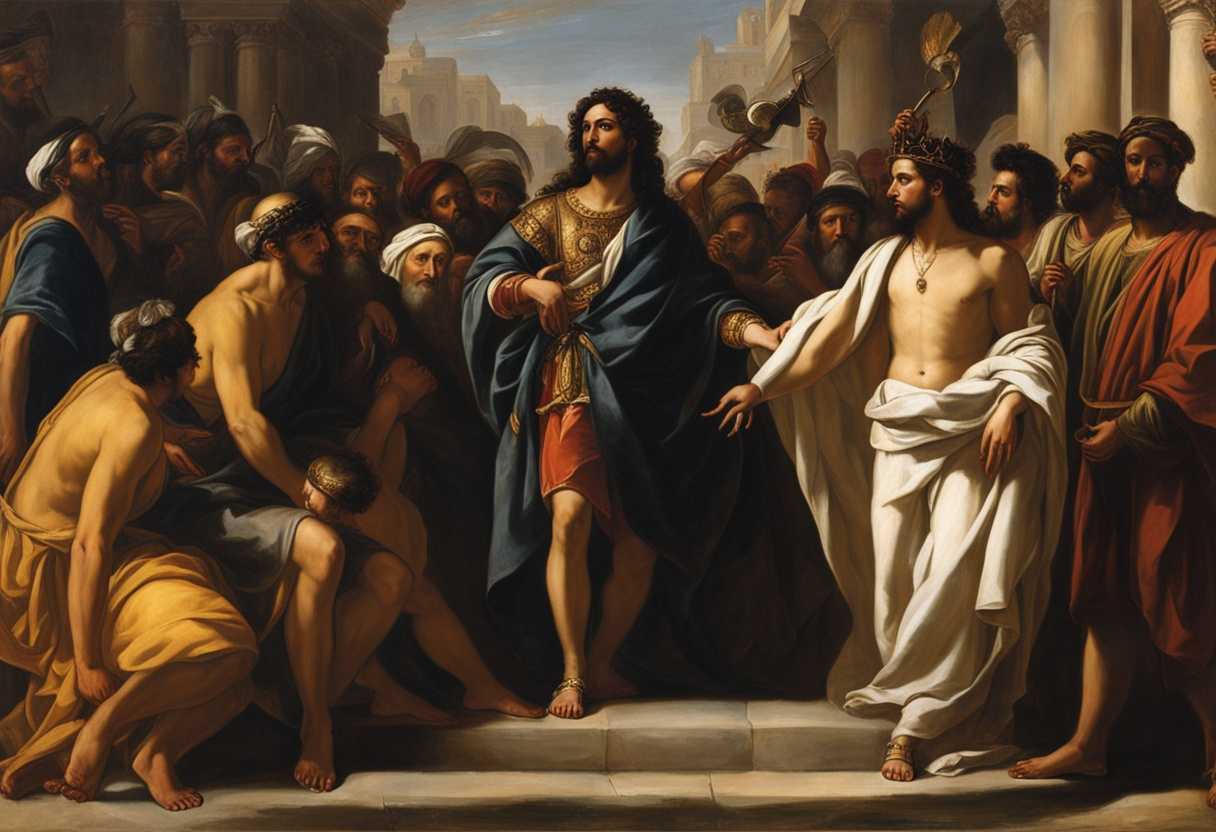
Setting the Scene for 2 Chronicles 25:25-28
The scene in 2 Chronicles 25:25-28 takes place in the royal palace of Judah during the reign of King Amaziah. The main characters in this scene are King Amaziah himself and his advisors. Amaziah had just suffered a devastating defeat in battle against the king of Israel, King Jehoash. The defeat left him wounded and humiliated, seeking counsel on how to proceed.
The room is filled with tension and despair as Amaziah grapples with the consequences of his actions. His advisors, who had warned him against going to war with Israel, now stand by his side offering their support and guidance. The atmosphere is heavy with the weight of defeat, as the king contemplates his next steps and the future of his kingdom.
The setting is opulent yet somber, with rich tapestries adorning the walls and flickering torches casting a dim light over the room. The air is thick with the scent of incense, adding to the sense of solemnity that hangs over the scene. As Amaziah reflects on his mistakes and seeks wisdom from his advisors, the room echoes with the weight of his regret and the uncertainty of what lies ahead.
What is 2 Chronicles 25:25-28 about?
This verse serves as a cautionary reminder of the consequences that can follow when individuals stray from their faith and turn away from their beliefs. King Amaziah’s downfall serves as a stark example of the potential outcomes when one loses sight of their spiritual foundation and abandons the guidance of God. It prompts us to reflect on the importance of staying true to our values and maintaining a strong connection to our faith, as our decisions and actions can have significant repercussions on our lives and the lives of those around us. This verse prompts us to ask ourselves introspective questions as we contemplate it. Are we staying committed to our beliefs even in times of challenge or temptation? Are we prioritizing our spiritual well-being and seeking guidance from our faith in our decision-making processes? Pondering these questions reminds us of the significance of staying steadfast in our faith and the dangers that can arise when we deviate from our beliefs. Let us use this verse as a guiding light to reinforce our commitment to our faith and avoid the pitfalls that may come from straying off course.
Understanding what 2 Chronicles 25:25-28 really means
The verses in 2 Chronicles 25:25-28 provide a glimpse into the tumultuous reign of Amaziah, the King of Judah. Amidst the historical setting of his rule, marked by both faithfulness and pride, we witness the downfall of a leader whose choices led to his demise. “Amaziah… lived fifteen years after the death of Jehoash” signifies a period of relative calm after conflict, hinting at a chance for reflection and repentance. However, internal strife brewed as “They conspired against him in Jerusalem,” revealing the consequences of straying from God’s path.
Fleeing to Lachish did not spare Amaziah from his fate, as “they sent men after him to Lachish and killed him there,” emphasizing the inescapability of facing the repercussions of one’s actions. Despite his shortcomings, Amaziah was “brought back on horses and buried with his ancestors in the City of Judah,” a complex legacy marked by a measure of respect. Parallel accounts like 2 Kings 14:17-20 offer further insights into Amaziah’s reign, while verses like Proverbs 16:18 and Galatians 6:7 echo the moral lessons of pride and consequences.
The narrative of Amaziah resonates with contemporary audiences, serving as a cautionary tale on leadership and accountability. Leaders today can glean wisdom from his missteps, understanding the perils of pride and the necessity of humility. The passage also underscores the universal truth that actions bear consequences, urging reflection on personal, professional, and spiritual decisions. Amaziah’s vacillation between faithfulness and downfall underscores the importance of seeking and adhering to God’s guidance consistently.
Drawing a modern parallel, envision a CEO whose integrity initially earns admiration but succumbs to pride, leading to ethical lapses and eventual downfall. This mirrors Amaziah’s arc, illustrating the timeless relevance of the biblical narrative. Reflect on personal experiences where the repercussions of poor choices taught lessons of accountability and humility, internalizing the essence of Amaziah’s story. In conclusion, the life of Amaziah imparts crucial lessons on the dangers of pride, the virtues of humility, and the inescapable nature of facing the outcomes of our deeds.
As we ponder on Amaziah’s legacy, let us heed the call to introspection, seeking God’s guidance, and embodying humility and integrity in our daily endeavors. May his story serve as a beacon, guiding us towards a path of wisdom and righteousness in our own lives.
How can we strive for righteousness in times of success?
Remaining humble and not letting pride or complacency take root in our hearts is crucial in times of success. We should always attribute our achievements to the blessings and guidance of Allah, recognizing that He is the source of all success. We can strive to maintain our righteousness even when things are going well by maintaining a mindset of gratitude and humility.
Success can sometimes lead people astray, causing them to forget their values and principles in pursuit of greater accomplishments. To prevent this, it is important to continuously seek guidance from the Quran and Sunnah, adhering to the teachings and examples set by the Prophet Muhammad (peace be upon him). This steadfast commitment to righteousness will serve as a shield against the potential pitfalls of success, keeping us grounded in our faith and morals.
Additionally, fostering a sense of community and giving back to those in need can help us remain righteous in times of success. We uphold the values of generosity and compassion that are central to Islam by sharing our blessings with others and supporting those less fortunate. This not only benefits those who are struggling, but it also keeps us mindful of the importance of using our success for good and fulfilling our responsibilities as stewards of Allah’s blessings.
Application
Let’s remember the lessons from 2 Chronicles 25:25-28 – the importance of staying true to our beliefs. It’s time to look within ourselves and make sure we’re on the right track, following God’s teachings in every aspect of our lives. Let’s not veer off course but stay committed to His plan. Are you ready to take that step and wholeheartedly embrace the path set by Him?

Reverend Michael Johnson is an experienced Church Minister with a profound expertise in spirituality and guidance. With a serene presence and a compassionate heart, he has faithfully served his congregation for over 20 years, leading them on a spiritual journey towards inner peace and enlightenment. Reverend Johnson’s extensive knowledge of religious philosophies and profound understanding of human nature have made him a trusted confidant and mentor to many, as he seamlessly weaves his profound wisdom into life teachings. Reverend Johnson’s calming demeanor and empathetic nature continue to uplift and heal souls, nurturing a sense of unity and tranquility within his community.