
John 12:1-12 is about Jesus entering Jerusalem triumphantly, fulfilling prophecies as the long-awaited Messiah, demonstrating humility, and foreshadowing his sacrificial death on the cross for the salvation of all mankind.
1 Six days before the Passover, Jesus therefore came to Bethany, where Lazarus was, whom Jesus had raised from the dead.
2 So they gave a dinner for him there. Martha served, and Lazarus was one of those reclining with him at table.
3 Mary therefore took a pound of expensive ointment made from pure nard, and anointed the feet of Jesus and wiped his feet with her hair. The house was filled with the fragrance of the perfume.
4 But Judas Iscariot, one of his disciples (he who was about to betray him), said,
5 “Why was this ointment not sold for three hundred denarii and given to the poor?”
6 He said this, not because he cared about the poor, but because he was a thief, and having charge of the moneybag he used to help himself to what was put into it.
7 Jesus said, “Leave her alone, so that she may keep it for the day of my burial.”
8 For the poor you always have with you, but you do not always have me.”
9 When the large crowd of the Jews learned that Jesus was there, they came, not only on account of him but also to see Lazarus, whom he had raised from the dead.
10 So the chief priests made plans to put Lazarus to death as well,
11 because on account of him many of the Jews were going away and believing in Jesus.
12 The next day the large crowd that had come to the feast heard that Jesus was coming to Jerusalem.
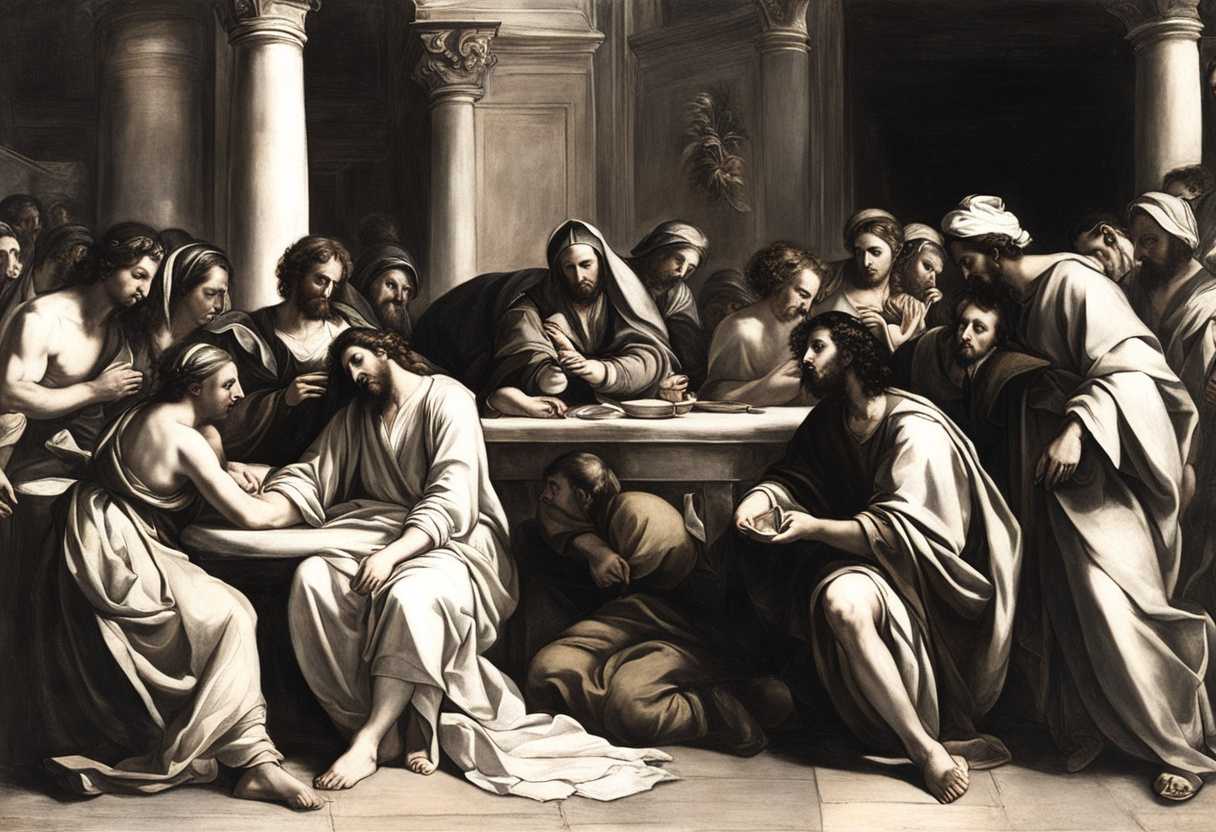
Setting the Scene for John 12:1-12
In John chapter 12, we find Jesus in the town of Bethany, just a few days before the Passover. He is invited to a dinner at the home of Lazarus, whom Jesus had raised from the dead. The scene is set in a humble yet welcoming house, with a warm and inviting atmosphere. The air is filled with the aroma of food being prepared, and the sound of lively conversation can be heard.
Sitting at the table with Jesus is Lazarus, whom many have come to see after hearing about his miraculous resurrection. Also present is Martha, Lazarus’ sister, who is busy serving the guests with her characteristic hospitality. Mary, another sister of Lazarus, enters the room with an alabaster jar of expensive perfume. She breaks the jar and pours the perfume on Jesus’ feet, anointing him in a gesture of deep love and devotion.
The disciples are also gathered around the table, along with other followers of Jesus who have come to share in this special moment. The room is filled with a sense of anticipation and reverence as Jesus speaks about his impending death and the significance of the events that are about to unfold. The scene is one of intimacy, love, and sacrifice, as Jesus prepares himself for the ultimate act of love for humanity.
What is John 12:1-12 about?
Mary anoints Jesus with a costly oil as a gesture of deep love and respect in this powerful and symbolic moment. This act of anointing foreshadows Jesus’ impending death and burial, symbolizing his preparation for the ultimate sacrifice that will soon unfold. Mary is not only honoring Jesus but also fulfilling a prophetic role in preparing him for his mission by anointing him with this precious oil before his entry into Jerusalem.
Imagine the immense emotions running through Mary’s heart as she pours this oil on Jesus, knowing the significance of this moment and the path that awaits him. This profound act serves as a poignant reminder of the sacrificial nature of Jesus’ mission and the unwavering love and devotion that surrounded him. We reflect on this verse, contemplating the depth of Mary’s love and the prophetic significance of Jesus’ anointing, allowing us to connect with the spiritual and emotional intensity of this pivotal moment in Jesus’ journey.
Understanding what John 12:1-12 really means
The passage in John 12:1-12 unfolds six days before the Passover, a pivotal moment in the Jewish calendar that foreshadows the crucifixion of Jesus. Bethany serves as the backdrop, the home of Lazarus, a living testament to Jesus’ power over life and death, setting the stage for profound events to unfold.
At the heart of the narrative are key characters whose actions illuminate deeper truths. Jesus, the central figure, is the recipient of Mary’s profound act of devotion. Mary’s anointing of Jesus’ feet with costly perfume symbolizes her recognition of His impending sacrifice and her deep reverence for Him. In contrast, Judas Iscariot’s criticism of Mary’s gesture exposes his true motives, hinting at his later betrayal.
The fragrance of the perfume filling the house serves as a powerful symbol of true worship and devotion permeating and influencing the environment. Judas’ question about the expensive ointment not being sold for the poor sheds light on the importance of genuine motives in our actions, urging us to examine our hearts and intentions.
Parallel passages in Matthew and Mark offer additional perspectives on the anointing at Bethany, while Luke’s account of Mary and Martha underscores the value of prioritizing Jesus’ presence above all else. The raising of Lazarus in John 11 provides context for understanding the significance of Jesus’ visit to Bethany, deepening the layers of meaning in the narrative.
The timeless relevance of this passage resonates with modern-day believers, challenging us to emulate Mary’s wholehearted devotion and worship. Judas’ cautionary tale prompts introspection on our motives and the authenticity of our love for Christ. Just as the fragrance of the perfume filled the house, our acts of worship can have a profound impact on those around us, spreading the love and presence of Christ.
Consider a scenario where a person sacrificially uses their resources to help a friend in need, despite facing criticism for not being more prudent. This anecdote mirrors Mary’s sacrificial act and prompts reflection on how we allocate our time and resources in service of others and our faith.
In conclusion, the passage in John 12:1-12 beckons us to offer our best in worship and devotion to Jesus, mirroring Mary’s profound act. It urges us to scrutinize our motives and the ripple effects of our actions, striving to live lives that exude the fragrance of Christ’s love and presence to those around us.
How can we show sacrificial love to Jesus?
We can show sacrificial love to Jesus by prioritizing Him above all else in our lives. We can offer our most valuable possessions, time, and talents as a way to honor and glorify Him, just as Mary anointed Jesus with expensive perfume. This act reflects a heart that is willing to sacrifice worldly comforts and desires in order to demonstrate love and devotion to Jesus.
Additionally, sacrificial love to Jesus can be shown through acts of service and selflessness towards others. Following the example of Jesus washing His disciples’ feet, we can humble ourselves and serve those around us with love and compassion. This sacrificial service not only reflects our love for Jesus but also mirrors His own sacrificial love for us, ultimately bringing glory to His name.
Lastly, sacrificial love to Jesus involves obedience to His teachings and commands, even when it is difficult or unpopular. We exhibit our love and devotion to Jesus in a tangible way by choosing to follow Him wholeheartedly and aligning our lives with His will. This sacrificial obedience is a testament to our faith and trust in Jesus, demonstrating that He is truly the Lord of our lives.
Application
Imagine Mary’s act of devotion as your dedication to your family or your job. Can you give your best to Christ, just as you do in your career or for your loved ones? Think of Mary’s pouring of oil as you prioritizing Jesus, even if it seems extravagant. Will you place Him above everything else in your life? Are you ready to answer His call with a heart full of commitment and willingness to give your all?

Reverend Michael Johnson is an experienced Church Minister with a profound expertise in spirituality and guidance. With a serene presence and a compassionate heart, he has faithfully served his congregation for over 20 years, leading them on a spiritual journey towards inner peace and enlightenment. Reverend Johnson’s extensive knowledge of religious philosophies and profound understanding of human nature have made him a trusted confidant and mentor to many, as he seamlessly weaves his profound wisdom into life teachings. Reverend Johnson’s calming demeanor and empathetic nature continue to uplift and heal souls, nurturing a sense of unity and tranquility within his community.