
2 Chronicles 29:20-24 is about King Hezekiah reinstating the Levites and priests to cleanse and rededicate the temple, symbolizing the restoration of true worship and holiness in the presence of God.
20 Then Hezekiah the king rose early and gathered the officials of the city and went up to the house of the Lord.
21 And they brought seven bulls, seven rams, seven lambs, and seven male goats for a sin offering for the kingdom and for the sanctuary and for Judah. And he commanded the priests, the sons of Aaron, to offer them on the altar of the Lord.
22 So they slaughtered the bulls, and the priests received the blood and threw it against the altar.
23 Then the goats for the sin offering were brought to the king and the assembly, and they laid their hands on them,
24 And the priests slaughtered them and made a sin offering with their blood on the altar, to make atonement for all Israel. For the king commanded that the burnt offering and the sin offering should be made for all Israel.
Setting the Scene for 2 Chronicles 29:20-24
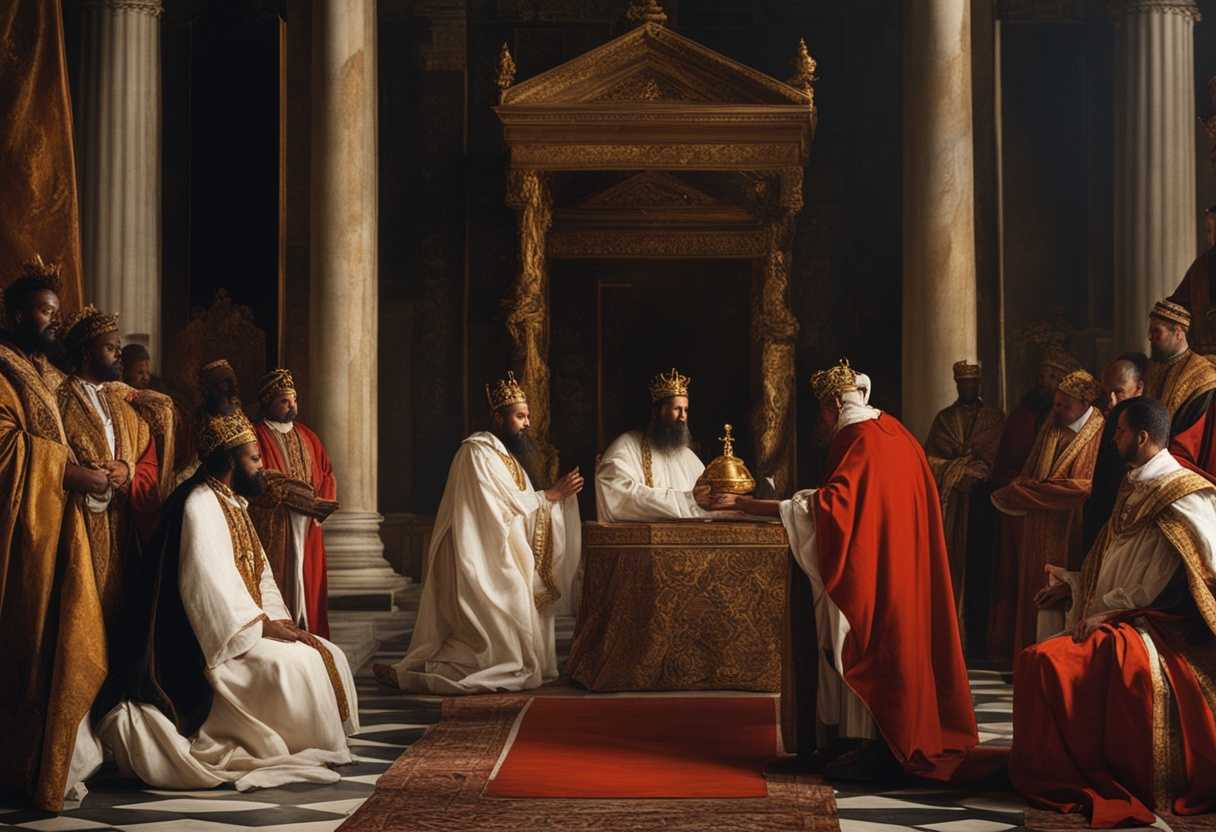
In 2 Chronicles chapter 29, King Hezekiah has just ascended to the throne of Judah. He is determined to bring about religious reform in the kingdom, which had fallen into idolatry and neglect of the temple. Hezekiah gathers the priests and Levites in the courtyard of the temple in Jerusalem to initiate the cleansing and restoration of the house of the Lord.
The scene is set in the early morning, with the first rays of sunlight breaking through the clouds, casting a golden hue over the temple courtyard. The priests and Levites, dressed in their sacred garments, have assembled with a sense of purpose and anticipation. The air is filled with the sounds of prayers and hymns as they prepare to carry out the commands of the king.
Hezekiah stands at the forefront, his face set with determination and zeal for the Lord. The priests begin the process of purifying the temple, removing the defiled items and cleansing the sacred vessels. The Levites bring offerings of atonement and sacrifices to restore the worship of the Lord. The atmosphere is charged with a sense of reverence and renewal as the people witness the restoration of true worship in the land.
What is 2 Chronicles 29:20-24 about?
Isn’t it inspiring to see the priests diligently carrying out their duties in the temple? They not only cleanse the sacred space but also offer sacrifices and engage in worship to honor God. They are demonstrating their commitment to upholding the religious practices and traditions of their community by following King Hezekiah’s command. This verse highlights the importance of faithfulness and obedience in serving God.
Just imagine the priests going about their tasks with dedication and reverence, ensuring that the temple remains a holy place where God’s presence can be felt. Their actions remind us of the significance of faith-based practices in strengthening our connection to the divine. Let us reflect on this verse and consider how we can incorporate elements of devotion and worship into our own lives, following in the footsteps of these faithful priests.
Understanding what 2 Chronicles 29:20-24 really means
King Hezekiah’s reforms in Judah, as depicted in 2 Chronicles 29:20-24, offer a compelling narrative of spiritual revival and communal worship. In a time of spiritual decline, Hezekiah’s urgency to restore proper worship is evident in the phrase “early the next morning,” reflecting his dedication to honoring God’s commands. By assembling the city officials, Hezekiah emphasizes the communal aspect of repentance, highlighting that spiritual renewal is a collective responsibility that involves leaders and the community at large. The specific numbers and types of animals used in the sacrifices—seven bulls, rams, lambs, and male goats—symbolize completeness and perfection in atonement, underscoring the thorough cleansing sought for the people’s sins.
The comprehensive nature of the atonement, “for the kingdom, for the sanctuary, and for Judah,” signifies the holistic approach Hezekiah took towards restoring the spiritual well-being of the nation. The act of laying hands on the sacrificial animals symbolizes the transfer of sin, foreshadowing Christ’s ultimate sacrifice for humanity. This passage resonates with Leviticus 4:20, providing a background on the sin offering, and connects to Hebrews 9:22, emphasizing the necessity of bloodshed for forgiveness, ultimately pointing to Jesus’ sacrificial atonement. Romans 12:1 further reinforces the call to ongoing spiritual dedication and worship, aligning with Hezekiah’s commitment to restoring proper worship in Judah.
The relevance of Hezekiah’s actions extends to contemporary society, emphasizing the need for spiritual renewal and communal responsibility in faith communities. Just as Hezekiah sought to renew Judah’s spiritual life, individuals and communities today require periodic recommitment to God and collective efforts towards spiritual growth. While animal sacrifices are no longer practiced, the principle of atonement through Jesus’ sacrifice remains foundational in Christian faith, reminding believers of the ultimate sacrifice made for their redemption.
An illustrative anecdote of a neglected community center being restored parallels Hezekiah’s efforts, showcasing how physical restoration can lead to renewed community spirit and unity. Similarly, Hezekiah’s actions were not merely about restoring the temple but about revitalizing the heart and soul of the nation, emphasizing the transformative power of spiritual renewal and communal worship. In conclusion, 2 Chronicles 29:20-24 serves as a poignant reminder of the significance of spiritual revival, communal engagement in worship, and the enduring impact of sacrificial atonement, urging us to prioritize our relationship with God, collaborate in faith communities, and reflect on the profound sacrifice of Jesus Christ for our redemption.
How can we restore our spiritual purity and dedication?
To restore our spiritual purity and dedication, we can look to the example set in the passage where King Hezekiah cleanses the temple. We must remove anything that hinders our connection with God, just as he removed the impurities and obstacles from the temple. This could involve examining our hearts, confessing our sins, and seeking forgiveness. We can create a sacred space within us for the presence of God to dwell by purifying ourselves both inwardly and outwardly.
Furthermore, dedicating ourselves wholeheartedly to serving and worshiping God is crucial in restoring our spiritual purity. We must commit ourselves to living a life that honors and glorifies God, just as the priests and Levites rededicated themselves to the service of the Lord in the passage. This involves renewing our commitment to prayer, studying the Word, participating in acts of service, and living in obedience to God’s commandments. Through a renewed focus on our faith and a deepening of our relationship with God, we can rekindle our spiritual purity and dedication.
Application
Reflect on your own temple, your own sacred space within, and cleanse it of any barriers blocking your connection to the divine. Just like a diligent worker maintaining their equipment for optimal performance, tend to your spiritual well-being with care and commitment. Brush away the dust of doubt and fears, and let the light of faith shine brightly within you. Take that step towards repentance and renewal today. Will you heed the call and embark on this transformative journey?

Reverend Michael Johnson is an experienced Church Minister with a profound expertise in spirituality and guidance. With a serene presence and a compassionate heart, he has faithfully served his congregation for over 20 years, leading them on a spiritual journey towards inner peace and enlightenment. Reverend Johnson’s extensive knowledge of religious philosophies and profound understanding of human nature have made him a trusted confidant and mentor to many, as he seamlessly weaves his profound wisdom into life teachings. Reverend Johnson’s calming demeanor and empathetic nature continue to uplift and heal souls, nurturing a sense of unity and tranquility within his community.