
2 Chronicles 3:8-9 is about the elaborate and intricate craftsmanship required to build the temple of the Lord, indicating the importance of dedicating our best efforts and skills to honor and worship God.
8 The Most Holy Place was twenty cubits long, corresponding to the width of the house, and twenty cubits wide.
9 The weight of the nails was fifty shekels of gold. He also overlaid the upper chambers with gold.
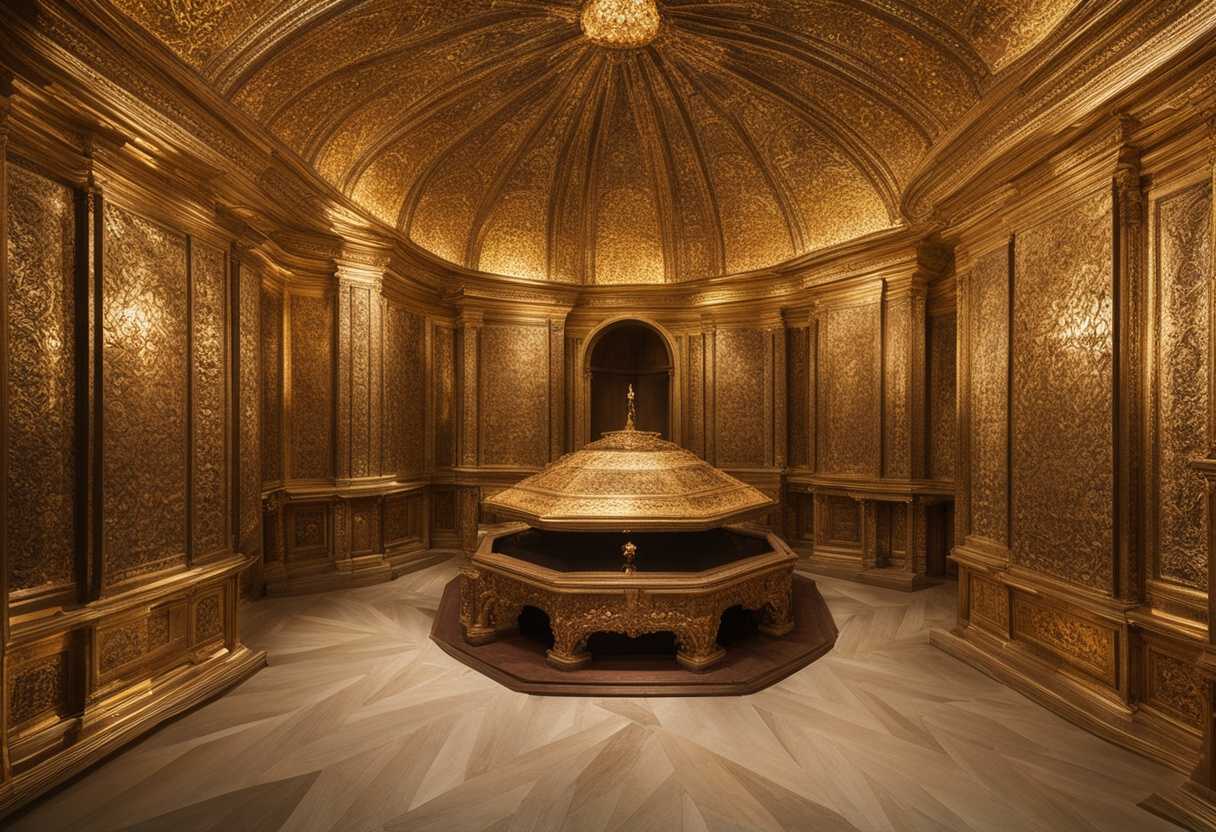
Setting the Scene for 2 Chronicles 3:8-9
In 2 Chronicles chapter 3, we find ourselves in the grand setting of Jerusalem, specifically on Mount Moriah where King Solomon is overseeing the construction of the magnificent Temple of the Lord. The scene is bustling with activity as skilled craftsmen and laborers work tirelessly to bring to life the vision of this sacred place of worship. The air is filled with the sounds of hammers striking metal, stones being chiseled, and the murmur of workers coordinating their efforts.
King Solomon, known for his wisdom and devotion to God, stands at the center of the construction site, clad in royal robes and a crown, closely inspecting the progress of the temple. He is surrounded by his trusted advisors, priests, and officials, all of whom are deeply involved in the intricate details of the temple’s design and construction. The atmosphere is one of reverence and dedication, as everyone present understands the significance of this holy endeavor.
As the sun begins to set over the horizon, casting a warm golden glow over the temple mount, King Solomon raises his hands in prayer, thanking the Lord for the opportunity to build this sacred place. The scene is a testament to the faith and commitment of the people of Israel, as they come together to honor and glorify their God in this magnificent structure that will stand as a symbol of their devotion for generations to come.
What is 2 Chronicles 3:8-9 about?
This verse paints a vivid picture of the temple being built with the most exquisite materials – precious stones and gold. The use of these luxurious materials symbolizes the grandeur and importance of the temple, emphasizing its significance as a sacred and holy place. Imagine the shimmering beauty and opulence of a structure adorned with precious stones and gold, creating a sense of awe and reverence for the divine.
When we reflect on this verse, we are reminded of the care and dedication that went into constructing a place of worship. It serves as a powerful reminder of the reverence and respect that we should have for sacred spaces. We are called to approach places of worship with reverence, humility, and a sense of awe, just as we constructed the temple with the finest materials. Let this verse inspire us to honor and cherish the sacred spaces in our lives, whether physical or spiritual, with the same level of care and respect.
Understanding what 2 Chronicles 3:8-9 really means
In 2 Chronicles 3:8-9, we find a glimpse into the construction of the Temple by Solomon, a monumental undertaking that held immense significance for the people of Israel. This temple was not merely a physical structure but a symbol of their devotion to God and a place where they could worship Him in splendor and reverence. The verses describe the intricate details of the Temple’s adornment, highlighting the meticulous craftsmanship and the lavish use of gold, a precious metal symbolizing purity and divinity.
The mention of “The Most Holy Place” in these verses refers to the inner sanctuary of the Temple, also known as the Holy of Holies. This sacred space housed the Ark of the Covenant and was where God’s presence dwelt among His people. The meticulous attention to detail, such as the nails weighing fifty shekels of gold and the upper parts overlaid with gold, underscores the reverence and care with which the Temple was constructed.
Drawing parallels to the construction of the Temple, we can reflect on the importance of creating sacred spaces in our lives today. Just as the Temple was a place of worship and connection with God, we can cultivate environments, both physical and spiritual, where we can deepen our relationship with the divine. The dedication and reverence shown in the building of the Temple can inspire us to approach our faith with similar devotion, seeking to honor God in all aspects of our lives.
In Exodus 25:10-22 and 1 Kings 6:19-22, we find additional details about the Ark of the Covenant and the construction of the Most Holy Place, shedding further light on the significance of these sacred elements. Hebrews 9:3-5 offers a New Testament perspective on the Most Holy Place, emphasizing its role in the new covenant and the access it provides to God’s presence through Christ.
Anecdotes from modern-day churches or places of worship built with great care and dedication can serve as reminders of the communal effort and reverence that went into constructing Solomon’s Temple. These stories illustrate how coming together as a community to create a sacred space can deepen faith, foster unity, and draw individuals closer to God.
In conclusion, the construction of Solomon’s Temple serves as a powerful reminder of the importance of approaching our faith with dedication and reverence. By creating sacred spaces in our lives and communities, we can cultivate environments where we can connect deeply with God and experience His presence. Let us reflect on how we can bring a sense of sacredness and devotion into our daily lives, drawing inspiration from the reverence displayed in the construction of the Temple.
How can we build a place of worship today?
To build a place of worship today, we should focus on creating a space that reflects the reverence and glory of God. We can strive to make our place of worship beautiful and honorable, just as the temple described in the verses was adorned with precious stones and fine materials. This can be achieved by incorporating elements that inspire awe and respect, such as intricate architecture, artwork, and symbolism that uplift the spirit.
Additionally, we should ensure that the place of worship is built with a spirit of dedication and purity. This means that the construction process should be undertaken with care and commitment, with the intention of honoring and glorifying God. We should also strive to maintain the space with cleanliness and upkeep, fostering an environment that is conducive to worship and spiritual growth for all who enter.
Finally, it is important to remember that the true essence of a place of worship lies in the hearts of those who gather there. While the physical structure is significant, our focus should ultimately be on fostering a community of believers who come together in unity, humility, and devotion to worship and serve God. We can build a place of worship today that honors God and provides a sanctuary for spiritual growth and connection with the divine by embodying these principles.
Application
Just like Solomon put his heart and soul into building the temple for God, are you ready to invest the same passion and devotion in creating a sacred space within you for Him? Let’s commit to honor God with all our being, just as Solomon did with the temple. Are you prepared to spare no effort, expense, or dedication in constructing a holy sanctuary in your heart for the Lord? Remember, just as the temple was a labor of love, our dedication to God should also be a testament to our faith. Will you embark on this spiritual journey with the zeal and commitment it deserves?

Reverend Michael Johnson is an experienced Church Minister with a profound expertise in spirituality and guidance. With a serene presence and a compassionate heart, he has faithfully served his congregation for over 20 years, leading them on a spiritual journey towards inner peace and enlightenment. Reverend Johnson’s extensive knowledge of religious philosophies and profound understanding of human nature have made him a trusted confidant and mentor to many, as he seamlessly weaves his profound wisdom into life teachings. Reverend Johnson’s calming demeanor and empathetic nature continue to uplift and heal souls, nurturing a sense of unity and tranquility within his community.