
Galatians 6:5-6 is about taking responsibility for one’s own actions and burdens while also supporting and providing for those who teach and guide in spiritual matters.
5 For each will have to bear his own load.
6 One who is taught the word must share all good things with the one who teaches.
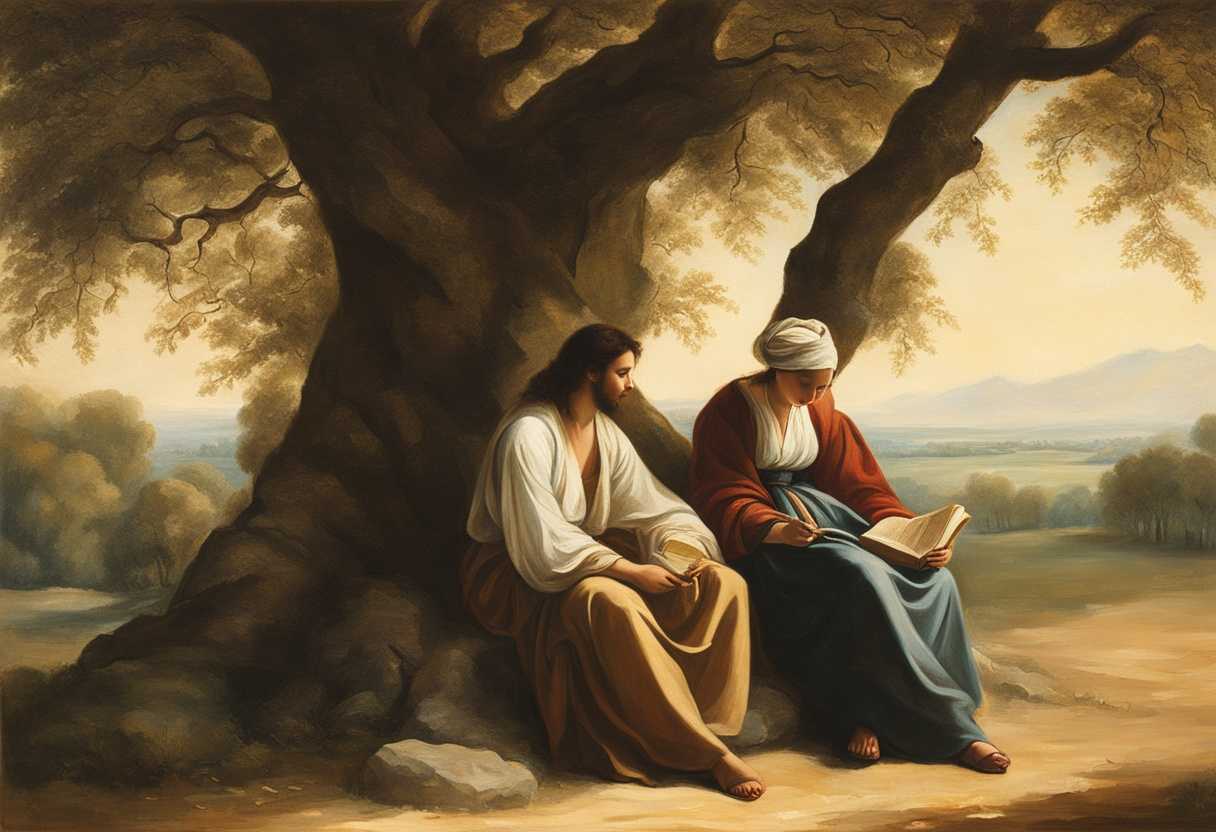
Setting the Scene for Galatians 6:5-6
In Galatians chapter 6, the apostle Paul is writing to the churches in Galatia, addressing various issues and offering guidance on how to live as followers of Christ. In the scene referred to in Galatians 6:5-6, imagine a small gathering of believers meeting in a humble home in one of the towns in Galatia. The room is lit by flickering oil lamps, casting a warm glow on the faces of those present.
Among those gathered are Lydia, a wealthy businesswoman who had been converted to Christianity during Paul’s visit to Philippi, and Aquila and Priscilla, a couple who had worked alongside Paul in Corinth. They have come together to study Paul’s letter and discuss its teachings. As they sit on cushions and low stools, they listen attentively as one of the elders reads aloud from the parchment scroll containing Paul’s words.
The atmosphere is one of earnest reflection and mutual support, as they consider Paul’s exhortation to bear one another’s burdens and share in each other’s needs. The group discusses how they can practically apply these principles in their own lives, supporting one another in their faith journey and embodying the love and grace of Christ in their community.
What is Galatians 6:5-6 about?
This verse is a powerful reminder that everyone has their own burdens to bear, their own struggles and challenges to face. It emphasizes personal responsibility and individual accountability for our actions and circumstances. Each of us is responsible for carrying our own load, for navigating our own path in life. At the same time, the verse encourages us to lean on and learn from those who teach us. It speaks to the importance of humility, of recognizing that we don’t have to go through life alone, that we can benefit from the wisdom and guidance of others.
Think about the balance that this verse calls for – the balance between self-reliance and interdependence. It challenges us to take ownership of our lives and decisions while also recognizing the value of community and learning from others. How can we carry our own load while also being open to receiving support and guidance from those who have knowledge and experience to share? Reflect on the idea that true strength comes not just from carrying our burdens alone, but also from being willing to connect with and support one another. How can we find that balance in our own lives, between independence and collaboration, between self-reliance and seeking help when needed? Consider how we can be inspired by this verse to take responsibility for our own journey and cultivate a spirit of openness and cooperation with those who teach and guide us.
Understanding what Galatians 6:5-6 really means
In Galatians 6:5-6, Paul addresses the importance of personal responsibility and supporting spiritual leaders within the Christian community. The verse “For each one should carry their own load” emphasizes the concept of individual accountability in the faith. Just as Romans 14:12 reminds us that we will each give an account of ourselves to God, this phrase encourages self-examination and personal growth. It prompts us to reflect on our actions and take ownership of our responsibilities in our spiritual journey.
On the other hand, “Nevertheless, the one who receives instruction in the word should share all good things with their instructor” highlights the significance of supporting those who teach and guide in matters of faith. This echoes 1 Timothy 5:17, which speaks of honoring those who lead well in the church. It underscores the mutual relationship between teachers and learners, emphasizing the value of reciprocity and appreciation within the Christian community.
In today’s world, the principles outlined in these verses remain relevant. Personal responsibility is essential for personal development and accountability. Taking ownership of our actions can lead to positive growth and transformation. Consider a story of someone who embraced responsibility and witnessed positive change in their life, illustrating the power of accountability in personal development.
Similarly, supporting spiritual leaders is crucial for the health of the Christian community. By valuing and uplifting those who dedicate their lives to guiding others in faith, we contribute to a stronger, more united congregation. Reflect on a community that thrived because of their unwavering support for their spiritual leaders, showcasing the impact of unity and encouragement within a faith community.
The phrase “carry their own load” symbolizes the personal duties and responsibilities each individual carries. It promotes self-reliance and diligence in one’s spiritual journey, urging believers to take ownership of their faith walk. Conversely, “share all good things with their instructor” encourages sharing blessings and resources with those who provide spiritual guidance. This fosters a culture of gratitude and reciprocity within the Christian community, nurturing a spirit of generosity and appreciation.
In conclusion, Galatians 6:5-6 underscores the importance of personal responsibility and supporting spiritual leaders in the Christian faith. As we reflect on these principles, let us consider how we can apply them in our daily lives. Embrace accountability and actively support those who guide us in our spiritual growth, fostering a community built on mutual respect and encouragement in our walk with God.
How can we carry our own load and share with those who teach?
The passage highlights the importance of personal responsibility. We are encouraged to carry our own load, indicating that each individual has a responsibility to take care of themselves and their obligations. This concept emphasizes self-reliance and accountability in our lives. Additionally, the verse also mentions the importance of sharing with those who teach. This underscores the value of supporting and honoring those who impart knowledge and wisdom to us. We not only show appreciation for their guidance but also help those who teach by sharing with them. These verses emphasize a balanced approach to our relationships with others. We are called to be self-sufficient and responsible for our own actions, while also recognizing the contributions of those who teach and guide us. We fulfill our own duties and cultivate a spirit of generosity and gratitude towards others by carrying our own load and sharing with those who teach.这些经文强调了一种平衡的方法来处理我们与他人的关系。我们被要求自给自足,对自己的行为负责,同时也认识到那些教导和指引我们的人的贡献。通过自己承担责任并与教导我们知识的人分享,我们不仅能够履行自己的职责,而且还能培养一种慷慨和感恩的精神。
Application
Imagine your life as a busy kitchen—everyone has their tasks, but a meal gets prepared faster when everyone pitches in. When someone’s overwhelmed, stepping in can make all the difference. Are you ready to be the helping hand that lightens the load? Let’s commit to being the support system someone desperately needs. Isn’t it time to make that difference today?

Reverend Michael Johnson is an experienced Church Minister with a profound expertise in spirituality and guidance. With a serene presence and a compassionate heart, he has faithfully served his congregation for over 20 years, leading them on a spiritual journey towards inner peace and enlightenment. Reverend Johnson’s extensive knowledge of religious philosophies and profound understanding of human nature have made him a trusted confidant and mentor to many, as he seamlessly weaves his profound wisdom into life teachings. Reverend Johnson’s calming demeanor and empathetic nature continue to uplift and heal souls, nurturing a sense of unity and tranquility within his community.