
Exodus 2:12 is about Moses killing an Egyptian who was oppressing a Hebrew, symbolizing his rejection of his privileged Egyptian upbringing and aligning himself with the oppressed Hebrews.
12 He looked this way and that, and seeing no one, he struck down the Egyptian and hid him in the sand.
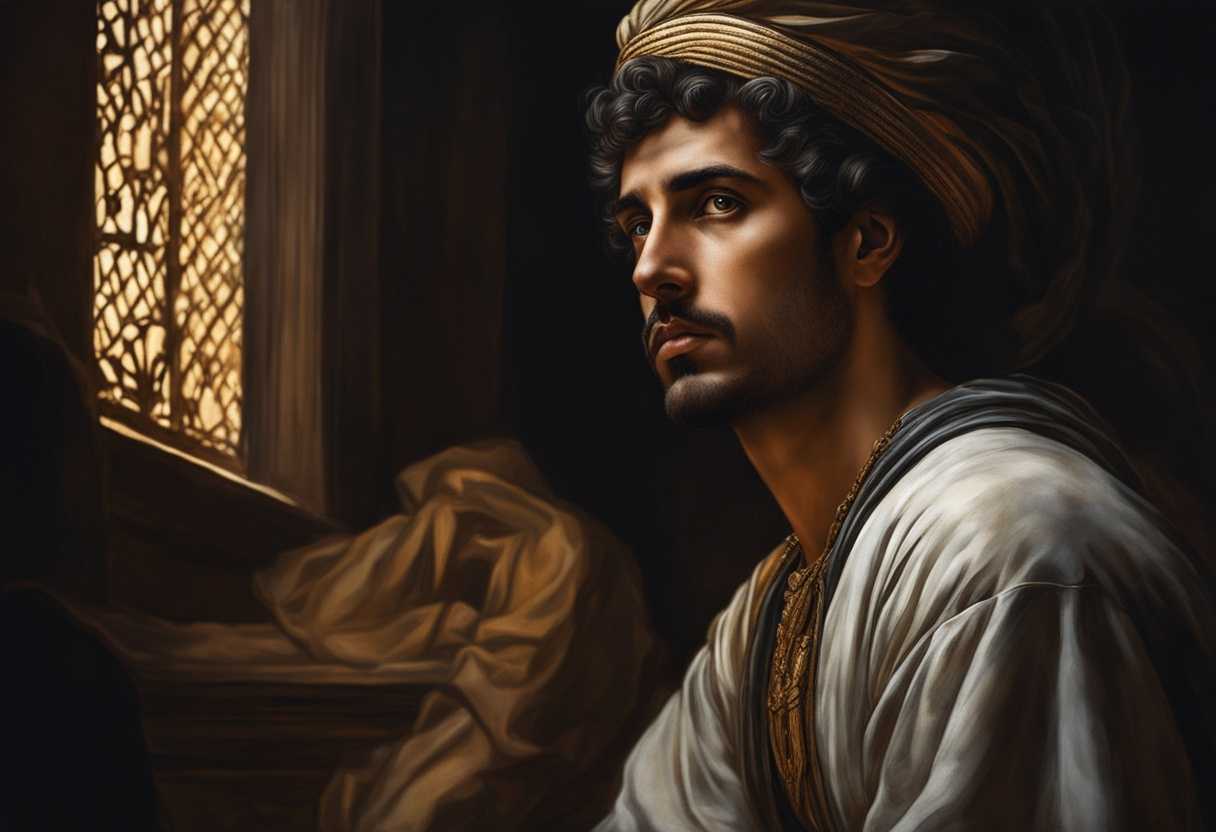
Setting the Scene for Exodus 2:12
In Exodus chapter 2, we find Moses, who had been raised as an Egyptian prince but was actually a Hebrew by birth, witnessing an Egyptian taskmaster beating a Hebrew slave. Filled with righteous anger, Moses looked around and, seeing no one, struck down the Egyptian and buried him in the sand. The next day, he saw two Hebrew men fighting and tried to intervene, but one of them questioned his authority, saying, “Who made you a prince and a judge over us? Do you mean to kill me as you killed the Egyptian?” This confrontation made Moses realize that his secret act of justice was known, and he fled to the land of Midian to escape Pharaoh’s wrath.
The scene is set in the harsh and oppressive backdrop of ancient Egypt, with the scorching sun beating down on the vast desert landscape. The Hebrew slaves toil under the watchful eyes of their Egyptian taskmasters, their faces etched with exhaustion and despair. Moses, a conflicted figure torn between his privileged upbringing and his true identity, stands at a crossroads as he witnesses the injustice inflicted upon his people. The tension is palpable as he grapples with his sense of duty and the consequences of his actions, ultimately leading him on a path of self-discovery and redemption.
What is Exodus 2:12 about?
Moses chooses to defend one of his own, an Israelite, by killing the Egyptian who was harming him in this verse. This act reveals Moses’ deep empathy and connection to his people, the Israelites. It showcases his integrity and courage to stand up for justice, even at the risk of his own safety and comfort.
Have you ever felt a strong sense of loyalty and protection towards your community or loved ones? How did you act upon it? Reflecting on Moses’ actions can inspire us to examine our own values and principles and consider how we can courageously defend and support those in need around us. It also serves as a reminder of the importance of standing up against injustice and oppression, even when it may require difficult choices and sacrifices.
Understanding what Exodus 2:12 really means
In the narrative of Moses, Exodus 2:12 captures a pivotal moment where Moses, still in Egypt, witnesses the oppression of his Hebrew brethren by the Egyptians. The phrase “Looked this way and that” reveals Moses’ cautious awareness of his surroundings, hinting at the weight of his impending actions. When he “saw no one,” it portrays a vulnerable moment of decision-making, where Moses believed he could act without immediate consequences, a relatable human struggle of weighing choices.
The act of Moses “striking down the Egyptian” signifies his initial attempt at justice, albeit through violence, showcasing his empathy and emerging leadership qualities. His subsequent action of “hiding him in the sand” reflects Moses’ fear and the sudden realization of the gravity of his deeds, a mix of emotions that many can empathize with in moments of crisis.
In Acts 7:24-25, Stephen recounts Moses’ actions, emphasizing his belief that his people would recognize God’s hand in his actions. Hebrews 11:24-25 further highlights Moses’ faith and his choice to stand with the people of God, showcasing his commitment to a higher calling over fleeting pleasures.
The relevance of this passage to modern individuals lies in the moral dilemmas we face daily. Like Moses, we encounter situations where we must discern right from wrong, often with significant repercussions. Moses’ flawed yet principled actions also speak to the themes of leadership and responsibility, inspiring us to act justly even in challenging circumstances.
Consider a scenario where a professional witnesses unethical behavior at work. Like Moses, they must navigate the internal conflict of intervening while weighing the potential fallout. This anecdote mirrors Moses’ struggle, emphasizing the timeless nature of ethical dilemmas and the importance of making principled choices.
In conclusion, Exodus 2:12 serves as a poignant reminder of the complexities of human nature and the significance of ethical decision-making. It prompts us to act with integrity, mindful of the repercussions of our actions, and encourages us to consider the broader impact of our choices on those around us.
How can we defend those who are oppressed?
We can defend those who are oppressed by taking a stand against injustice and standing up for the rights of the vulnerable. This may involve speaking out against those who are mistreating others and advocating for fair treatment and equality. We can also intervene and support those who are being oppressed or targeted unfairly, just as Moses defended the Hebrew slave who was being beaten by the Egyptian taskmaster.
Additionally, we can defend the oppressed by providing them with assistance and support. This could include offering resources, shelter, guidance, or any form of help that can alleviate their suffering and empower them to overcome their challenges. We demonstrate our commitment to defending the oppressed and fighting against injustice by actively reaching out and extending a helping hand to those in need. We can defend the oppressed by seeking to change systems and structures that perpetuate inequality and discrimination. We contribute to dismantling the barriers that keep individuals marginalized and oppressed by working towards creating a more just and equitable society. Through advocacy, education, and collective action, we can address root causes of oppression and strive to build a more inclusive and fair community for all.
Application
Harness the courage within you, just like Moses did in times of struggle. Will you pave the way for peace and righteousness in your own modern journey? Let the story of Exodus 2:12 guide you to stand up for justice and show compassion to those around you. Take a moment to reflect: are your actions aligned with God’s will in moments of conflict? Channel Moses’s integrity and resilience as you navigate through the challenges of your daily life. How will you rise to the occasion and make a difference in the world today?

Reverend Michael Johnson is an experienced Church Minister with a profound expertise in spirituality and guidance. With a serene presence and a compassionate heart, he has faithfully served his congregation for over 20 years, leading them on a spiritual journey towards inner peace and enlightenment. Reverend Johnson’s extensive knowledge of religious philosophies and profound understanding of human nature have made him a trusted confidant and mentor to many, as he seamlessly weaves his profound wisdom into life teachings. Reverend Johnson’s calming demeanor and empathetic nature continue to uplift and heal souls, nurturing a sense of unity and tranquility within his community.