
2 Samuel 3:22-25 is about Joab tricking Abner to bring him back to Hebron under the pretense of a peace treaty, but ultimately killing him out of revenge for the death of his brother Asahel.
22 Just then the servants of David arrived with Joab from a raid, bringing much spoil with them. But Abner was not with David at Hebron, for he had sent him away, and he had gone in peace.
23 When Joab and all the army that was with him came, it was told Joab, “Abner the son of Ner came to the king, and he has let him go, and he has gone in peace.”
24 Then Joab went to the king and said, “What have you done? Behold, Abner came to you. Why is it that you have sent him away, so that he is gone?”
25 You know that Abner the son of Ner came to deceive you and to know your going out and your coming in, and to know all that you are doing.”
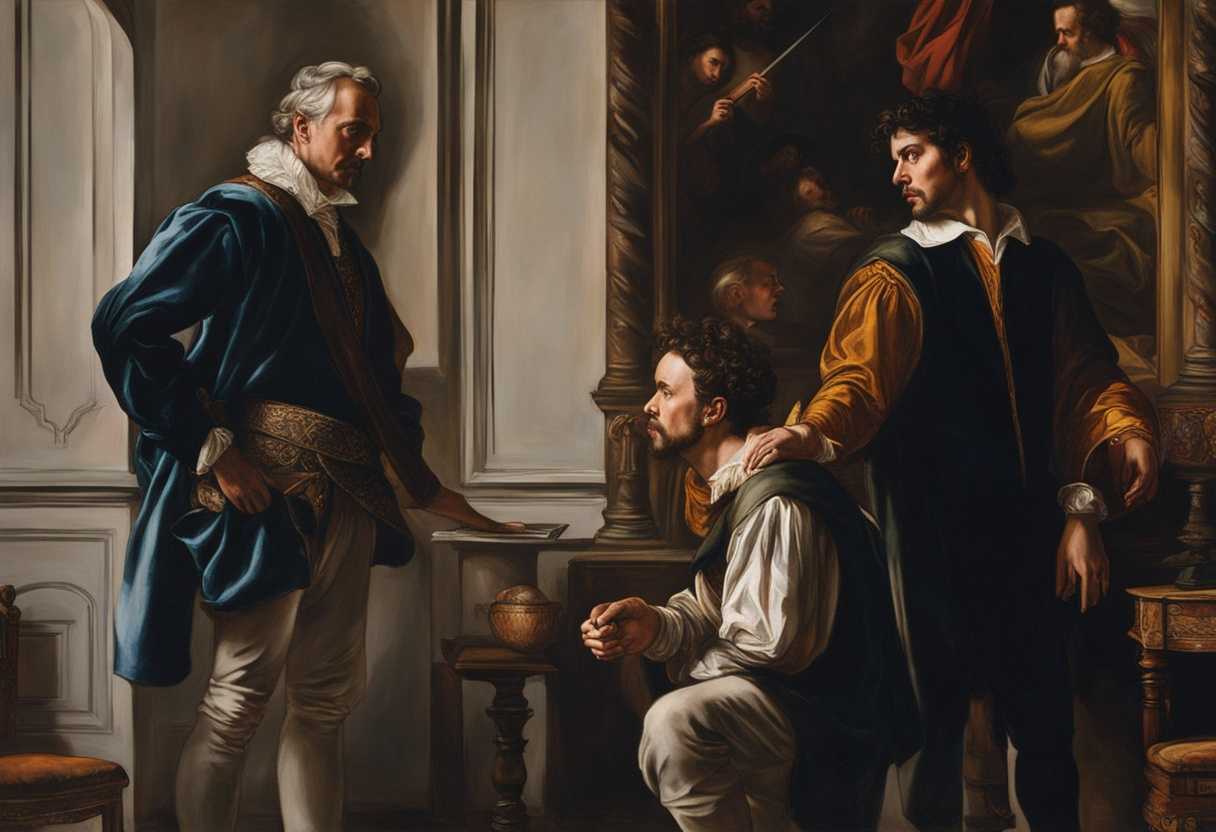
Setting the Scene for 2 Samuel 3:22-25
The scene in 2 Samuel 3:22-25 takes place in Hebron, a significant city in ancient Israel. In this passage, we find Joab, the commander of David’s army, and his brother Abishai. They are meeting with Abner, the commander of Saul’s army, who has recently defected to David’s side. The meeting is meant to establish peace between the two factions and solidify Abner’s support for David as the rightful king of Israel.
The setting is tense as both sides are wary of each other’s intentions. The men are gathered in a public place in Hebron, surrounded by onlookers who are curious about the outcome of this meeting. The sun is setting, casting a warm glow over the scene, adding to the dramatic atmosphere. Joab and Abishai are on edge, unsure of Abner’s true motives, while Abner is trying to navigate the delicate balance of power and loyalty in this fragile moment of transition.
As the men converse, their words are measured and cautious, each trying to gauge the other’s intentions. The tension in the air is palpable as they discuss the terms of their agreement, with each man carefully choosing his words. The outcome of this meeting will have far-reaching consequences for the future of Israel, as alliances are formed and loyalties are tested in this pivotal moment of political intrigue and power play.
What is 2 Samuel 3:22-25 about?
This verse highlights the theme of revenge and its consequences in the biblical narrative. Joab’s actions reveal the destructive nature of seeking revenge and taking matters into one’s own hands. Despite David’s disapproval, Joab’s desire for retribution leads him to commit a heinous act, staining his own character and causing further turmoil.
Through Joab’s actions, we are reminded of the importance of restraint and forgiveness in the face of conflict. David’s attempt to maintain peace and avoid further bloodshed contrasts sharply with Joab’s impulsive and vengeful actions. This verse serves as a poignant lesson on the dangers of allowing anger and resentment to drive our decisions, ultimately leading to tragic outcomes that cannot be undone. We reflect on Joab’s betrayal of David’s trust and the irreversible consequences of his actions, prompting us to consider the value of forgiveness and mercy in resolving conflicts. How might this story inspire us to choose a path of peace and reconciliation, even in the face of deep pain and loss? What lessons can we draw from Joab’s story to guide us in navigating conflicts in our own lives with wisdom and grace?
Understanding what 2 Samuel 3:22-25 really means
During the tumultuous period of King David’s ascension to power, a pivotal moment unfolds in 2 Samuel 3:22-25. Joab, David’s esteemed military commander, returns from a successful raid only to discover that Abner, the commander of Saul’s army, had visited David and departed unharmed. Joab’s suspicion is palpable as he questions David’s decision to let Abner go, hinting at underlying tensions and political intrigue within the narrative.
The arrival of Joab and his troops signifies the return of a key military figure, emphasizing the strategic importance of his role in David’s camp. Conversely, Abner’s visit to the king symbolizes a potential shift in power dynamics and hints at the possibility of reconciliation between the factions led by David and Saul. Joab’s pointed inquiry, “Why did you let him go?” exposes his deep-seated distrust and raises questions about his motivations, whether driven by personal grudges or strategic calculations.
In accusing Abner of deception, Joab not only casts doubt on Abner’s intentions but also challenges David’s judgment in extending peace. This exchange between Joab, David, and Abner echoes themes of trust and betrayal, resonating with broader biblical narratives such as Saul’s acknowledgment of David’s righteousness in 1 Samuel 26:21. The contrast between David’s pursuit of peace and Joab’s suspicion underscores the timeless tension between trust and skepticism in human relationships.
Drawing parallels to contemporary life, this passage prompts reflection on issues of trust, suspicion, and conflict resolution in our personal and professional interactions. The biblical wisdom encapsulated in Proverbs 3:5-6 encourages reliance on divine guidance over human understanding, advocating for discernment in navigating complex relationships. Similarly, the beatitude in Matthew 5:9 extols the virtues of peacemaking, emphasizing the value of seeking reconciliation even in the face of opposition or doubt.
Leaders today can glean valuable insights from David’s example of pursuing reconciliation and building bridges, even amidst conflicting advice or skepticism from trusted advisors. The anecdote of a workplace scenario involving trust issues with a new team member mirrors the dynamics between David, Joab, and Abner, illustrating the potential for unity and growth through intentional efforts at reconciliation and collaboration. Ultimately, the passage from 2 Samuel 3:22-25 serves as a poignant reminder of the complexities of leadership, the importance of trust in relationships, and the enduring relevance of seeking peace in the midst of conflict.
How can we maintain peace amidst worldly conflicts?
Maintaining peace amidst worldly conflicts can be achieved by choosing forgiveness and reconciliation over resentment and revenge. We can avoid escalating conflicts further by seeking to understand the perspectives of others and reaching out to communicate and find common ground. It is crucial to approach situations with patience, humility, and a willingness to listen and compromise.
Additionally, focusing on promoting unity and harmony rather than division and discord can help in diffusing conflicts. We can build bridges and foster a culture of understanding and cooperation by cultivating a spirit of empathy, compassion, and respect for others. Embracing peace as a guiding principle in our interactions with others can lead to mutual understanding, healing, and the resolution of conflicts in a constructive manner.
Application
In your journey of faith, will you be bold like Joab in seizing opportunities to strengthen your connection with God? Take courageous steps in your spiritual path, just as Joab fearlessly pursued David’s kingdom. Evaluate your commitment to building a meaningful relationship with God and impacting the lives of those around you. Are you ready to step up and make a difference by living out your faith authentically? The time is now to embrace your faith wholeheartedly and spread positivity in your community. Will you answer the call to be a beacon of light in this world?

Reverend Michael Johnson is an experienced Church Minister with a profound expertise in spirituality and guidance. With a serene presence and a compassionate heart, he has faithfully served his congregation for over 20 years, leading them on a spiritual journey towards inner peace and enlightenment. Reverend Johnson’s extensive knowledge of religious philosophies and profound understanding of human nature have made him a trusted confidant and mentor to many, as he seamlessly weaves his profound wisdom into life teachings. Reverend Johnson’s calming demeanor and empathetic nature continue to uplift and heal souls, nurturing a sense of unity and tranquility within his community.