
Numbers 35:9-28 is about providing cities of refuge for individuals who have committed accidental manslaughter, highlighting the importance of mercy, justice, and protection for those who find themselves in vulnerable situations.
9 And the Lord spoke to Moses, saying,
10 “Speak to the people of Israel and say to them, When you cross the Jordan into the land of Canaan,
11 then you shall select cities to be cities of refuge for you, that the manslayer who kills any person without intent may flee there.
12 The cities shall be for you a refuge from the avenger, that the manslayer may not die until he stands before the congregation for judgment.
13 And the cities that you give shall be your six cities of refuge.
14 You shall give three cities beyond the Jordan, and three cities in the land of Canaan, to be cities of refuge.
15 These six cities shall be for refuge for the people of Israel, and for the stranger and for the sojourner among them, that anyone who kills any person without intent may flee there.
16 “But if he struck him down with an iron object, so that he died, he is a murderer. The murderer shall be put to death.
17 And if he struck him down with a stone tool that could cause death, and he died, he is a murderer. The murderer shall be put to death.
18 Or if he struck him down with a wooden object that could cause death, and he died, he is a murderer. The murderer shall be put to death.
19 The avenger of blood shall himself put the murderer to death; when he meets him, he shall put him to death.
20 And if he pushed him out of hatred or hurled something at him, lying in wait, so that he died,
21 or in enmity struck him with his hand so that he died, then he who struck the blow shall be put to death. He is a murderer. The avenger of blood shall put the murderer to death when he meets him.
22 “But if he pushed him suddenly without enmity, or hurled anything on him without lying in wait”
23 or if he struck him down with a stone tool that could cause death, and he died, he is a murderer. The murderer shall be put to death.
24 then the congregation shall judge between the manslayer and the avenger of blood, in accordance with these rules.
25 And the congregation shall rescue the manslayer from the hand of the avenger of blood, and the congregation shall restore him to his city of refuge to which he had fled, and he shall live in it until the death of the high priest who was anointed with the holy oil.
26 But if the manslayer shall at any time go beyond the boundaries of his city of refuge to which he fled,
27 And the avenger of blood finds him outside the boundaries of his city of refuge, and the avenger of blood kills the manslayer, he shall not be guilty of blood.
28 because he should have remained in his city of refuge until the death of the high priest, but after the death of the high priest the manslayer may return to the land of his possession.
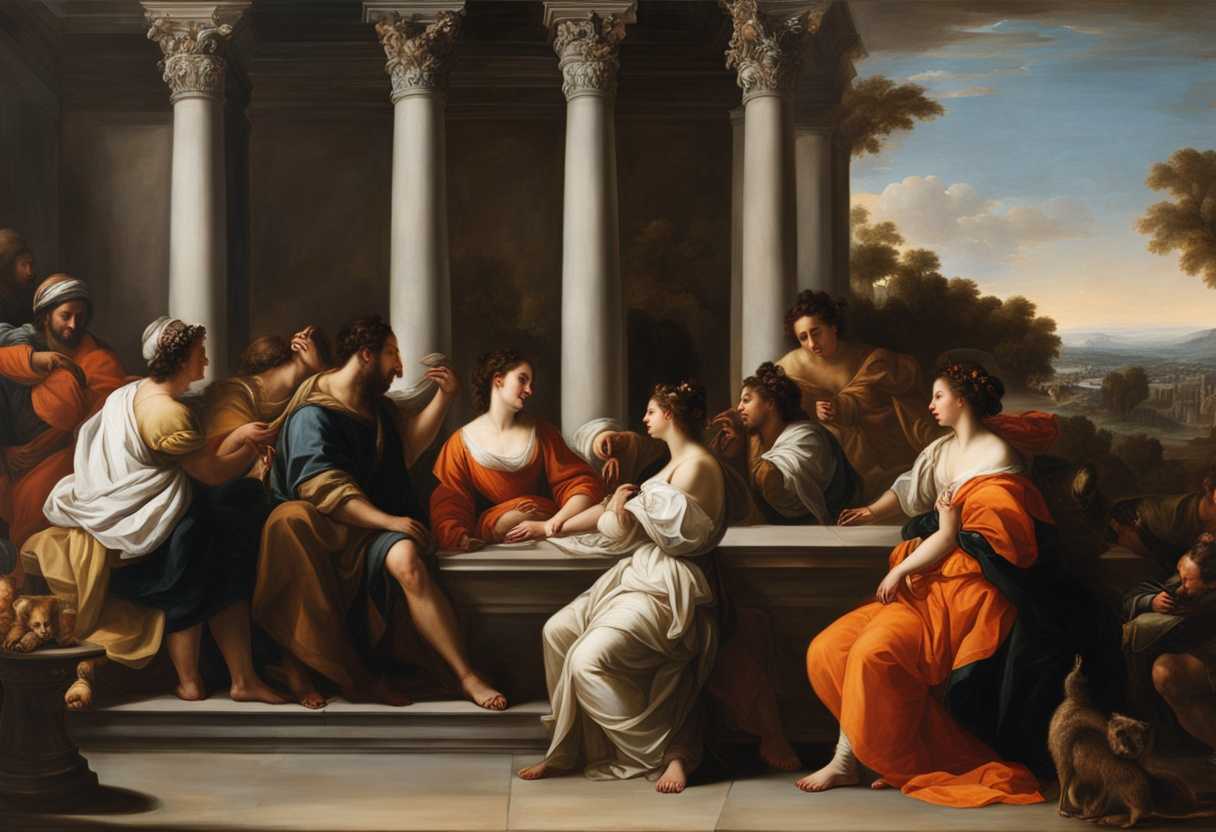
Setting the Scene for Numbers 35:9-28
In the vast wilderness of the ancient land of Canaan, a solemn gathering takes place at the foot of Mount Sinai. The Israelites, led by Moses, have been wandering for years, following the guidance of the Lord. As they settle in this temporary camp, the tribes of Israel come together to hear the laws and regulations that will govern their new society. Among them are the Levites, chosen by God to serve as priests and caretakers of the Tabernacle.
In the midst of the assembly, Moses stands tall, his weathered face illuminated by the flickering flames of the campfire. He speaks with authority, recounting the instructions given by the Lord regarding the establishment of cities of refuge for those who have unintentionally taken a life. The Levites listen intently, their hearts heavy with the weight of responsibility placed upon them to uphold justice and mercy in the land.
As the sun sets behind the mountains, casting long shadows over the camp, the people bow their heads in reverence. They understand the importance of these laws in maintaining order and righteousness among them. The words of Moses echo through the valley, reminding them of the sacred duty they have been entrusted with as the chosen people of God.
What is Numbers 35:9-28 about?
This verse highlights a crucial aspect of God’s justice system concerning unintentional harm. Ancient societies designated cities of refuge to provide a safe haven for individuals who had accidentally caused harm or death to another person. This provision ensured that those who were not guilty of intentional harm would be protected from retaliation and given a fair trial. God demonstrated his understanding and compassion for human fallibility by setting up these cities, offering a way for the unintentional offenders to find refuge and have their cases heard justly.
Have you ever made a mistake that had unintended consequences? Can you imagine the relief of having a place you could flee to for safety and a fair trial in such a situation? God’s command for cities of refuge teaches us about the importance of providing opportunities for redemption and fair treatment, even in times of crisis or accidents. It underscores the value of mercy, understanding, and second chances in the administration of justice, reminding us of our responsibility to extend grace to those who may have erred unintentionally.
Understanding what Numbers 35:9-28 really means
In Numbers 35:9-28, we delve into the ancient laws concerning cities of refuge, where individuals who unintentionally caused the death of another could seek sanctuary from the avenger of blood. This passage underscores the crucial distinction between intentional murder and accidental killing, offering a system that balances justice and mercy in the face of tragedy. The concept of “cities of refuge” symbolizes a place of safety and fairness, where those involved in unintended harm could find refuge until a proper trial could be conducted.
The term “avenger of blood” refers to a family member of the deceased who had the right to seek retribution for the loss of their loved one. This highlights the deep sense of responsibility and justice within the community, ensuring that the consequences of actions were carefully considered and met with appropriate measures. “Unintentional manslaughter” is a key phrase that emphasizes the significance of intent in the administration of justice, recognizing that not all loss of life is the result of malicious intent.
In Deuteronomy 19:1-13 and Joshua 20:1-9, we find further elaboration on the establishment and function of these cities of refuge in the Promised Land. These passages reinforce the importance of distinguishing between intentional and unintentional acts, emphasizing the need for a just and compassionate response to human error. In Matthew 5:21-22, Jesus expands on the commandment against murder, highlighting the importance of examining the heart’s intent in matters of justice and righteousness.
The relevance of these ancient principles to modern society is striking. The balance between justice and mercy, the significance of intent in actions, and the provision of safe havens for those in need are enduring themes that resonate in contemporary legal systems and personal ethics. Just as the cities of refuge provided a place of safety for the unintentional offender, modern practices like witness protection programs and asylum for refugees reflect a similar commitment to offering sanctuary and fairness to those in vulnerable situations.
Consider a scenario where a young driver accidentally causes harm due to a momentary lapse in attention. Today’s legal system would take into account the circumstances and intent behind the action, much like the principles behind the cities of refuge in ancient times. This anecdote illustrates how the concepts of justice, mercy, and intent continue to shape our understanding of ethical conduct and compassion in the complexities of modern life. In conclusion, Numbers 35:9-28 imparts timeless lessons on the importance of justice tempered with mercy, the critical role of intent in actions, and the provision of safe havens for those in need, guiding our approach to justice and compassion in today’s world.
What are the consequences of taking a life?
The consequences of taking a life are deeply ingrained in the fabric of morality and justice. When a life is unjustly taken, it disrupts the balance of society and causes immense grief and suffering to the families and communities involved. The severity of this act is such that the consequences demand justice and accountability. The verse outlines the consequences of taking a life in a structured manner. It highlights the importance of distinguishing between accidental killing and intentional murder, emphasizing the need for fair judgment and punishment. This structured approach not only serves as a deterrent to prevent further harm but also ensures that justice is served for the victim and their loved ones. The consequences of taking a life ultimately extend beyond the physical act itself. They carry a weight of moral and ethical implications that must be carefully considered. Individuals are encouraged to uphold the sanctity of life and treat others with respect and empathy by acknowledging the profound impact of such actions.
Application
Let’s be the guardians of righteousness and defenders of the innocent, just as the passage instructs. It calls us to stand up for what is right and protect those in need. Today, let’s be the advocates for justice, ensuring fairness prevails in our modern world. How will you answer the call and make a difference in your community today?

Reverend Michael Johnson is an experienced Church Minister with a profound expertise in spirituality and guidance. With a serene presence and a compassionate heart, he has faithfully served his congregation for over 20 years, leading them on a spiritual journey towards inner peace and enlightenment. Reverend Johnson’s extensive knowledge of religious philosophies and profound understanding of human nature have made him a trusted confidant and mentor to many, as he seamlessly weaves his profound wisdom into life teachings. Reverend Johnson’s calming demeanor and empathetic nature continue to uplift and heal souls, nurturing a sense of unity and tranquility within his community.