
Revelation 6:15-16 is about the fear and panic that will grip those who witness the wrath of God, as they try to hide from His presence and the Lamb’s judgment.
15 Then the kings of the earth and the great ones and the generals and the rich and the powerful, and everyone, slave and free, hid themselves in the caves and among the rocks of the mountains,
16 calling to the mountains and rocks, “Fall on us and hide us from the face of him who is seated on the throne, and from the wrath of the Lamb,
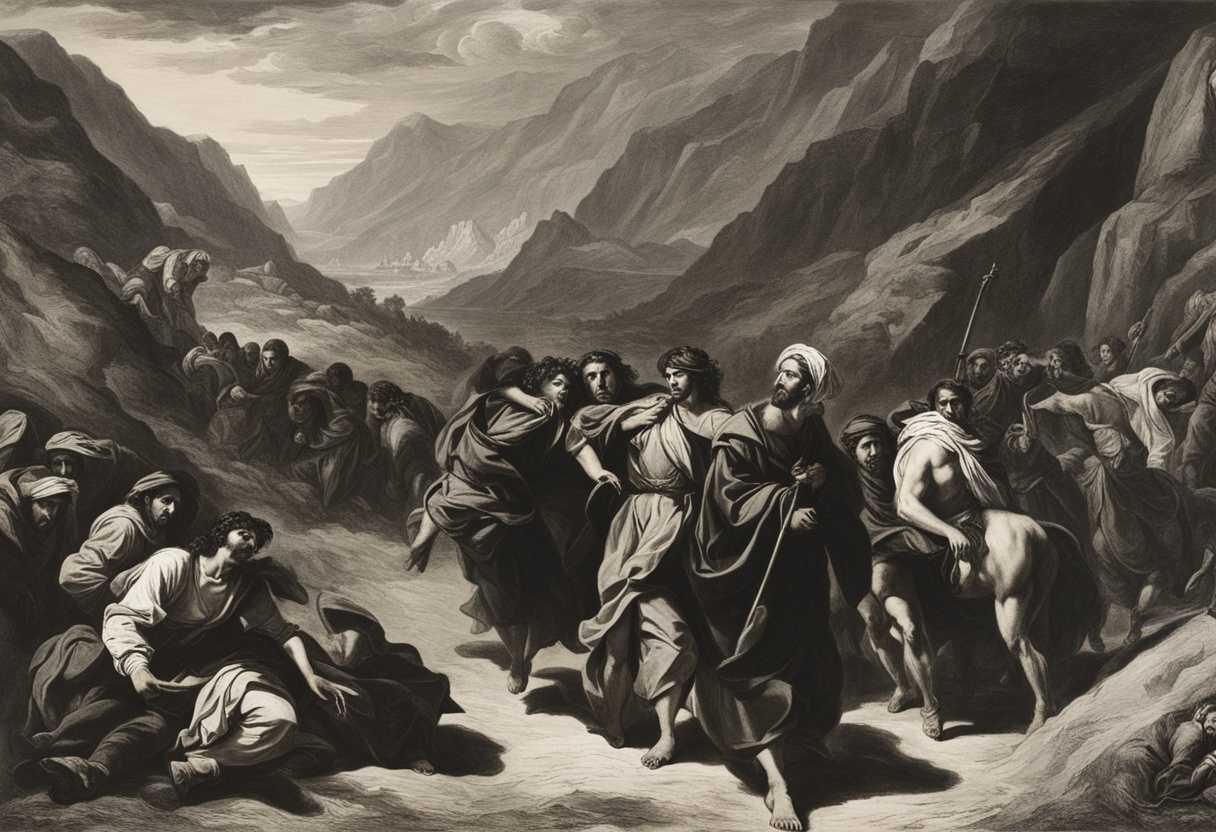
Setting the Scene for Revelation 6:15-16
In Revelation chapter 6, the scene described is one of great turmoil and upheaval. The passage depicts a moment when the sixth seal is opened, unleashing catastrophic events on the earth. The sky turns dark, the stars fall from the sky, and the earth shakes violently. People from all walks of life, including kings, princes, generals, the rich, the mighty, and every slave and free person, hide in caves and among the rocks of the mountains. They are filled with fear and dread as they witness the unfolding of these apocalyptic events.
In this scene, the characters are a diverse group of individuals who have come together in a moment of shared terror and despair. They have been brought to this point by the series of calamities that have been unleashed upon the earth. The surroundings are bleak and chaotic, with the natural order of the world being disrupted in a dramatic and terrifying manner. The atmosphere is charged with a sense of impending doom, as the people huddle together in fear of what is to come next.
What is Revelation 6:15-16 about?
This verse highlights the powerful imagery of fear and desperation that can arise in the face of God’s wrath. Imagine the intensity of a situation where people are so overwhelmed with fear that they seek refuge in rocks and mountains, believing they can shield them from God’s anger. It speaks to a sense of helplessness and the deep desire for protection when confronted with the almighty power of God’s wrath.
Have you ever felt such overwhelming fear or desperation in your own life? Can you envision the magnitude of emotions that would drive someone to seek shelter in rocks and mountains rather than facing God’s wrath head-on? This verse serves as a poignant reminder of the profound impact that the concept of divine punishment can have on one’s psyche and the lengths one may go to in order to feel safe and secure. It prompts us to reflect on our own beliefs about God’s wrath and how we navigate feelings of fear and vulnerability in the face of the unknown.
Understanding what Revelation 6:15-16 really means
The Book of Revelation, a prophetic vision given to the Apostle John, is known for its symbolic imagery and apocalyptic themes. In Revelation 6:15-16, we witness a moment of great fear and realization as the sixth seal is opened, prompting people from all walks of life to seek refuge from the impending wrath of God. The phrase “The kings of the earth, the princes, the generals, the rich, the mighty, and everyone else, both slave and free” underscores the universality of the event, showing that no one, regardless of status, can escape judgment. This inclusivity serves as a stark reminder of the impartiality of divine judgment.
As individuals in the vision hide in caves and among the rocks of the mountains, we see a poignant portrayal of desperation and the futility of trying to evade divine judgment. This imagery reflects the innate human instinct to seek shelter in times of overwhelming fear. The plea to “Fall on us and hide us from the face of him who sits on the throne and from the wrath of the Lamb!” reveals a profound acknowledgment of God’s supreme authority and the impending judgment that individuals are unable to escape.
Drawing parallels with other biblical passages such as Isaiah 2:19-21 and Luke 23:30, we find similar themes of people seeking refuge from the terror of the Lord. These passages emphasize the inevitability of facing divine judgment and the inability to hide from the presence of God. In today’s context, Revelation 6:15-16 serves as a poignant reminder of the reality of divine judgment and the necessity of aligning our lives with God’s will. It highlights the transient nature of earthly status and possessions in providing true security, emphasizing the paramount importance of spiritual preparedness.
Consider a powerful CEO who, despite worldly success, grapples with an unexplained emptiness and fear. When faced with a personal crisis that shatters his facade of invincibility, he realizes the limitations of his wealth and power. In his vulnerability, he seeks spiritual solace, finding peace and purpose in faith. This anecdote mirrors the awakening described in Revelation 6:15-16, where individuals come to terms with their dependence on God for true refuge and salvation.
In conclusion, Revelation 6:15-16 prompts introspection into our own lives and priorities. It challenges us to evaluate where we place our trust for security and to recognize the significance of cultivating a relationship with God. This passage serves as a potent reminder of God’s ultimate authority and the imperative of spiritual readiness in anticipation of divine judgment. Let us heed this call to reflection and ensure that our hearts are prepared to face the righteous judgment of the Almighty.
How will we stand before the wrath of God?
According to the verse, when facing the wrath of God, people will call upon the mountains and rocks to fall on them to hide them from the face of God. This shows the intense fear and desperation that will overcome individuals when they realize the severity of God’s judgment. The mountains and rocks represent natural elements that people would typically deem as strong and unmovable, yet in the face of God’s wrath, they are seen as a refuge, albeit a futile one.
The imagery presented indicates a profound sense of dread and hopelessness when confronted with the wrath of God. It illustrates that there will be nowhere to hide and no escape from the divine judgment that is to come. The reaction of calling on inanimate objects to shield them highlights the magnitude of the fear and the realization of the severity of the consequences of their actions in the eyes of God. Facing the wrath of God ultimately signifies a reckoning and accountability for one’s actions and choices. It serves as a stark reminder that divine justice is inevitable and that all will have to face the consequences of their deeds. The intensity of the depicted reaction demonstrates the overwhelming nature of facing God’s wrath without any recourse or means of escape.
Application
Just as in a busy workplace where deadlines must be met, so should we heed the urgent call to repentance. The consequences of our actions are as real as the responsibilities we hold towards our families. Let’s not delay in seeking forgiveness and walking in the path of righteousness. Will you choose to realign your life with God’s will today?

Reverend Michael Johnson is an experienced Church Minister with a profound expertise in spirituality and guidance. With a serene presence and a compassionate heart, he has faithfully served his congregation for over 20 years, leading them on a spiritual journey towards inner peace and enlightenment. Reverend Johnson’s extensive knowledge of religious philosophies and profound understanding of human nature have made him a trusted confidant and mentor to many, as he seamlessly weaves his profound wisdom into life teachings. Reverend Johnson’s calming demeanor and empathetic nature continue to uplift and heal souls, nurturing a sense of unity and tranquility within his community.