
1 Kings 3:4 is about King Solomon sacrificing at the high place in Gibeon, showcasing his deep desire for wisdom and understanding from God.
4 And the king went to Gibeon to sacrifice there, for that was the great high place. Solomon used to offer a thousand burnt offerings on that altar.
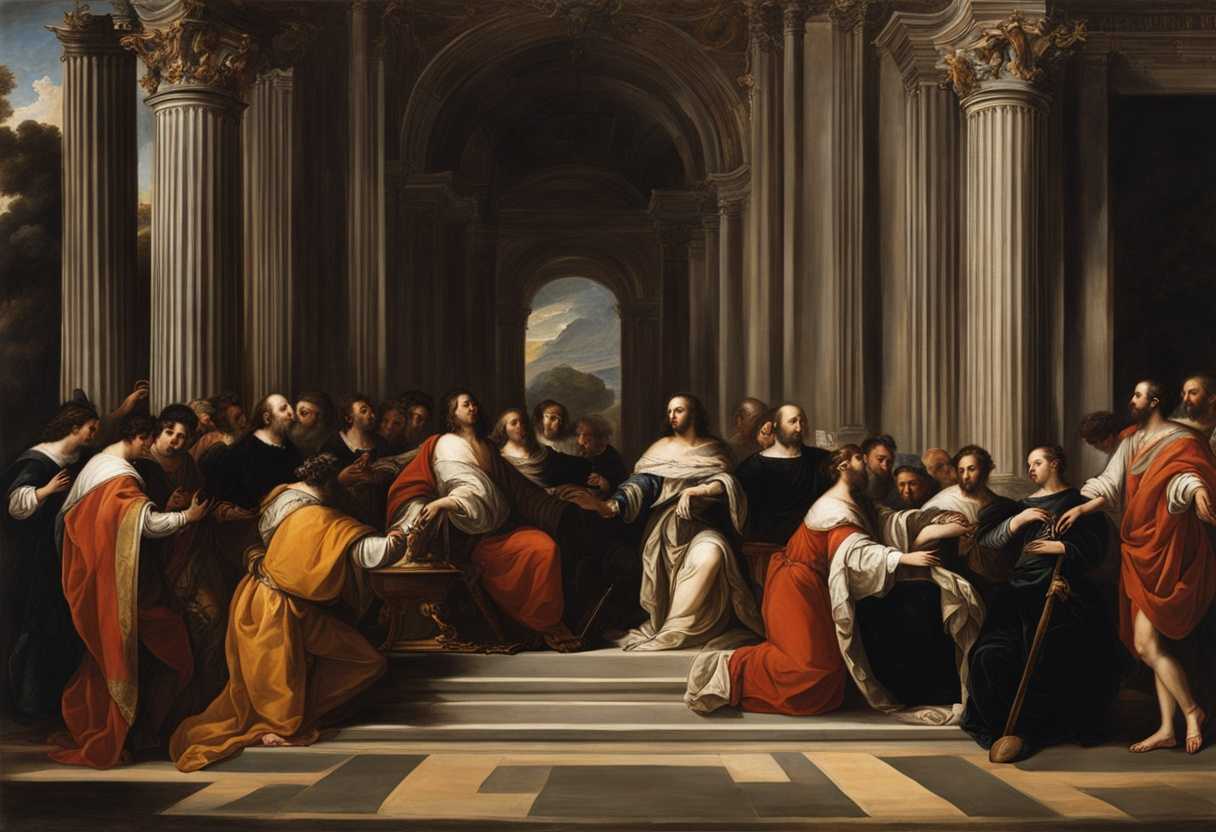
Setting the Scene for 1 Kings 3:4
In 1 Kings chapter 3, we find King Solomon at the beginning of his reign over Israel. The scene is set in Jerusalem, the capital city, known for its grandeur and significance in the biblical narrative. King Solomon, the son of King David, has recently ascended to the throne after his father’s death. He is young and inexperienced but filled with wisdom and a desire to lead his people well.
Surrounded by his court officials, advisors, and servants, King Solomon makes his way to the high place at Gibeon to offer sacrifices to the Lord. The high place is a sacred site where the people of Israel traditionally worshiped God. As the smoke from the sacrifices rises towards the heavens, Solomon’s heart is filled with reverence and awe for the God of his ancestors. It is in this moment of devotion and humility that the Lord appears to Solomon in a dream, setting the stage for one of the most famous passages in the Bible where God grants Solomon wisdom beyond measure.
What is 1 Kings 3:4 about?
Isn’t it fascinating how even the wisest among us can sometimes stray from the prescribed path? King Solomon, known for his wisdom and deep connection with God, engages in a ritual that was later deemed unacceptable by the standards set in Deuteronomy in this verse. It serves as a reminder that even the most devout individuals can sometimes fall into practices or traditions that might not align with the teachings of their faith. We can use this verse as teachers and learners to reflect on the importance of staying true to our beliefs and following the guidelines set by our faith traditions. It prompts us to consider the significance of remaining vigilant in our spiritual practices and ensuring that they are in line with the teachings we hold dear. This verse encourages us to question our own actions and rituals, asking ourselves if they truly reflect our beliefs and values or if they may need reevaluation in light of our faith teachings. Let’s take this opportunity to reflect on our own practices and ensure that they align with the teachings that guide us on our spiritual journey.
Understanding what 1 Kings 3:4 really means
In the narrative of King Solomon, known for his exceptional wisdom, we encounter a pivotal moment in 1 Kings 3:4. As Solomon ascends to the throne, he embarks on a journey to Gibeon to offer sacrifices—a profound act of worship and dedication to God. This gesture signifies his reverence and desire to establish his reign on a foundation of spiritual devotion and humility.
Following this verse, in 1 Kings 3:5-14, we witness God appearing to Solomon in a dream, granting him wisdom in response to his humble request. This divine interaction underscores the importance of seeking God’s guidance, a timeless lesson applicable to individuals today. Just as Solomon sought wisdom at the onset of his kingship, contemporary individuals can seek divine direction in navigating life’s complexities.
In parallel, 2 Chronicles 1:3-6 provides another account of Solomon’s offerings at Gibeon, emphasizing the significance of his devotion. This repetition underscores the importance of acts of worship as a means of dedicating our time, resources, and efforts to God. The essence of humility and devotion displayed by Solomon remains relevant and commendable in modern times.
Consider a young professional embarking on a new job, grappling with uncertainties and challenges. By emulating Solomon’s example of seeking God’s wisdom through prayer and dedication, individuals can find the strength and insight needed to excel in their endeavors. Solomon’s actions serve as a beacon, guiding us to approach our responsibilities with humility and a fervent desire to honor God.
The mention of Gibeon as a significant high place for worship before the construction of the temple in Jerusalem underscores Solomon’s commitment to seeking God in a place of historical and spiritual importance. The act of offering sacrifices symbolizes honoring God, seeking forgiveness, and demonstrating unwavering devotion. Solomon’s multitude of sacrifices reflects his profound commitment to commencing his reign on a spiritually sound footing.
In essence, Solomon’s pilgrimage to Gibeon encapsulates the essence of seeking divine wisdom, dedicating our endeavors to God, and embracing humility and devotion in our pursuits. By reflecting on Solomon’s example, we glean invaluable insights into the significance of spiritual reverence and seeking God’s guidance in our daily lives.
How can we ensure our worship is authentic?
One way to ensure our worship is authentic is to approach it with a sincere heart. We should not worship out of obligation or tradition, but rather from a place of genuine devotion and love for God. Our worship should be a reflection of our faith and commitment to Him, not merely going through the motions.
Additionally, we should strive for humility in our worship. Pride and self-centeredness can hinder the authenticity of our worship. Approaching God with a humble and contrite spirit opens us up to a deeper connection with Him and allows our worship to be more meaningful and sincere.
Finally, we should seek to align our actions and intentions with the teachings of God’s Word. Authentic worship involves not just external rituals, but also a life lived in accordance with God’s principles and commandments. When our worship is in harmony with our beliefs and actions, it becomes a true expression of our devotion to God.
Application
Reflecting on 1 Kings 3:4, remember the power of seeking wisdom from the One above. Just as Solomon dedicated himself to God, let us prioritize our spiritual growth and deepen our faith. As we navigate the complexities of the modern world, may we seek guidance and insight from the Almighty in all our endeavors. Will you choose to follow in Solomon’s footsteps and prioritize seeking wisdom from the Lord in your life today?

Reverend Michael Johnson is an experienced Church Minister with a profound expertise in spirituality and guidance. With a serene presence and a compassionate heart, he has faithfully served his congregation for over 20 years, leading them on a spiritual journey towards inner peace and enlightenment. Reverend Johnson’s extensive knowledge of religious philosophies and profound understanding of human nature have made him a trusted confidant and mentor to many, as he seamlessly weaves his profound wisdom into life teachings. Reverend Johnson’s calming demeanor and empathetic nature continue to uplift and heal souls, nurturing a sense of unity and tranquility within his community.