
Exodus 30:12-16 is about the redemption of the Israelites through the census tax, emphasizing each individual’s equal worth in the eyes of God regardless of their financial status.
12 When you take the census of the people of Israel, then each shall give a ransom for his life to the Lord when you number them, that there be no plague among them when you number them.
13 Each one who is numbered in the census shall give this: half a shekel according to the shekel of the sanctuary (the shekel is twenty gerahs), half a shekel as an offering to the Lord.
14 Everyone who is numbered in the census shall give this: half a shekel according to the shekel of the sanctuary (the shekel is twenty gerahs), half a shekel as an offering to the Lord.
15 The rich shall not give more, and the poor shall not give less, than the half shekel, when you give the Lord’s offering to make atonement for your lives.
16 You shall take the atonement money from the people of Israel and shall give it for the service of the tent of meeting, that it may bring the people of Israel to remembrance before the Lord, so as to make atonement for your lives.”
Setting the Scene for Exodus 30:12-16
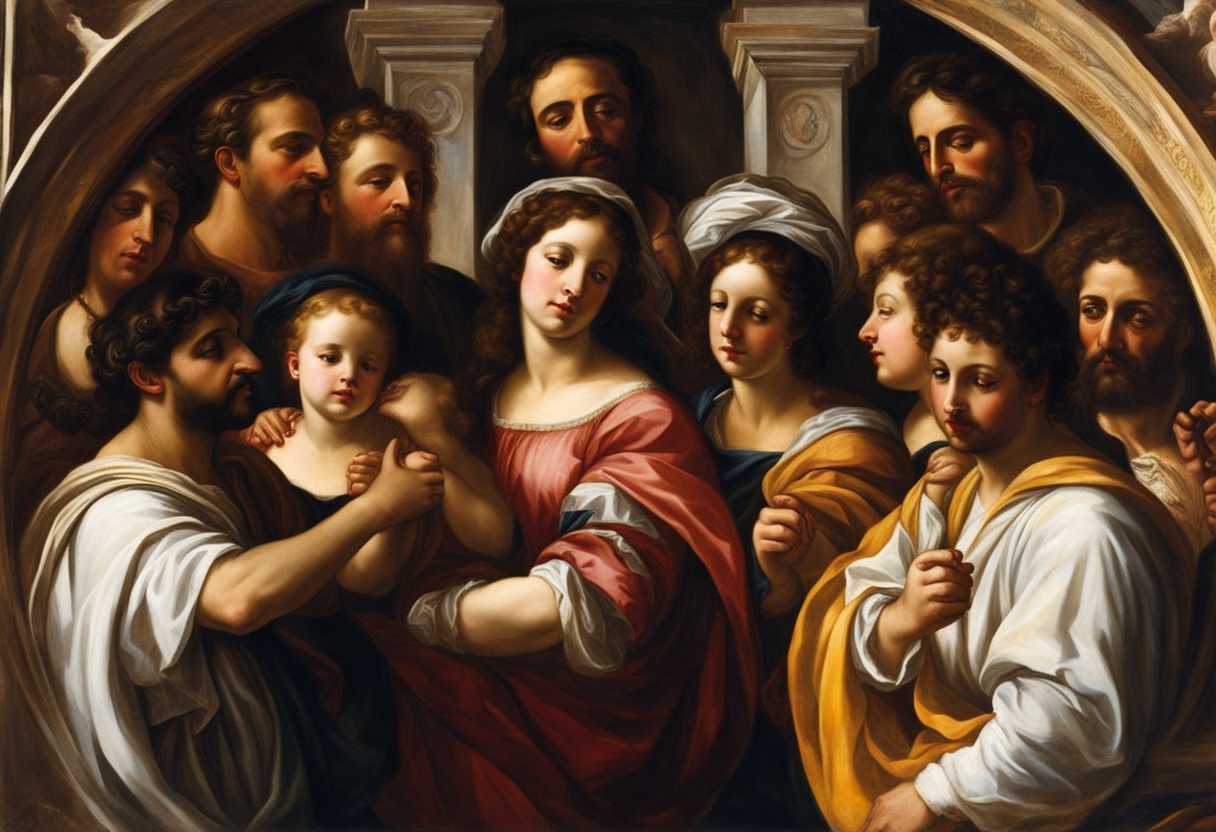
In the scene described in Exodus 30:12-16, we find Moses and Aaron standing in the Tabernacle courtyard, surrounded by the Israelites who have gathered for a census. The Tabernacle is a magnificent tent made of fine linen and adorned with gold and precious stones, serving as a sacred place of worship and offering for the Israelites during their journey in the wilderness. The courtyard is bustling with activity as people from all tribes come forward to be counted and contribute to the atonement offering.
Moses, the revered leader chosen by God to lead the Israelites out of Egypt, stands tall and authoritative, his face radiant from his encounters with the divine. Aaron, his brother and the high priest, assists in the census-taking and the collection of the atonement offering from each person. The atmosphere is solemn yet filled with a sense of unity and purpose as the Israelites fulfill this important ritual to consecrate themselves before the Lord.
As each person approaches, they present a half-shekel as their contribution to the Tabernacle, symbolizing their commitment to the community and their acknowledgment of God’s sovereignty over their lives. The sound of coins clinking and the murmur of prayers fill the air, creating a sacred ambiance that reminds the Israelites of their covenant with God and their shared identity as His chosen people.
What is Exodus 30:12-16 about?
The Lord commands Moses to take a census of the Israelites and for each person counted to pay a ransom for their life in these verses. This ransom served as a reminder of the value of life and the importance of being obedient to the Lord’s commands. It was a way for the Israelites to show their gratitude and commitment to God by contributing to the upkeep of the tabernacle and supporting the work of the priests.
Imagine the significance of each person contributing equally, regardless of their wealth or status. This act of giving was not just a means of financial support but a spiritual act of atonement and acknowledgment of God’s sovereignty over their lives. It served as a symbol of unity and shared responsibility within the community of believers. Reflect on these verses as you consider how you can apply the principles of stewardship, obedience, and gratitude in your own life and relationships. How can you demonstrate your commitment to God and support the work of His kingdom?
Understanding what Exodus 30:12-16 really means
In the book of Exodus, amidst the detailed instructions for the construction of the Tabernacle and establishment of rituals, we find a significant passage concerning the census of the Israelites and the atonement money. God instructs Moses that when counting the people, each individual must pay a ransom for their life to the Lord. This directive underscores the concept of atonement and the idea that every life is valuable and in need of redemption. It highlights the intrinsic worth of each person in the eyes of God, emphasizing the need for reconciliation and restoration.
The passage further states that by paying this ransom, the Israelites would be protected from plagues or calamities when numbered. This notion suggests a connection between atonement and divine protection, illustrating the belief in God’s mercy and provision for those who seek reconciliation. It prompts us to reflect on the relationship between our actions, our faith, and the grace of God in our lives.
A striking aspect of this passage is the principle of equality before God. Both the rich and the poor were required to give the same amount, a half shekel, as atonement money. This equality in contribution highlights the importance of fairness and justice in the eyes of God, regardless of one’s economic status. It challenges us to consider how we view and treat others in our communities, emphasizing the need for impartiality and equity.
Drawing parallels from related biblical passages such as Leviticus and Numbers, we see a consistent theme of valuing and counting individuals. This theme resonates with us today, reminding us of the significance of every person and the need to recognize and appreciate the diversity and worth of each individual. It prompts us to consider how we value and interact with those around us, fostering a mindset of inclusivity and respect for all.
In our contemporary context, this passage speaks to the value of every individual, the importance of equality, and the call to communal responsibility. It challenges us to acknowledge our own worth, treat others with fairness and dignity, and actively contribute to the well-being of our communities. Just as the atonement money united the Israelites in a shared act of redemption, we are called to come together, recognizing our interconnectedness and shared responsibility in building a more just and compassionate society.
How can we understand the value of redemption?
Individuals can make atonement for their lives by giving a ransom for themselves, as described in this passage. The value of redemption in this context lies in the idea that it serves as a means for individuals to be counted among the community. Through the act of redemption, a person shows their dedication to God and their willingness to participate in the communal life of worship and service.
Furthermore, the concept of redemption in this verse underscores the importance of recognizing the worth placed on one’s life and the acknowledgment of the need for reconciliation and restoration. Individuals demonstrate their recognition of their own value and their commitment to rectifying any transgressions they may have committed by offering a ransom for their life. Redemption, then, becomes a way to bridge the gap between oneself and the divine, emphasizing the significance of personal accountability and the desire for spiritual renewal.
Application
Just as you work hard to support your family, giving back to God is a fundamental part of nurturing your spiritual well-being. Show your appreciation for His blessings by contributing willingly and generously. Embrace the opportunity to strengthen your bond with Him through this act of gratitude. Are you willing to make this commitment and honor God with your resources and blessings?

Reverend Michael Johnson is an experienced Church Minister with a profound expertise in spirituality and guidance. With a serene presence and a compassionate heart, he has faithfully served his congregation for over 20 years, leading them on a spiritual journey towards inner peace and enlightenment. Reverend Johnson’s extensive knowledge of religious philosophies and profound understanding of human nature have made him a trusted confidant and mentor to many, as he seamlessly weaves his profound wisdom into life teachings. Reverend Johnson’s calming demeanor and empathetic nature continue to uplift and heal souls, nurturing a sense of unity and tranquility within his community.