
2 Samuel 18:19-33 is about the deep grief and conflicting emotions experienced by King David upon receiving news of the death of his son Absalom, highlighting the complex dynamics of love, loss, and forgiveness within families.
19 Then Ahimaaz the son of Zadok said, “Let me run and carry news to the king that the Lord has delivered him from the hand of his enemies.”
20 Then Joab said to him, “You will not carry news today. You may carry news another day, but today you shall carry no news, because the king’s son is dead.”
21 Then Joab said to the Cushite, “Go, tell the king what you have seen.” And the Cushite bowed before Joab and ran.
22 Then Ahimaaz the son of Zadok said, “Let me run and carry news to the king that the Lord has delivered him from the hand of his enemies.”
23 But whatever happens, he said, I will run.
24 Now David was sitting between the two gates, and the watchman went up to the roof of the gate by the wall, and lifted up his eyes and looked, and behold, a man running alone.
25 And the watchman cried out and told the king. And the king said, “If he is alone, there is news in his mouth.” And he drew nearer and nearer.
26 And the watchman saw another man running. And the watchman called to the gate and said, “See, another man running alone!” The king said, “He also brings news.”
27 The watchman said, “I think the running of the first is like the running of Ahimaaz the son of Zadok.”
28 Then Ahimaaz cried out to the king, “All is well.” And he bowed before the king with his face to the earth and said, “Blessed be the Lord your God, who has delivered up the men who raised their hand against my lord the king.”
29 The king said, “Is it well with the young man Absalom?” Ahimaaz answered, “When Joab sent the king’s servant, your servant, I saw a great commotion, but I do not know what it was.”
30 The king said, “Turn aside and stand here.” So he turned aside and stood still.
31 And behold, the Cushite came, and the Cushite said, “Good news for my lord the king! For the Lord has delivered you this day from the hand of all who rose up against you.”
32 The king said to the Cushite, “Is it well with the young man Absalom?” And the Cushite answered, “May the enemies of my lord the king and all who rise up against you for evil be like that young man.”
33 And the king was deeply moved and went up to the chamber over the gate and wept. And as he went, he said, “O my son Absalom, my son, my son Absalom! Would I had died instead of you, O Absalom, my son, my son!”
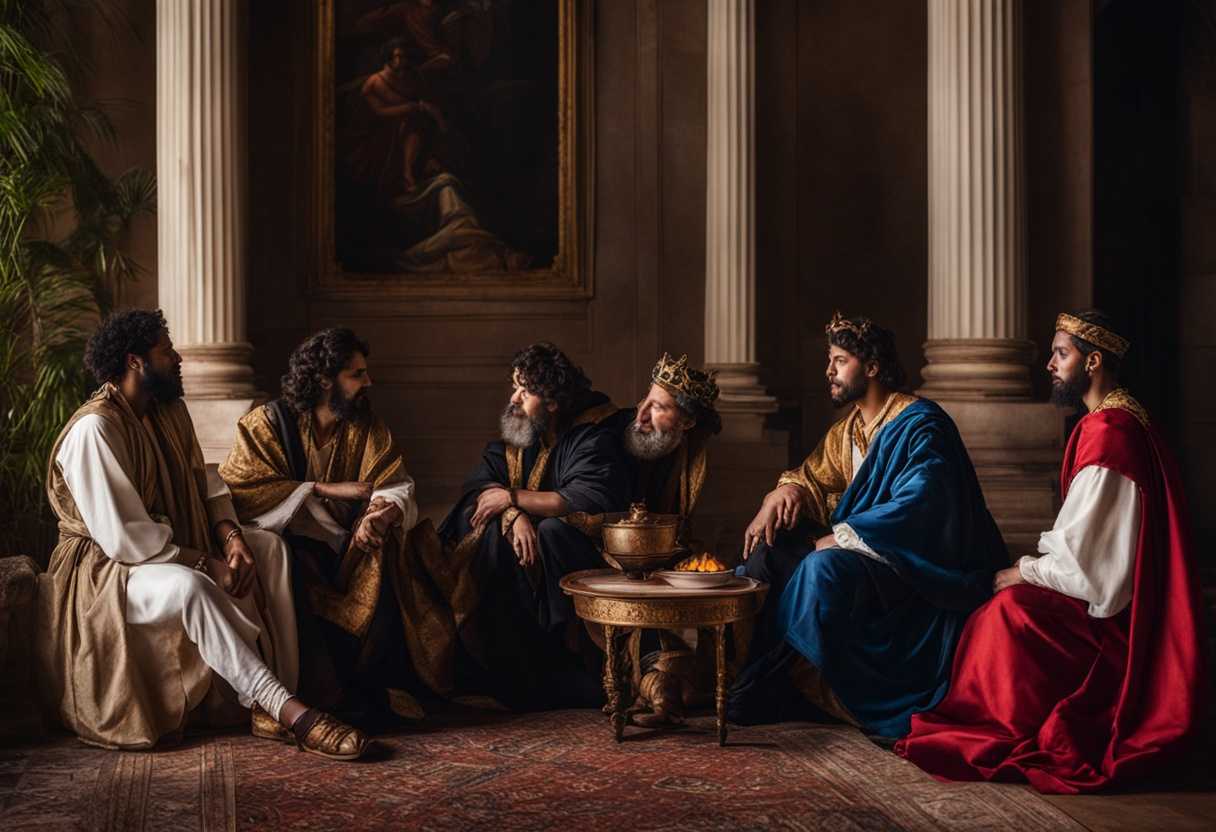
Setting the Scene for 2 Samuel 18:19-33
The scene in 2 Samuel 18:19-33 takes place in the aftermath of a battle between King David’s forces and the rebellious son Absalom. The setting is a dense forest in the region of Ephraim, where the battle had unfolded. As the battle concludes, messengers are sent to King David to deliver the news of the outcome.
Among those present are Ahimaaz, the son of the high priest Zadok, and Cushi, a Cushite servant. Ahimaaz is eager to bring the news of the victory to David, while Cushi is also prepared to deliver a message, but with a different perspective. The two messengers have different motivations and loyalties, adding tension to the scene. The forest is depicted as a place of uncertainty and danger, mirroring the turmoil within David’s kingdom at that time.
As the messengers make their way through the forest to deliver their reports to King David, the tension and drama of the moment are palpable. The dense trees and undergrowth create a sense of isolation and suspense, reflecting the weight of the news they carry. The scene captures the aftermath of a pivotal moment in David’s reign, as he grapples with the consequences of the battle and the fate of his beloved but rebellious son, Absalom.
What is 2 Samuel 18:19-33 about?
The powerful and complex emotions of a mourning father are seen in this verse, even though his son had rebelled against him. It speaks to the unconditional love that a parent can have for their child, even in the face of conflict and betrayal. David’s mourning for Absalom shows the depth of his grief and the pain of losing a child, regardless of the circumstances surrounding their relationship.
The verse challenges us to reflect on the nature of forgiveness and compassion. It prompts us to consider how we can still show love and empathy towards those who may have wronged us, even in the midst of our own pain. It also highlights the importance of understanding the human experience of loss and grief, emphasizing the universal feelings of sadness and heartache that can transcend any past conflicts or disagreements. We contemplate this verse, examining our own capacity for forgiveness and empathy, and recognizing the profound significance of love and mourning in our relationships with others.
Understanding what 2 Samuel 18:19-33 really means
This passage from 2 Samuel 18:19-33 delves into the aftermath of a battle where Absalom, King David’s son, meets his demise. It centers on the messengers who bear the news to David and his intense grief upon learning of his son’s death.
Ahimaaz, son of Zadok, symbolizes the human inclination to be the bearer of significant news, whether positive or negative. His eagerness to relay the message reflects our own desire to be involved in pivotal moments, prompting us to consider the repercussions of our actions on others. On the other hand, the Cushite represents the often overlooked messengers in our lives who bring us harsh truths, highlighting the importance of truth-telling even in challenging circumstances.
“The king was shaken” encapsulates David’s reaction to Absalom’s death, showcasing the depth of a parent’s love and the anguish of losing a child, irrespective of the child’s actions. This poignant moment resonates with the universal experience of grief and the intricate emotions entwined with losing a loved one, particularly a child. David’s mourning for Absalom, despite his betrayal, underscores the themes of forgiveness and unconditional love, illustrating the profound power of love to transcend betrayal and pain.
In a modern context, envision a scenario where a parent receives news of their child’s tragic accident. The initial messenger, akin to Ahimaaz, may seek to soften the blow, while the official report, like the Cushite, delivers the unvarnished truth. The parent’s reaction, a blend of disbelief, sorrow, and overwhelming grief, mirrors David’s response, emphasizing the timeless and deeply human nature of such emotions.
By contemplating the roles of Ahimaaz and the Cushite, we are reminded of the significance and challenge of conveying difficult news with empathy and honesty. These elements from the passage offer profound insights into the complexities of human emotions, the enduring power of love and forgiveness, and the importance of truth-telling even in the face of adversity. Through reflection on these themes, we can glean a deeper understanding of the passage and its abiding relevance to our lives today.
How can we find peace and closure after loss?
One way to find peace and closure after a loss is through acceptance. Accepting that loss is an inevitable part of life and understanding that it is part of a greater plan can provide a sense of comfort. We can begin to focus on healing and moving forward by acknowledging that we cannot change what has happened.
Another way to find peace is through seeking support from others. Surrounding yourself with loved ones who can offer comfort, understanding, and empathy can help in the healing process. Talking about your feelings, memories, and emotions related to the loss can be therapeutic and can help in processing the grief.
Additionally, finding ways to remember and honor the person who has been lost can bring a sense of peace. Creating rituals, engaging in activities that were meaningful to the person, or keeping their memory alive through sharing stories can help in finding closure and keeping their spirit alive in our hearts.
Application
Life is like a busy office, full of tasks and deadlines, but relationships are the most important project we can work on. Imagine the heartfelt sorrow of King David over his lost son Absalom. It reminds us of the power of love and forgiveness in mending broken ties. Instead of clinging to resentment, let’s use God’s wisdom to bring grace into our family and work conflicts. Will you choose today to forgive, rebuild, and embrace love over anger?

Reverend Michael Johnson is an experienced Church Minister with a profound expertise in spirituality and guidance. With a serene presence and a compassionate heart, he has faithfully served his congregation for over 20 years, leading them on a spiritual journey towards inner peace and enlightenment. Reverend Johnson’s extensive knowledge of religious philosophies and profound understanding of human nature have made him a trusted confidant and mentor to many, as he seamlessly weaves his profound wisdom into life teachings. Reverend Johnson’s calming demeanor and empathetic nature continue to uplift and heal souls, nurturing a sense of unity and tranquility within his community.