
Leviticus 9:23-24 is about God’s powerful presence and acceptance of the offerings made by Aaron and the Israelites, symbolizing divine approval and establishing a covenant with His people.
23 And Moses and Aaron went into the tent of meeting, and when they came out they blessed the people, and the glory of the Lord appeared to all the people.
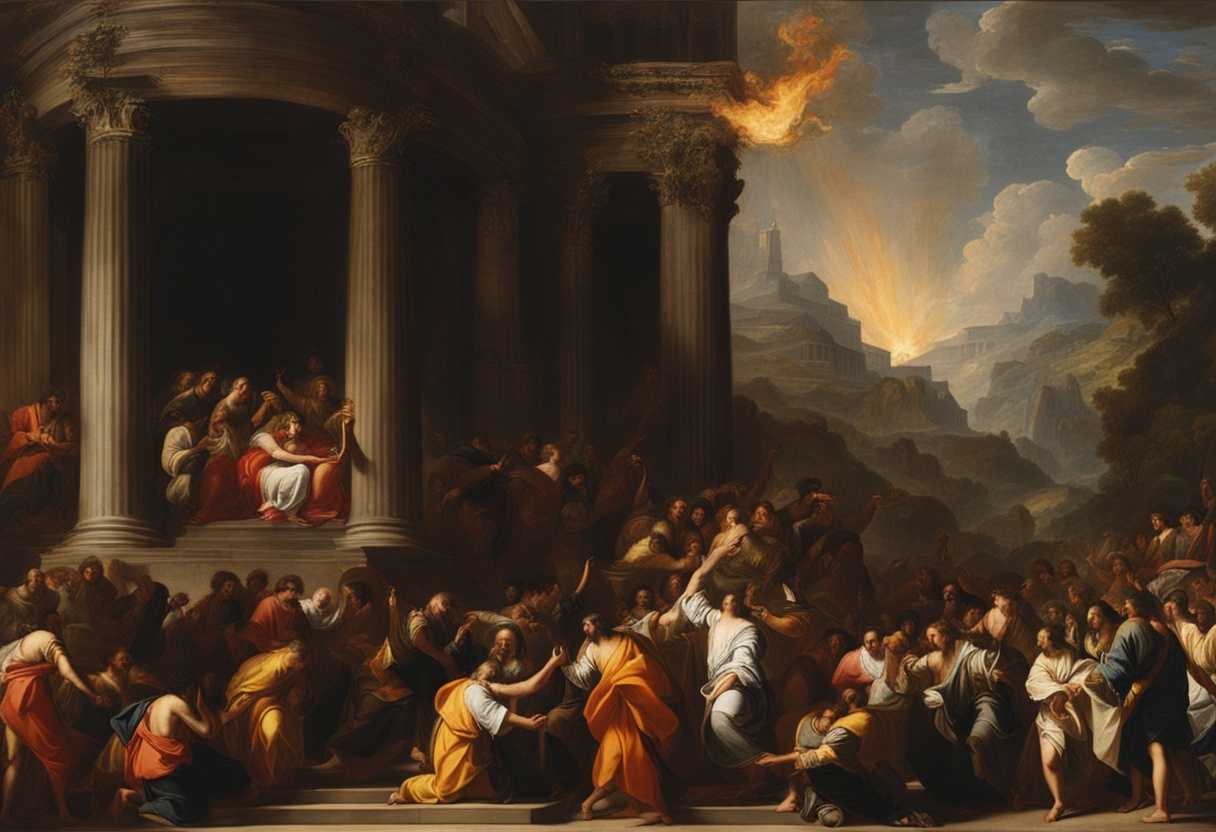
24 And fire came out from before the Lord and consumed the burnt offering and the pieces of fat on the altar, and when all the people saw it, they shouted and fell on their faces.
Setting the Scene for Leviticus 9:23-24
In Leviticus chapter 9, we find ourselves in the Tabernacle in the wilderness, a sacred and elaborate tent constructed by the Israelites as a place of worship and sacrifice. The scene is filled with a sense of anticipation and reverence as Aaron, the high priest, and his sons have just completed the consecration ceremony for the Tabernacle and themselves. The air is heavy with the scent of incense and the sound of prayers being offered up to the Lord.
Surrounding Aaron are his sons, Nadab, Abihu, Eleazar, and Ithamar, all dressed in their priestly garments. They have been anointed and consecrated for their roles as priests, and now stand ready to assist their father in carrying out the sacred duties of the Tabernacle. The people of Israel have gathered outside the Tabernacle, eager to witness the first official sacrifices being offered on their behalf.
As the scene unfolds, Aaron takes his place at the altar and begins to make the sin offering, the burnt offering, and the grain offering. The people watch in awe as fire suddenly comes out from the presence of the Lord and consumes the offerings on the altar. A sense of holiness and divine presence fills the Tabernacle, and the people fall to their knees in worship and praise. Aaron and his sons lift their hands in blessing over the people, and a deep sense of peace and unity settles over the camp as they receive the Lord’s approval and favor.
What is Leviticus 9:23-24 about?
This verse paints a vivid picture of a powerful and awe-inspiring moment where God’s glory manifested in a tangible way for all to see. The imagery of fire consuming offerings symbolizes God’s acceptance and approval of the sacrifices being made. The reaction of the people, shouting and falling on their faces, indicates a deep sense of reverence, fear, and humility in the presence of such a divine and overwhelming presence.
Imagine witnessing such a dramatic display of God’s glory – the crackling of the fire, the fervent shouts of the people, and the sight of everyone bowing down in humility. It is a reminder of the immense power and majesty of God, and a call for us to approach Him with respect and awe. The verse serves as a powerful message about the significance of recognizing and honoring God’s presence in our lives and in our worship, prompting us to reflect on our own attitudes and responses when we encounter the glory of God.
Understanding what Leviticus 9:23-24 really means
In Leviticus 9:23-24, we witness a pivotal moment in the consecration of Aaron and his sons as priests. Following God’s precise instructions for offerings, Moses and Aaron step into the tent of meeting, symbolizing their role as intercessors and leaders before God. As they bless the people, the glory of the Lord appears to all, signifying His approval and presence among His chosen ones. This event marks the culmination of the ordination process, highlighting the significance of God’s acceptance and the establishment of His presence among His people.
The key phrases in this passage hold profound meanings that resonate through the pages of Scripture. When “the glory of the Lord appeared to all the people,” it represents a visible manifestation of God’s presence, affirming His acceptance of the offerings and the consecration of the priests. The miraculous event where “fire came out from the presence of the Lord and consumed the burnt offering” symbolizes God’s power, holiness, and the seriousness of worship. These phrases serve as reminders of God’s transcendence and His desire to dwell among His people.
Drawing parallels from related biblical passages, such as Exodus 40:34-35 and 1 Kings 18:38, we see recurring themes of God’s glory filling sacred spaces and consuming offerings as a sign of His acceptance. Hebrews 12:29 further emphasizes God’s holiness as a consuming fire, underlining the purifying nature of His presence. These connections deepen our understanding of God’s character and His expectations regarding worship and obedience.
The relevance of this passage extends to our lives today, urging us to approach God with obedience and reverence in our worship. Just as Aaron and Moses followed God’s instructions meticulously, we are called to honor God with respect and humility in our worship practices. Moreover, the passage underscores God’s willingness to reveal His presence among those who earnestly seek Him, highlighting His desire to dwell among His people.
Consider a modern-day scenario where a community diligently builds a place of worship, following every detail with care and dedication. On the day of dedication, as they gather in prayer, a profound sense of unity and peace fills the place, akin to the awe experienced by the Israelites when God’s glory appeared. This anecdote illustrates the transformative power of God’s presence when His people come together in reverence and obedience.
As we reflect on this passage, let us examine our hearts and lives in preparation for worship. Are we approaching God with the same reverence and obedience as Moses and Aaron did? How can we cultivate a deeper awareness of God’s glory in our daily walk, recognizing His desire to reveal Himself to those who seek Him earnestly? May this passage inspire us to seek God’s presence wholeheartedly, knowing that He longs to manifest Himself among His people when they come before Him with sincerity and reverence.
Are we worshipping God with reverence and awe?
The people were worshipping God with reverence and awe in Leviticus 9:23-24. The context of the verse shows that Aaron followed the specific instructions given by Moses for the offerings. The people fell on their faces in awe and worship when they saw the fire coming from the presence of the Lord and consuming the burnt offering on the altar. This reaction demonstrates their reverence for God’s power and presence in that moment.
The act of falling on their faces symbolizes humility and respect towards God. It shows that they recognized the holiness and majesty of God and responded with awe and reverence. This type of worship is essential in acknowledging God’s greatness and giving Him the honor and glory He deserves. It serves as a reminder for us today to approach God with humility, respect, and awe in our worship, recognizing His sovereignty and power. We, as believers, are called to worship God with reverence and awe, recognizing His greatness and holiness. Approaching God with humility and respect allows us to fully appreciate His majesty and power. We are able to experience a deeper connection with God and grow in our faith by acknowledging His supremacy and responding with reverence in our worship. We should approach worship with a heart full of admiration and respect for our Heavenly Father, just as the people in Leviticus fell on their faces in awe of God’s presence.
Application
Let’s reflect on the power of divine presence as shown in Leviticus 9:23-24. Like the people who witnessed this awe-inspiring moment, it’s time for us to show reverence and obedience. Let’s humble ourselves before God, just as the Israelites did, in appreciation for His magnificent deeds. So, how will you acknowledge God’s presence in your life today?

Reverend Michael Johnson is an experienced Church Minister with a profound expertise in spirituality and guidance. With a serene presence and a compassionate heart, he has faithfully served his congregation for over 20 years, leading them on a spiritual journey towards inner peace and enlightenment. Reverend Johnson’s extensive knowledge of religious philosophies and profound understanding of human nature have made him a trusted confidant and mentor to many, as he seamlessly weaves his profound wisdom into life teachings. Reverend Johnson’s calming demeanor and empathetic nature continue to uplift and heal souls, nurturing a sense of unity and tranquility within his community.