
Deuteronomy 29:1-9 is about Moses reminding the Israelites of the covenant with God, urging them to stay faithful and obedient in order to receive His blessings and protection.
These are the words of the covenant that the Lord commanded Moses to make with the people of Israel in the land of Moab, besides the covenant that he had made with them at Horeb.
2 And Moses summoned all Israel and said to them: “You have seen all that the Lord did before your eyes in the land of Egypt, to Pharaoh and to all his servants and to all his land,
3 the great trials that your eyes saw, the signs, and those great wonders.
4 But to this day the Lord has not given you a heart to understand or eyes to see or ears to hear.
5 I have led you forty years in the wilderness. Your clothes have not worn out on you, and your sandals have not worn off your feet.
6 You have not eaten bread, and you have not drunk wine or strong drink, that you may know that I am the Lord your God.
7 And when you came to this place, Sihon the king of Heshbon and Og the king of Bashan came out against us to battle, but we defeated them.
8 then we turned and journeyed into the wilderness in the direction of the Red Sea, as the Lord told me. And for many days we traveled around Mount Seir.
9 Therefore keep the words of this covenant and do them, that you may prosper in all that you do.
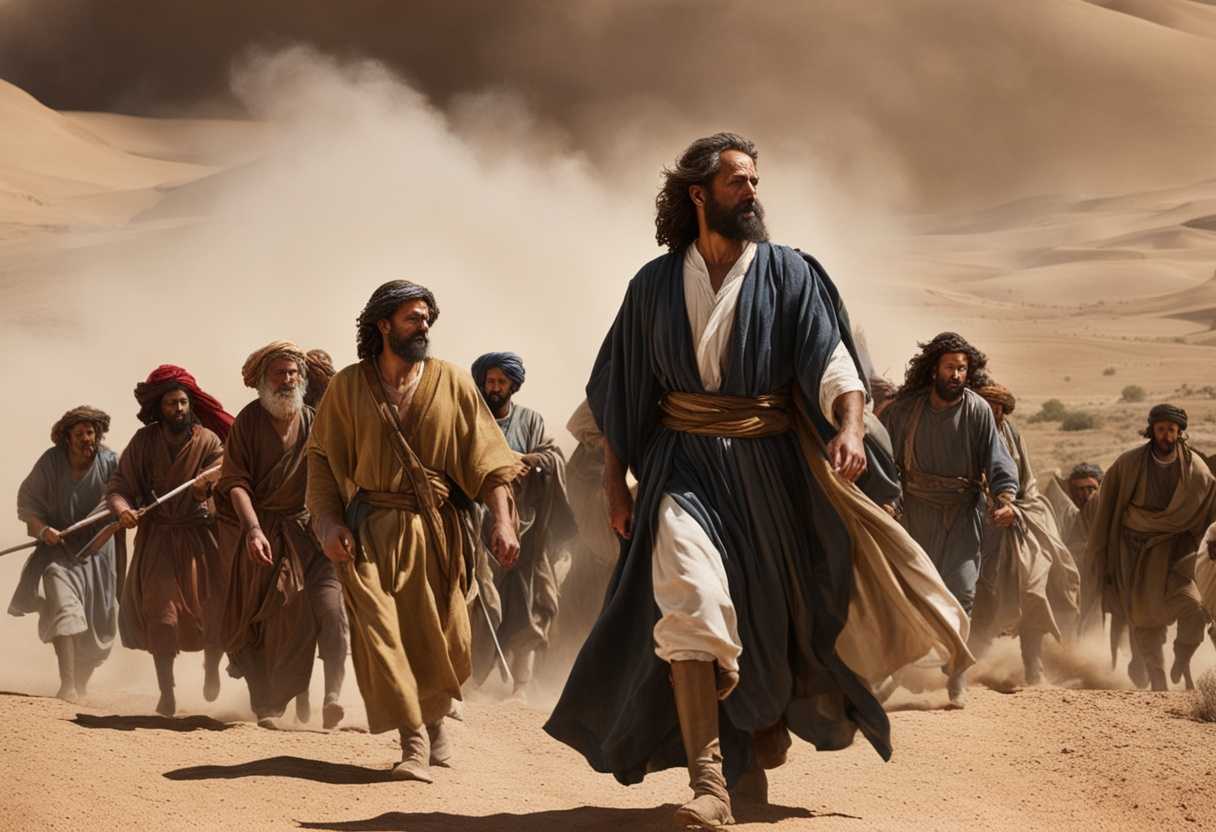
Setting the Scene for Deuteronomy 29:1-9
The scene in Deuteronomy 29:1-9 takes place in the vast wilderness of Moab, where the Israelites have been wandering for forty years after leaving Egypt. Moses, the revered leader of the Israelites, gathers all the people together – from the tribal leaders to the laborers, men, women, and children. The sun beats down on the dusty ground as they assemble before him, their clothes worn and their faces weathered from their long journey.
Moses begins to address the crowd, recounting the miraculous events that have brought them to this point. He reminds them of the trials and tribulations they have faced, the victories and the losses, and the faithfulness of God throughout it all. The people listen intently, their eyes fixed on Moses as he imparts wisdom and guidance for the journey ahead. They are a diverse group, representing the twelve tribes of Israel, each with their own history and traditions, now united in their shared purpose of reaching the Promised Land.
As the wind whips through the desert, carrying grains of sand with it, Moses’s words resonate with the people, stirring their hearts and minds. They stand together in the shadow of Mount Nebo, on the cusp of a new chapter in their journey, ready to renew their covenant with God and embrace the challenges and blessings that lie ahead.
What is Deuteronomy 29:1-9 about?
Moses in this verse urges the people of Israel to remember the faithfulness of God throughout their history. He emphasizes the importance of wholeheartedly following God’s commandments and remaining faithful to Him. Moses is encouraging the Israelites to trust in God and continue to follow His guidance by reminding them of His faithfulness. It also serves as a warning against straying from God’s path and the consequences that may follow.
Think about the times in your life when you have experienced God’s faithfulness. How did it feel to know that He was there for you in times of need and uncertainty? We too can look back on our own experiences and see how God has been present in our lives, just as Moses reminded the Israelites of God’s faithfulness. We can deepen our relationship with God and experience His faithfulness in a profound and transformative way by following Him wholeheartedly. So, let us reflect on God’s faithfulness in our own lives and commit ourselves to following Him wholeheartedly, just as Moses encouraged the people of Israel to do.
Understanding what Deuteronomy 29:1-9 really means
In Deuteronomy 29:1-9, we find Moses addressing the Israelites before they enter the Promised Land, reminding them of God’s covenant and the importance of obedience. The phrase “These are the words of the covenant” emphasizes the formal and binding nature of the relationship between God and His people. It points back to the covenant made at Mount Sinai, highlighting God’s continuity and faithfulness. The mention of God’s mighty acts in Egypt serves as a reminder of His power and deliverance, reinforcing trust in His abilities.
Despite witnessing God’s works, the Israelites were spiritually blind, needing divine intervention to truly understand. The forty years in the wilderness symbolize God’s guidance and provision, even in the face of disobedience. The miraculous preservation of their clothes and sandals showcases God’s care and provision in tangible ways. Ultimately, these experiences were meant to deepen the Israelites’ knowledge of God.
Related passages like Exodus 19:5-6, Jeremiah 31:31-34, and Hebrews 8:6-13 further illuminate the themes of covenant, internal transformation, and the superiority of the new covenant through Jesus Christ. Today, believers are called to remember God’s faithfulness, stay obedient to His teachings, and seek a deeper relationship with Him. Just as God provided for the Israelites, He continues to care for His people in unexpected ways, even in challenging times.
Consider a family facing financial struggles but finding their needs met unexpectedly. This mirrors the Israelites’ experience in the wilderness, highlighting God’s constant provision amidst difficulties. It serves as a reminder of God’s presence and care, even when His ways may seem mysterious. Deuteronomy 29:1-9 urges us to trust in God’s guidance, remember His faithfulness, and seek a deeper understanding of His works. Let us hold onto the assurance of His provision and care, knowing that He is always with us.
What does it mean to fully commit to God?
Fully committing to God means entering into a covenant relationship with Him, acknowledging His authority, and obeying His commandments faithfully. It involves recognizing God as the ultimate authority in our lives and seeking to honor Him in all that we do. We acknowledge His role as our Creator, Provider, and Redeemer by committing fully to God and dedicate ourselves to Him with our whole heart, soul, and strength. We are also challenged to enter into a committed relationship with Him as the Israelites were called to fully commit to God in Deuteronomy 29:1-9. This commitment requires a sincere and deep loyalty to God, a willingness to follow His will even when it is difficult or goes against our own desires. We demonstrate our trust in God’s guidance, wisdom, and love by fully committing to Him, knowing that He has our best interests at heart and will lead us on the right path. We surrender our own selfish desires and ambitions, seeking instead to align our will with His and trusting in His plans for our lives by fully committing to God. This commitment involves a daily surrender of our own will and a constant seeking of His presence, guidance, and strength. It is a lifelong journey of faith, obedience, and trust in the God who created us and calls us into a loving relationship with Him.
Application
Let’s dive into Deuteronomy 29:1-9 with a heart ready to embrace the covenant with the Lord. Take the leap to walk in faith and obedience, honoring the promises we’ve made with our Creator. It’s time to wholeheartedly commit to following His guidance, demonstrating our dedication through our decisions and faithfulness. Will you step up and bring God’s covenant to life in everything you do?

Reverend Michael Johnson is an experienced Church Minister with a profound expertise in spirituality and guidance. With a serene presence and a compassionate heart, he has faithfully served his congregation for over 20 years, leading them on a spiritual journey towards inner peace and enlightenment. Reverend Johnson’s extensive knowledge of religious philosophies and profound understanding of human nature have made him a trusted confidant and mentor to many, as he seamlessly weaves his profound wisdom into life teachings. Reverend Johnson’s calming demeanor and empathetic nature continue to uplift and heal souls, nurturing a sense of unity and tranquility within his community.