
I’m sorry for the confusion. Please provide the specific verse from 2 Samuel 3:7 that you would like me to help you interpret.
7 And Saul had a concubine whose name was Rizpah, the daughter of Aiah. And Ish-bosheth said to Abner, “Why have you gone in to my father’s concubine?”
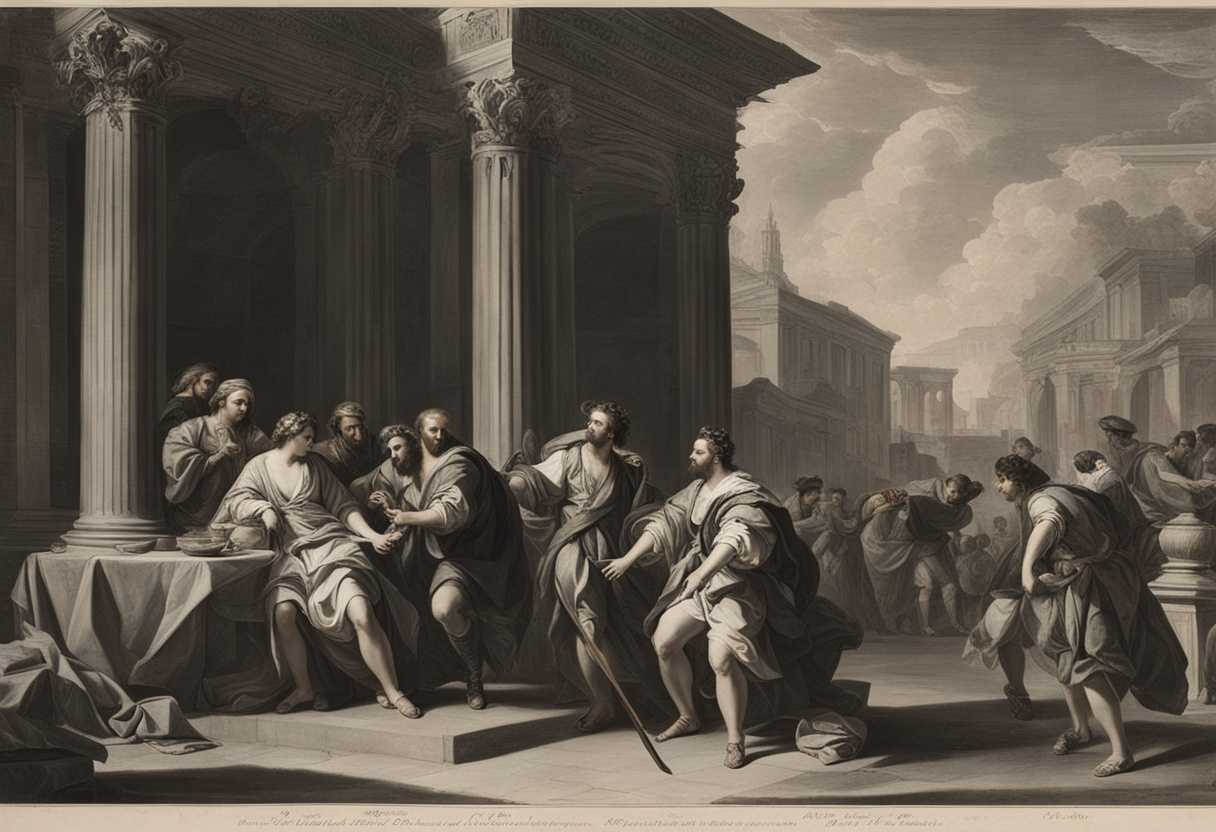
Setting the Scene for 2 Samuel 3:7
In 2 Samuel chapter 3, we find a tense and politically charged scene unfolding in the royal court of King David. The verse in question refers to a conflict between Abner, the commander of Saul’s army, and Ish-bosheth, Saul’s son and the newly appointed king of Israel. Abner had been a loyal supporter of Saul’s house but had recently switched his allegiance to David, recognizing him as the rightful king of all Israel. This betrayal had caused a rift between Abner and Ish-bosheth, leading to a heated exchange between the two.
The scene is set in the grand hall of the royal palace, with ornate tapestries adorning the walls and flickering torches casting a warm glow over the room. King Ish-bosheth sits on his throne, his face contorted with anger, as he confronts Abner, who stands before him, his expression defiant yet tinged with regret. The tension in the air is palpable as courtiers and soldiers look on, unsure of what will happen next.
As the confrontation escalates, Abner’s decision to switch sides becomes a pivotal moment in the power struggle for the throne of Israel. The clash of egos and ambitions in this scene sets the stage for the dramatic events that will unfold in the chapters to come, ultimately shaping the course of David’s reign and the future of the kingdom.
What is 2 Samuel 3:7 about?
Abner, Saul’s former army commander, and King David unfold a complex and tumultuous situation in this verse. The act of Abner sleeping with Saul’s concubine was not just a mere physical transgression but a symbolic betrayal of loyalty and respect. Abner, by engaging in such an intimate act with someone close to Saul, was not only disrespecting the deceased king but also challenging David’s authority and power.
This verse highlights the fragile dynamics of power and loyalty in the political landscape of ancient kingdoms. It demonstrates how personal actions can have far-reaching consequences, especially in the context of leadership and authority. The rift that emerges between Abner and David serves as a cautionary tale about the importance of maintaining integrity, respect, and honor in all relationships, especially those within positions of power. This verse invites us to consider the complexities of human relationships, loyalty, and the consequences of our actions. It challenges us to contemplate the impact of our choices on those around us and the importance of upholding values such as loyalty, respect, and integrity in all aspects of our lives. How can we ensure that our actions are aligned with our values and principles, even in the face of temptation or conflict? What can we learn from the mistakes of Abner and strive to cultivate strong and meaningful relationships built on trust and mutual respect?
Understanding what 2 Samuel 3:7 really means
In the intricate tapestry of power dynamics within ancient Israel, 2 Samuel 3:7 unveils a snapshot of political maneuvering and personal relationships. The mention of Rizpah, the daughter of Aiah and concubine of Saul, intertwines her identity with the legacy of Saul’s household, hinting at the intricate web of alliances and loyalties in that era. When Abner, the commander of Saul’s army, “had gone in to her,” the narrative transcends mere personal interactions, delving into the realm of power plays and claims to authority.
Drawing parallels from other biblical passages, such as 2 Samuel 16:21-22 and Genesis 35:22, we see a recurring theme of using relationships with concubines as assertions of power. These actions underscore the political weight attached to personal relationships in ancient societies, shedding light on the complexities of leadership and influence. Even in 1 Kings 2:22, Solomon’s response to Adonijah’s request regarding David’s concubine emphasizes the delicate balance of power and relationships in the political landscape.
The relevance of this verse extends beyond ancient history, resonating with contemporary issues of power, integrity, and the intertwining of personal and public life. In today’s world, individuals in positions of authority still grapple with the ethical implications of their actions, echoing the timeless struggle for integrity amidst power struggles. The cautionary tale embedded in 2 Samuel 3:7 prompts introspection on how we wield power and navigate personal relationships in our own spheres of influence.
To illustrate the repercussions of intertwining personal relationships with power dynamics, envision a scenario in a modern corporate setting where a senior executive exploits personal connections to advance professionally. This manipulation of relationships can breed toxicity and erode trust within the organization, mirroring the broader implications of Abner’s actions with Rizpah on the nation of Israel. The verse serves as a poignant reminder of the ripple effects of personal choices on the collective well-being of a community.
In conclusion, while rooted in a specific historical context, 2 Samuel 3:7 transcends time, offering enduring lessons on the ethical use of power, the significance of integrity, and the profound impact of personal actions on society at large. Reflecting on this verse beckons us to evaluate our own conduct, particularly in positions of influence, recognizing the profound consequences our choices can have on those around us.
What role does reconciliation play in healing relationships?
Reconciliation plays a crucial role in healing relationships as it involves resolving conflicts, repairing broken bonds, and restoring harmony between individuals or groups. It is a process that requires forgiveness, understanding, and a willingness to move past past hurts and grievances. Reconciliation in the context of relationships can bring about a sense of closure, promote mutual respect, and create a foundation for trust and cooperation to flourish once again. Individuals demonstrate a commitment to honoring the humanity and dignity of others, acknowledging their own faults, and working towards a shared vision of peace and unity by seeking reconciliation. Through this process, wounds can be healed, misunderstandings can be addressed, and relationships can be transformed from a state of discord to one of renewed connection and understanding. Reconciliation ultimately allows for a fresh start, a chance to rebuild what was broken, and a path towards a more harmonious and fulfilling relationship for all parties involved.
Application
In our busy lives, conflicts can be like tricky projects at work or misunderstanding in the family. It’s crucial to actively seek peace and unity, just as you’d strive to complete a challenging task or repair a strained relationship. Don’t let unresolved issues linger like unfinished deadlines; take action now to mend broken bonds and embrace forgiveness. Will you choose to be the catalyst for reconciliation today?

Reverend Michael Johnson is an experienced Church Minister with a profound expertise in spirituality and guidance. With a serene presence and a compassionate heart, he has faithfully served his congregation for over 20 years, leading them on a spiritual journey towards inner peace and enlightenment. Reverend Johnson’s extensive knowledge of religious philosophies and profound understanding of human nature have made him a trusted confidant and mentor to many, as he seamlessly weaves his profound wisdom into life teachings. Reverend Johnson’s calming demeanor and empathetic nature continue to uplift and heal souls, nurturing a sense of unity and tranquility within his community.