
Acts 16:22-40 is about Paul and Silas showing steadfast faith and sharing the message of salvation, even in the midst of adversity, leading to the conversion of the jailer and his household.
22 The crowd joined in attacking them, and the magistrates tore the garments off them and gave orders to beat them with rods.
23 And when they had inflicted many blows upon them, they threw them into prison, ordering the jailer to keep them safely.
24 Having received this order, he put them into the inner prison and fastened their feet in the stocks.
25 About midnight Paul and Silas were praying and singing hymns to God, and the prisoners were listening to them,
26 and suddenly there was a great earthquake, so that the foundations of the prison were shaken.
27 When the jailer woke and saw that the prison doors were open, he drew his sword and was about to kill himself, supposing that the prisoners had escaped.
28 But Paul cried with a loud voice, “Do not harm yourself, for we are all here.”
29 And the jailer called for lights and rushed in, and trembling with fear he fell down before Paul and Silas.
30 Then he brought them out and said, “Sirs, what must I do to be saved?”
31 And they said, “Believe in the Lord Jesus, and you will be saved, you and your household.”
32 And they spoke the word of the Lord to him and to all who were in his house.
33 And he took them the same hour of the night and washed their wounds; and he was baptized at once, he and all his family.
34 Then he brought them up into his house and set food before them. And he rejoiced along with his entire household that he had believed in God.
35 But when it was day, the magistrates sent the police, saying, “Let those men go.”
36 And the jailer reported these words to Paul, saying, “The magistrates have sent to let you go. Therefore come out now and go in peace.”
37 But Paul said to them, “They have beaten us publicly, uncondemned, men who are Roman citizens, and have thrown us into prison; and do they now throw us out secretly? No! Let them come themselves and take us out.”
38 The police reported these words to the magistrates, and they were afraid when they heard that they were Roman citizens.
39 So they came and apologized to them. And they took them out and asked them to leave the city.
40 So they went out of the prison and visited Lydia. And when they had seen the brothers, they encouraged them and departed.
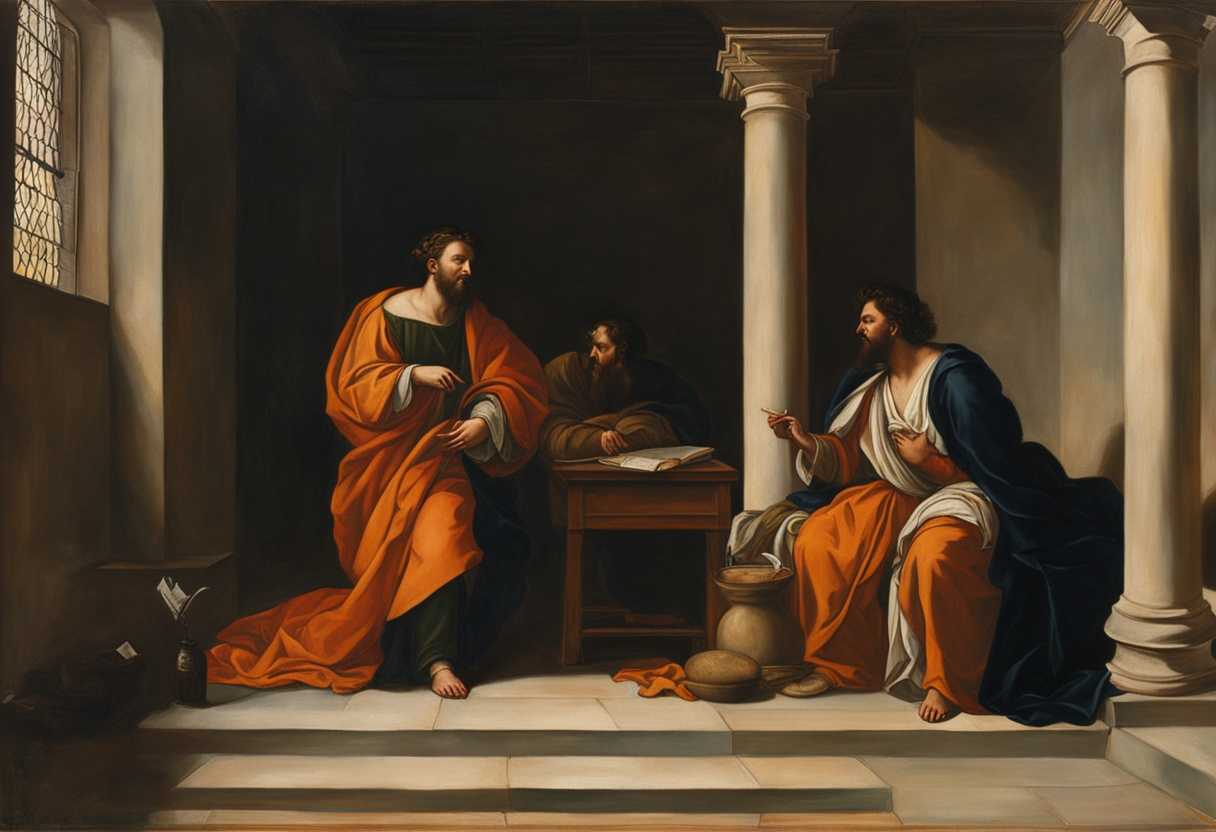
Setting the Scene for Acts 16:22-40
In Acts chapter 16, we find the apostle Paul and his companion Silas in the city of Philippi. The scene unfolds in the midst of a tumultuous situation as Paul and Silas had been preaching the Gospel and casting out a spirit of divination from a slave girl. This act angered her owners, who had been profiting from her fortune-telling abilities, leading to Paul and Silas being seized and dragged before the authorities.
The setting is a crowded marketplace in Philippi, with onlookers gathering to witness the commotion. The Roman magistrates order Paul and Silas to be stripped, beaten, and thrown into prison. Despite their harsh treatment, Paul and Silas remain steadfast in their faith, praying and singing hymns to God in the darkness of their cell. Suddenly, an earthquake shakes the prison, causing the doors to open and the prisoners’ chains to fall off.
The jailer, fearing that the prisoners had escaped, is about to take his own life when Paul stops him, assuring him that all the prisoners are still there. This act of compassion leads the jailer to inquire about salvation, and Paul and Silas share the Gospel with him and his household, resulting in their baptism. The scene ends with Paul and Silas being released from prison, vindicated by the magistrates, and departing from Philippi, leaving behind a newly established church in the city.
What is Acts 16:22-40 about?
Paul and Silas’ story is a powerful example of how God’s miraculous interventions can lead to the transformation of even the most challenging situations. Imagine being unjustly imprisoned for spreading the Word of God – what would be your response? Despite their suffering, Paul and Silas chose to worship and pray even as they were shackled in chains. And then suddenly, an earthquake shook the prison, opening the doors and setting them free. The miraculous nature of this event highlights that nothing is impossible for God, and He can use even the most unexpected circumstances to display His power and bring about His will.
Furthermore, the jailer and his household witnessing this incredible event led to their salvation. The jailer, realizing the magnitude of what had happened, asked Paul and Silas what he needed to do to be saved. This displays the transformative power of God’s grace, which can bring about conversions and new beginnings in the most unexpected ways. Additionally, the revelation of Paul’s Roman citizenship showcases how God can work through legal and social structures for His purposes. This brings to mind the thought-provoking question – how does God use our circumstances, both good and bad, to further His kingdom and reveal His glory? This verse challenges us to trust in God’s plans, even when they seem incomprehensible, knowing that He is always at work for our good.
Understanding what Acts 16:22-40 really means
In Acts 16:22-40, we witness the remarkable story of Paul and Silas, who, despite facing unjust imprisonment and physical suffering in Philippi, chose to respond with prayer and hymns of praise to God. This response in the midst of adversity serves as a profound example of unwavering faith and worship even in the darkest of circumstances. The passage highlights the resilience of these early Christians and their trust in God’s sovereignty, regardless of their external challenges.
The sudden and violent earthquake that shook the prison, opening the doors but not prompting Paul and Silas to escape, symbolizes God’s intervention and power in the midst of human trials. It serves as a reminder that God is always present and capable of working miracles in unexpected ways, even in the most dire situations. The jailer’s question, “What must I do to be saved?” reflects a moment of spiritual awakening and desperation for salvation, leading to the conversion of the jailer and his household through the message of believing in the Lord Jesus.
The simplicity and inclusivity of the gospel message are evident in Paul’s response to the jailer, “Believe in the Lord Jesus, and you will be saved—you and your household.” This declaration emphasizes the universal offer of salvation through faith in Christ, extending to all who are willing to believe. The subsequent release of Paul and Silas by the magistrates, with Paul demanding a public apology for their wrongful imprisonment, showcases the importance of seeking justice and standing up against injustice, even in the face of authority.
The relevance of this passage to people today is profound. It challenges believers to maintain their faith in the midst of adversity, trusting in God’s plan and continuing to worship Him regardless of their circumstances. The story of Paul and Silas serves as a reminder that our actions and attitudes in times of trial can have a powerful impact on those around us, leading to opportunities for transformation and witnessing to God’s grace and power.
In a modern context, the example of someone unjustly losing their job but choosing to trust in God, serve others, and maintain a positive outlook can mirror the faith and resilience displayed by Paul and Silas. Just as their steadfast faith led to the conversion of the jailer and his family, our unwavering trust in God can inspire those around us and pave the way for unexpected blessings and opportunities in the midst of adversity.
In conclusion, Acts 16:22-40 stands as a testament to the enduring strength of faith, the significance of worship in all circumstances, and the transformative nature of God’s intervention. It calls believers to emulate the example of Paul and Silas by trusting in God’s sovereignty, remaining steadfast in faith, and being a beacon of hope and witness to others through their actions and attitudes.
How can we maintain faith in times of suffering?
We can maintain faith in times of suffering by trusting in God’s plan and His promises. Even when we face trials and tribulations, we can hold on to the belief that God is working all things together for our good. Remembering that God is sovereign and in control can bring comfort and peace in the midst of suffering.
Furthermore, we can find strength in knowing that our suffering has a purpose. Just like Paul and Silas endured hardships in Acts 16, our trials can also be opportunities for God to work in and through us. Our faith is strengthened as we rely on God’s grace and power to sustain us through difficult times, knowing that He will never leave us nor forsake us.
Lastly, we can maintain faith by looking beyond our current circumstances and keeping an eternal perspective. Our present sufferings are temporary, but our hope in Christ is eternal. We can endure suffering with a sense of hope and assurance that God is with us every step of the way by fixing our eyes on the unseen.
Application
Let the story of Paul and Silas motivate you to keep the faith even in tough times. Just like they found strength through prayer, let your faith be your guiding light in challenging situations. Trust that God is always with you, offering support and deliverance in times of need. Will you stand strong in your faith, drawing inspiration from their story?

Reverend Michael Johnson is an experienced Church Minister with a profound expertise in spirituality and guidance. With a serene presence and a compassionate heart, he has faithfully served his congregation for over 20 years, leading them on a spiritual journey towards inner peace and enlightenment. Reverend Johnson’s extensive knowledge of religious philosophies and profound understanding of human nature have made him a trusted confidant and mentor to many, as he seamlessly weaves his profound wisdom into life teachings. Reverend Johnson’s calming demeanor and empathetic nature continue to uplift and heal souls, nurturing a sense of unity and tranquility within his community.