
Exodus 22:20-21 is about reminding the Israelites to show kindness and compassion to foreigners, widows, and orphans, for they were once strangers in the land of Egypt.
20 “Whoever sacrifices to any god, other than the Lord alone, shall be devoted to destruction.
21 “You shall not wrong a sojourner or oppress him, for you were sojourners in the land of Egypt.
Setting the Scene for Exodus 22:20-21
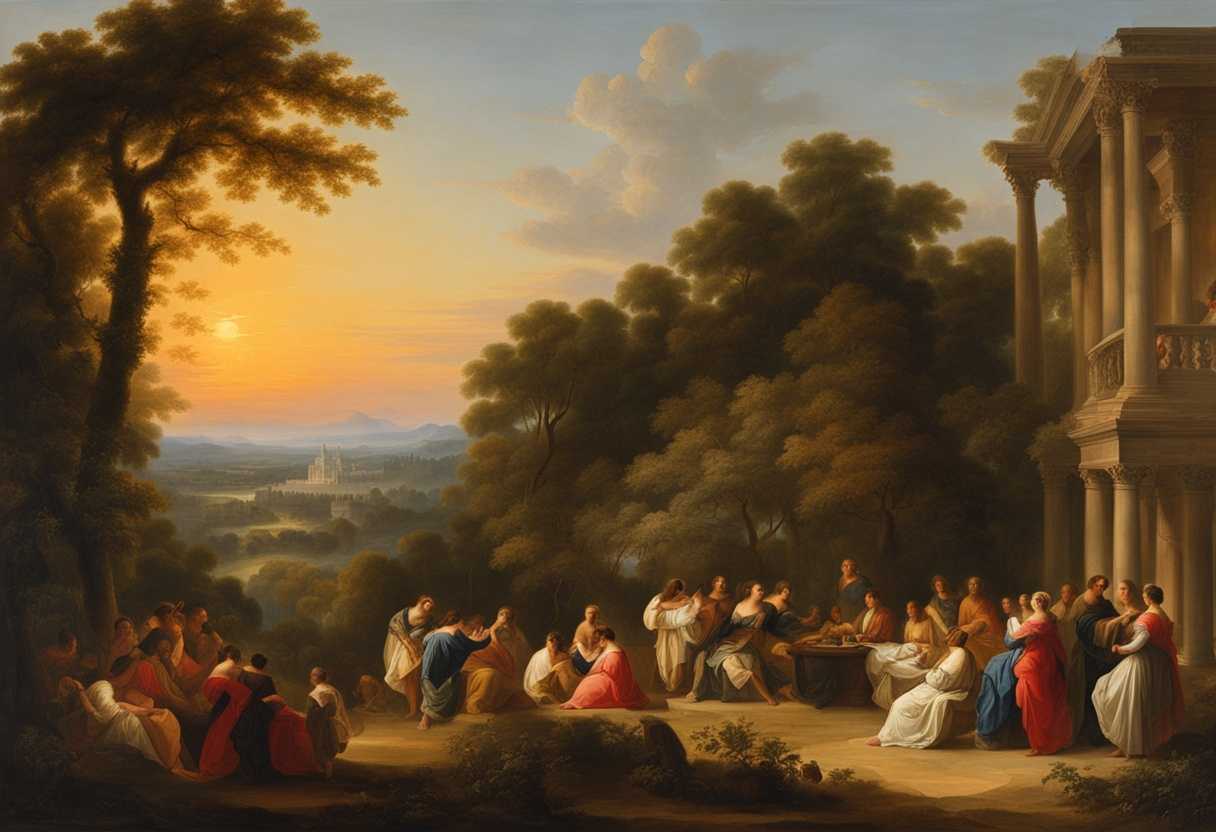
In Exodus 22:20-21, the scene is set in the midst of the Israelites’ journey through the wilderness after their exodus from Egypt. The Israelites have set up camp at the foot of Mount Sinai, where Moses has gone up to receive the commandments from God. The camp is bustling with activity as the people go about their daily tasks, tending to their tents, livestock, and families.
Among the crowd, we see Moses, the revered leader of the Israelites, who is deeply engrossed in conversation with Aaron, his brother and the high priest. Nearby, a group of elders is gathered, discussing matters of justice and righteousness in accordance with the laws given to them by God. In the distance, the majestic Mount Sinai looms, its peak shrouded in clouds, a constant reminder of the divine presence that hovers over the camp.
As the sun begins to set, casting a warm golden glow over the camp, Moses raises his voice to address the people, reminding them of the commandments they have received and urging them to show compassion and kindness to the foreigners and strangers among them. The scene is filled with a sense of reverence and awe, as the Israelites strive to live according to the laws and principles laid out for them by God.
What is Exodus 22:20-21 about?
This verse reminds us of the importance of treating all individuals with kindness and compassion, especially those who might be marginalized or vulnerable in society. The verse highlights the need to show empathy and understanding towards those who may be outsiders or facing difficult circumstances by specifically mentioning foreigners and widows. It serves as a powerful call to action to actively resist mistreatment, discrimination, or neglect of these individuals.
Imagine the impact of our interactions and behaviors towards foreigners and widows. How do our actions reflect our values and beliefs? Do we truly see and hear the struggles and cries of those who may feel unheard or unseen in our communities? This verse challenges us to consider the power of our words and actions in showing love, mercy, and justice to all members of society, regardless of their background or circumstances. It serves as a gentle reminder that our treatment of others does not go unnoticed, as God is always listening and attentive to the cries of those who are mistreated or oppressed. Let us follow the timeless wisdom of this verse by embodying compassion and empathy in our interactions with others.
Understanding what Exodus 22:20-21 really means
In the Covenant Code of the Israelites, specifically in Exodus 22:20-21, we encounter laws that emphasize the significance of loyalty and justice in the community. The verse “Whoever sacrifices to any god other than the Lord must be destroyed” highlights the exclusive worship that God demands, stressing the importance of faithfulness to the one true God. This command serves as a reminder to prioritize our devotion to God above all else, steering clear of any form of idolatry that may lead us astray.
Furthermore, the injunction “Do not mistreat or oppress a foreigner, for you were foreigners in Egypt” underscores the call for empathy and fairness towards foreigners. By drawing attention to the Israelites’ own history of oppression and deliverance, this command urges them to treat others with the same compassion and respect that they would desire for themselves. It serves as a poignant reminder of the importance of extending kindness and justice to those who may be different from us.
In Deuteronomy 6:14-15, we find a reinforcement of the prohibition against following other gods, emphasizing the jealousy of God for His people’s exclusive worship. This echoes the sentiment in Exodus, emphasizing the need for unwavering faithfulness to God amidst the various temptations and distractions that may surround us. Similarly, Leviticus 19:33-34 echoes the call for treating foreigners with love and equality, emphasizing the shared humanity and dignity of all individuals, regardless of their background or nationality.
Today, these verses continue to hold relevance in guiding our actions and attitudes. In a world filled with diverse beliefs and cultures, the call to remain faithful to God and to show compassion towards others remains as crucial as ever. The command to love our neighbors as ourselves, regardless of their origins or circumstances, challenges us to extend empathy and kindness to all, mirroring the love and justice of God in our interactions with others.
Consider a community faced with the arrival of a foreign family seeking refuge. Initially met with hesitation and uncertainty, the community’s response transforms when one member recalls their own family’s struggles as migrants. Through a gesture of kindness and understanding, the community learns to embrace the newcomers, enriching their lives through the diversity and shared experiences. This anecdote illustrates the transformative power of empathy and the positive impact of following the principles outlined in Exodus 22:20-21.
In conclusion, these verses from Exodus serve as a timeless reminder of the importance of exclusive devotion to God and the imperative of showing compassion towards those who may be marginalized or different from us. By embodying these principles in our daily lives, we can contribute to the creation of a more just and loving community, reflecting God’s love and justice in our interactions with others.
How do we show love and kindness to strangers?
Showing love and kindness to strangers can be done by being empathetic and caring towards those who may be different from us or not part of our immediate community. This can involve extending a helping hand, showing hospitality, and being inclusive towards others who may feel marginalized or excluded. We embody the teachings of showing love to others as we would want for ourselves by treating strangers with compassion and respect.
It is important to remember that acts of kindness towards strangers reflect our values and beliefs as individuals. We contribute to creating a more compassionate and inclusive society by demonstrating empathy and understanding towards those outside of our usual social circles. Through small gestures of kindness, we can make a significant impact on the lives of strangers, fostering a sense of belonging and connection that transcends differences.
Application
Let’s embrace the wisdom of Exodus 22:20-21 and embody compassion and kindness towards those in need – the strangers, widows, and orphans in our midst. Let’s be the beacon of light in this modern world, where acts of generosity and love shine brighter than ever. Together, let’s make a difference by extending our hands and hearts to those who require our support. Will you stand with me in being the change we wish to see in the world today?

Reverend Michael Johnson is an experienced Church Minister with a profound expertise in spirituality and guidance. With a serene presence and a compassionate heart, he has faithfully served his congregation for over 20 years, leading them on a spiritual journey towards inner peace and enlightenment. Reverend Johnson’s extensive knowledge of religious philosophies and profound understanding of human nature have made him a trusted confidant and mentor to many, as he seamlessly weaves his profound wisdom into life teachings. Reverend Johnson’s calming demeanor and empathetic nature continue to uplift and heal souls, nurturing a sense of unity and tranquility within his community.