
Matthew 27:50 is about the moment when Jesus, after crying out in a loud voice and breathing his last, gave up his spirit, signifying the completion of his mission on earth and his sacrificial death for the salvation of humanity.
50 And Jesus cried out again with a loud voice and yielded up his spirit.
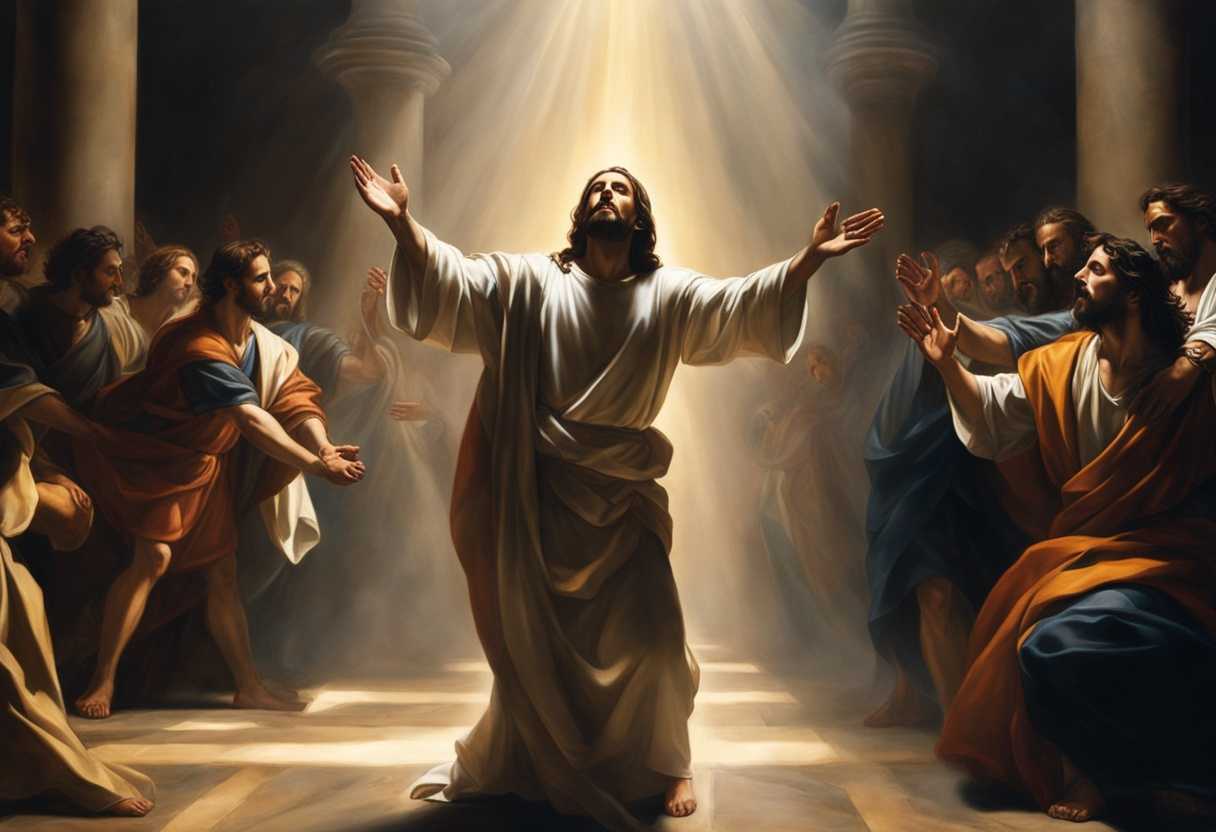
Setting the Scene for Matthew 27:50
The scene described in Matthew 27:50 takes place at Golgotha, the place of the Skull, where Jesus was crucified. The sky is darkened, and there is an eerie stillness in the air as Jesus hangs on the cross, having been crucified alongside two criminals. The crowd that had gathered to witness the crucifixion is a mix of onlookers, soldiers, religious leaders, and disciples of Jesus.
Among the crowd are Mary, the mother of Jesus, and Mary Magdalene, who are standing at a distance, grieving and watching in sorrow as Jesus suffers. The Roman soldiers are carrying out their duties, while the religious leaders mock Jesus and challenge him to save himself if he truly is the Son of God. The disciples, including John, are also present, grappling with the reality of the situation and the impending loss of their beloved teacher.
As Jesus utters his final words and breathes his last, a profound sense of darkness and despair hangs over Golgotha, signaling the culmination of Jesus’ earthly ministry and the sacrifice he made for the salvation of humanity. The scene is filled with a mix of emotions – sorrow, disbelief, and perhaps even a glimmer of hope for those who believe in the message Jesus preached.
What is Matthew 27:50 about?
Jesus, the Son of God, breathes His last breath on the cross in this powerful verse. This moment symbolizes the ultimate sacrifice made by Jesus for the redemption of humanity. Jesus demonstrates His complete submission to God’s will and His triumph over sin and death by yielding His spirit. It is a moment of profound significance, as it marks the culmination of Jesus’ earthly mission to reconcile humanity with God.
Imagine standing at the foot of the cross, witnessing the profound act of love and sacrifice that Jesus displayed. Jesus willingly lays down His life for us, revealing the full extent of God’s grace and mercy in this moment. His death on the cross is not the end but the beginning of a new chapter in the story of salvation, where sin is conquered, and eternal life is made available to all who believe. Let us reflect on this verse and ponder the depth of Jesus’ love for us and the victory He achieved through His death and resurrection.
Understanding what Matthew 27:50 really means
In the Gospel of Matthew, we encounter a pivotal moment in the crucifixion narrative as we read Matthew 27:50. This verse captures the solemn instance of Jesus’ death on the cross, a moment that holds immense significance in Christian theology. To truly grasp the depth of this verse, it is essential to delve into the broader context of Jesus’ crucifixion, recognizing the sacrificial nature of his ultimate act of love for humanity.
As we explore related passages such as John 19:30 and Luke 23:46, we witness the completion of Jesus’ earthly mission and his unwavering trust in God even in the face of death. These verses, along with the prophecy in Isaiah 53:5, paint a vivid picture of Jesus’ sacrificial death as a fulfillment of divine purpose and a profound expression of God’s love for humanity.
The relevance of Matthew 27:50 extends beyond its historical context, resonating deeply with people today. It serves as a poignant reminder of the extent of Jesus’ suffering and the depth of God’s love, offering hope and redemption in a world marred by suffering and injustice. In contemplating this verse, we are confronted with the reality of Jesus’ sacrifice for our sins, inviting us to reflect on the profound implications of his death on the cross.
To illustrate the magnitude of Jesus’ sacrifice, consider the image of a firefighter rushing into a burning building to save a child. Just as the firefighter selflessly risks their life for the sake of another, Jesus willingly laid down his life for the salvation of humanity. This analogy underscores the selfless love and sacrificial nature of Jesus’ act on the cross, calling us to respond with gratitude and reverence for his ultimate sacrifice.
Within the details of Matthew 27:50, phrases like “cried out again with a loud voice” and “gave up his spirit” carry profound meaning. These expressions convey the intensity and deliberateness of Jesus’ final moments, emphasizing the voluntary nature of his sacrifice. Jesus’ conscious surrender of his life underscores his role as the Savior, who willingly offered himself for the redemption of humanity, demonstrating his ultimate authority over life and death.
By meditating on Matthew 27:50 and its implications, we are invited to deepen our understanding of Jesus’ sacrificial love and its transformative power in our lives. This verse stands as a testament to the profound depth of God’s love and the redemptive significance of Jesus’ sacrifice, calling us to respond with gratitude, reverence, and a renewed sense of purpose in light of the cross.
How can we embrace and embody Jesus’ sacrifice today?
We can embrace and embody Jesus’ sacrifice today by recognizing the depth of His love for us. Jesus willingly endured immense suffering, humiliation, and ultimately death on the cross out of pure love for all humanity. This selfless act of sacrifice serves as a profound example for us to follow in our own lives. We can strive to love others wholeheartedly, to serve selflessly, and to prioritize the well-being of others above our own desires.
Furthermore, we can embrace and embody Jesus’ sacrifice by demonstrating forgiveness and grace towards others. We are called to extend forgiveness to those who have wronged us, just as Jesus forgave those who crucified Him. We can reflect the transformative power of Jesus’ sacrifice in our own lives by letting go of bitterness and resentment. Through acts of forgiveness and reconciliation, we can spread the message of love and redemption that Jesus embodied through His sacrifice on the cross. We can embrace and embody Jesus’ sacrifice by living a life of humility and service. Jesus, though He was the Son of God, humbled Himself to the point of death on a cross for the sake of others. We can follow His example by seeking to serve and uplift those around us, especially the marginalized and vulnerable in society. We emulate the love and compassion that Jesus embodied in His ultimate sacrifice by sacrificially giving of ourselves for the betterment of others.
Application
Think about how Jesus, in Matthew 27:50, gave His all for us. Imagine someone in your workplace giving their utmost, not for a bonus, but purely out of love. Reflect on the incredible sacrifice Jesus made for you; this is more profound than any daily grind or family commitment. What actions will you take to honor this immense love and sacrifice in your life? How will you show your gratitude today?

Reverend Michael Johnson is an experienced Church Minister with a profound expertise in spirituality and guidance. With a serene presence and a compassionate heart, he has faithfully served his congregation for over 20 years, leading them on a spiritual journey towards inner peace and enlightenment. Reverend Johnson’s extensive knowledge of religious philosophies and profound understanding of human nature have made him a trusted confidant and mentor to many, as he seamlessly weaves his profound wisdom into life teachings. Reverend Johnson’s calming demeanor and empathetic nature continue to uplift and heal souls, nurturing a sense of unity and tranquility within his community.