
Leviticus 8:14-15 is about Moses consecrating Aaron and his sons for the priesthood by anointing them with oil and preparing them for their service to God.
14 Then he brought the bull of the sin offering, and Aaron and his sons laid their hands on the head of the bull of the sin offering.
15 Then he killed it, and Moses took the blood, and with his finger put it on the horns of the altar around it and purified the altar and poured out the blood at the base of the altar and consecrated it to make atonement for it.
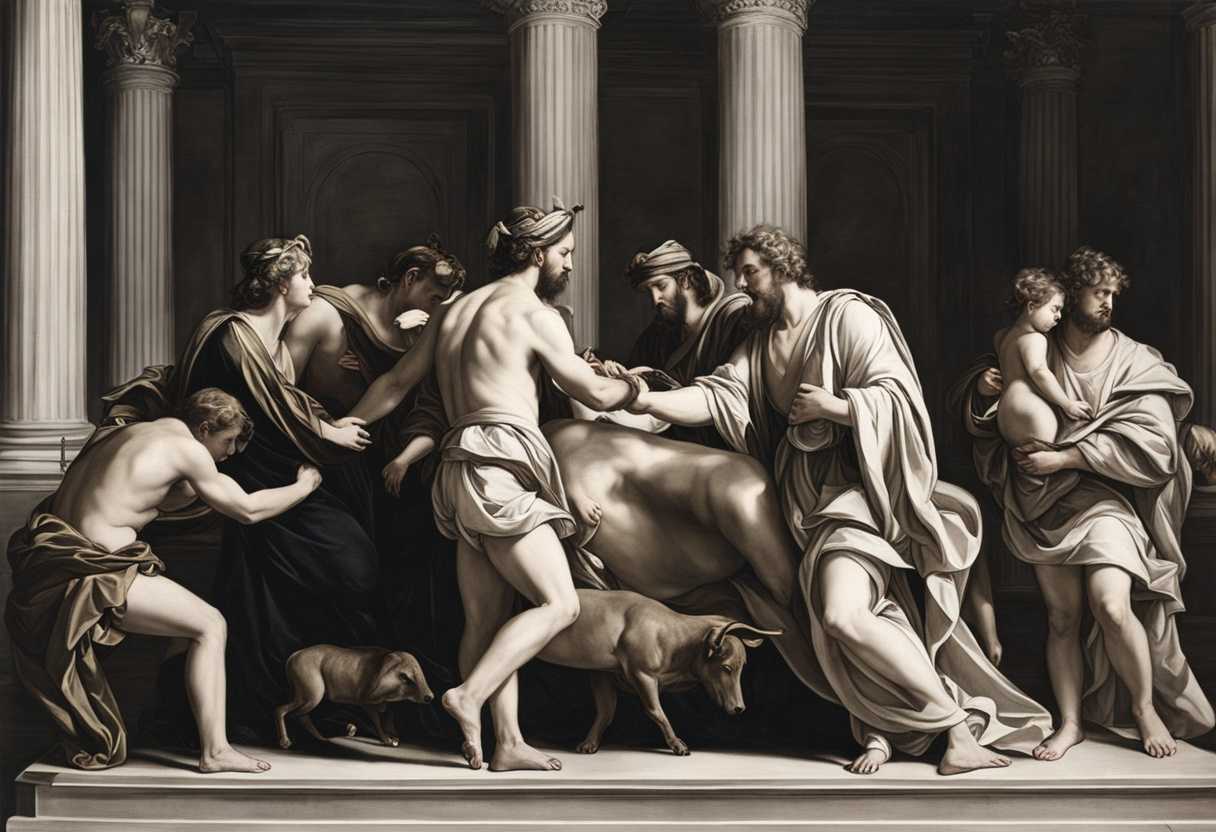
Setting the Scene for Leviticus 8:14-15
In Leviticus 8:14-15, we find ourselves in the Tabernacle courtyard, a sacred space where the Israelites gathered for worship and sacrifices. The scene is filled with a sense of reverence and anticipation as Aaron, the newly appointed high priest, and his sons, Nadab, Abihu, Eleazar, and Ithamar, are being consecrated for their priestly duties. The air is heavy with the scent of burning incense and the sound of prayers being offered up to the Lord.
Surrounding the courtyard are the tribes of Israel, gathered to witness this important moment in their religious history. The people are dressed in their finest garments, their faces reflecting a mixture of awe and joy as they watch the ceremony unfold. The Levites, chosen to assist the priests in their duties, stand ready to fulfill their roles in the worship of God.
As Moses follows the instructions given to him by the Lord, he anoints Aaron and his sons with oil, symbolizing their set-apartness for the service of God. The garments of the priests are adorned with intricate designs and precious stones, signifying their role as mediators between the people and God. In this sacred moment, the presence of the Lord is palpable, and the people of Israel are reminded of their covenant with Him and the importance of obedience and worship.
What is Leviticus 8:14-15 about?
Aaron, the high priest, and his sons carry out their priestly duties by presenting a sin offering and a burnt offering to the Lord in this verse. These offerings were significant aspects of the Israelites’ worship practices, symbolizing the atonement for sin and the dedication of the worshipper to God.
Through the sin offering, the priests acknowledged the sins of the people and sought forgiveness and purification. The burnt offering, on the other hand, represented complete surrender and dedication to God. This act of worship was meant to bring the people closer to God and renew their commitment to Him. Reflecting on this verse reminds us of the importance of acknowledging our sins, seeking forgiveness, and dedicating ourselves wholeheartedly to God. Just like Aaron and his sons, we are called to approach God with humility and reverence, recognizing His holiness and our need for His mercy and grace. We should strive to live lives that please God by constantly seeking to draw near to Him through acts of worship and devotion.
Understanding what Leviticus 8:14-15 really means
Leviticus 8:14-15 paints a vivid picture of the consecration of Aaron and his sons as priests, a pivotal moment in the Old Testament narrative. This passage is not merely a historical account but a profound lesson in the need for purification and atonement before approaching God. The offering of a bull as a sin offering symbolizes the cleansing required for the priests to be deemed holy and acceptable for their sacred duties. The act of laying hands upon the animal’s head signifies the transfer of sin, highlighting the gravity of sin and the necessity of a sacrificial system for redemption.
In delving into the key phrases of this passage, we uncover deeper meanings that resonate across time and cultures. The concept of the “sin offering” speaks to the universal need for atonement and purification from wrongdoing. It serves as a poignant reminder of the human condition and the constant need for spiritual cleansing. The symbolic act of transferring sin onto the sacrificial animal underscores the idea of vicarious sacrifice, where another bears the consequences of our transgressions, pointing towards a future ultimate sacrifice in Jesus Christ.
Drawing connections to related biblical passages such as Hebrews 9:22 and 1 Peter 2:9, we see a seamless thread woven through the Old and New Testaments. The shedding of blood for forgiveness, as emphasized in Hebrews, finds its ultimate fulfillment in Christ’s sacrificial death. The priesthood ordained in Leviticus finds its spiritual counterpart in all believers, as highlighted in 1 Peter, emphasizing the call to holiness and service to God.
The relevance of these ancient rituals to contemporary audiences lies in the enduring need for purification and atonement. While the era of animal sacrifices has passed, the underlying principle of seeking forgiveness and cleansing from sin remains as pertinent as ever. Jesus Christ emerges as the ultimate sin offering, whose sacrifice on the cross transcends time and culture, offering complete forgiveness and reconciliation with God.
An anecdote can further illuminate the profound impact of forgiveness and purification in our lives. Just as a burdened soul finds relief and joy in sincere reconciliation, so do we experience the cleansing power of Jesus’ sacrifice, restoring our relationship with God and freeing us from the weight of sin.
In conclusion, the intricate rituals of Leviticus serve as a poignant reminder of the seriousness of sin and the divine provision for redemption. By understanding and reflecting on these ancient practices, we deepen our appreciation for Jesus’ sacrificial offering and are inspired to live as a holy priesthood, dedicated to serving God with purified hearts.
How can we consecrate ourselves before serving God?
We must first recognize His holiness and our own unworthiness in order to consecrate ourselves before serving God. This involves a process of purification and dedication, symbolized by rituals such as washing and dressing in clean garments. We acknowledge our separation from sin and our commitment to serving God with a pure heart.
Consecration also requires a mindset of reverence and devotion towards God. It is a deliberate choice to set ourselves apart for His service, to prioritize His will above our own desires, and to align our thoughts and actions with His commandments. We prepare ourselves to be vessels for God’s work and to carry out His purposes with integrity and obedience by sanctifying ourselves in this way. Consecrating ourselves before serving God is a personal and intentional decision that ultimately reflects our commitment to live a life that honors Him. It is a continual process of seeking His presence, submitting to His authority, and allowing His Spirit to work in and through us as we serve Him faithfully.
Application
Ponder the appointment of Aaron and his sons in Leviticus 8:14-15, marked with divine purpose. Just like them, where in your life can you commit to God’s work more deeply? Let this story ignite a fervor within you to embrace your mission wholeheartedly and ready your spirit for the divine assignments ahead. Will you courageously embark on this journey towards greater dedication and passion for God now?

Reverend Michael Johnson is an experienced Church Minister with a profound expertise in spirituality and guidance. With a serene presence and a compassionate heart, he has faithfully served his congregation for over 20 years, leading them on a spiritual journey towards inner peace and enlightenment. Reverend Johnson’s extensive knowledge of religious philosophies and profound understanding of human nature have made him a trusted confidant and mentor to many, as he seamlessly weaves his profound wisdom into life teachings. Reverend Johnson’s calming demeanor and empathetic nature continue to uplift and heal souls, nurturing a sense of unity and tranquility within his community.