
Ruth 4:6 is about Boaz securing the right to redeem Ruth and Naomi’s land, assuming the responsibility of marrying Ruth and ensuring their family lineage and inheritance.
6 Then the redeemer said, “I cannot redeem it for myself, lest I impair my own inheritance. Take my right of redemption yourself, for I cannot redeem it.”
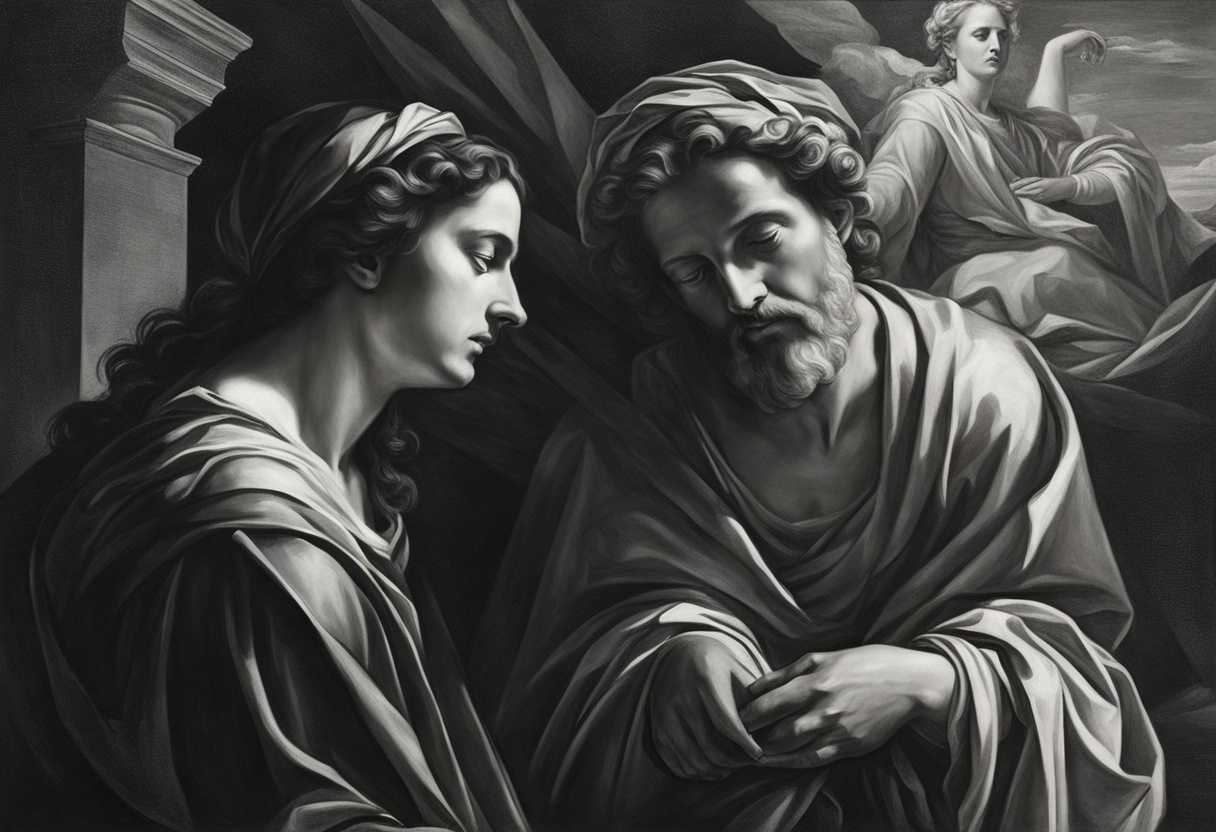
Setting the Scene for Ruth 4:6
In Ruth chapter 4, we find Boaz at the city gate, a place where important transactions and legal matters were often conducted in ancient times. Boaz had taken his place at the gate, ready to fulfill his duty as the kinsman-redeemer for Ruth, a Moabite widow who had come to glean in his fields. Alongside Boaz was the other potential kinsman-redeemer, whose name is not mentioned in the text.
The scene is set in the bustling city gate of Bethlehem, with merchants, travelers, and locals going about their business. The sun beats down on the dusty ground as Boaz waits for the other kinsman-redeemer to pass by. The elders of the city are also present, serving as witnesses to the transaction that is about to take place. Tension hangs in the air as Boaz and the other man prepare to negotiate the redemption of Ruth and her deceased husband’s inheritance.
As the two men discuss the matter, Ruth stands nearby, her future hanging in the balance. She had followed the instructions of her mother-in-law, Naomi, and presented herself to Boaz in the middle of the night at the threshing floor. Now, she waits anxiously to see if Boaz will be able to secure her future and provide her with a home and a family. The outcome of this meeting at the city gate will determine Ruth’s fate and solidify the lineage that will eventually lead to the birth of King David.
What is Ruth 4:6 about?
Boaz’s decision to marry Ruth beautifully depicts the act of redemption in this verse. Boaz secures Ruth’s future, provides for her, and restores her dignity and position in society by marrying her. It is a powerful symbol of love, mercy, and compassion, as Boaz takes responsibility for Ruth and ensures that she is cared for and protected.
Imagine the significance of this act of redemption in Ruth and Boaz’s time. Ruth, a widow and a foreigner, faced vulnerability and uncertainty in a society where women relied on male relatives for protection and provision. Boaz’s willingness to marry Ruth not only demonstrates his kindness and generosity, but also shows his commitment to upholding justice and showing compassion to those in need. It is a powerful example of how love and kindness can overcome societal norms and provide hope and security for the marginalized. Let us consider how we can be agents of redemption in our own lives as we reflect on this verse. How can we show kindness, compassion, and love to those who are in need of support and protection? How can we follow Boaz’s example and extend a helping hand to those who may be marginalized or vulnerable? Let us draw inspiration from Boaz’s act of redemption and strive to make a positive difference in the lives of others, just as he did for Ruth.
Understanding what Ruth 4:6 really means
In the Book of Ruth, we encounter a poignant moment in Ruth 4:6 where a kinsman-redeemer hesitates to fulfill his duty due to concerns about his inheritance. This reluctance sheds light on the tension between self-interest and sacrificial love, a theme that resonates across time and cultures. The kinsman-redeemer’s words, “I cannot redeem it for myself, lest I impair my own inheritance,” reveal a struggle familiar to many – the fear of personal loss overshadowing the call to selfless service. This inner conflict underscores the delicate balance between looking out for oneself and considering the needs of others, a dilemma that continues to challenge individuals today.
Delving deeper into the biblical context, passages like Leviticus 25:25 and Deuteronomy 25:5-10 provide a framework for understanding the kinsman-redeemer’s role and responsibilities. These laws emphasize the importance of caring for one’s family and community, even if it requires personal sacrifice. The contrast between the kinsman-redeemer’s self-preserving mindset and the biblical call to consider the interests of others, as highlighted in Philippians 2:4, invites reflection on our own attitudes towards selflessness and generosity.
The relevance of Ruth 4:6 extends beyond its historical setting, prompting readers to examine their own priorities and actions. Consider a scenario where a business owner hesitates to assist a struggling competitor for fear of weakening their own enterprise. This modern-day parallel to the kinsman-redeemer’s dilemma invites introspection on the delicate balance between self-preservation and altruism. The verse challenges us to evaluate where we might be prioritizing self-interest over extending a helping hand to those in need, urging us to consider the broader impact of our decisions on others.
As we ponder the implications of Ruth 4:6 in our lives, we are encouraged to seek wisdom and courage in navigating similar dilemmas. Just as Ruth’s story unfolds with unexpected blessings following acts of selflessness, we are reminded of the potential rewards that come from prioritizing the well-being of others. Let us reflect on areas where we can emulate Ruth’s loyalty and Boaz’s generosity, striving to honor God through our actions and serve those around us with a spirit of sacrificial love. May we find inspiration in Ruth’s narrative to embrace opportunities for selfless service, trusting in God’s provision and guidance as we navigate the tension between self-interest and altruism.
How can we show loyalty and kindness in difficult circumstances?
We can demonstrate loyalty and kindness by standing by those in need in difficult circumstances, just as Ruth remained faithful to Naomi even after her husband had passed away. Loyalty involves a deep sense of commitment and dedication to supporting and uplifting others, especially when they are facing challenges. Ruth’s loyalty to Naomi was unwavering, and she showed kindness by actively seeking to provide for her and ensure her well-being. We can show loyalty and kindness by offering our support and assistance to those who are going through tough times by following Ruth’s example. Whether it involves providing practical help, a listening ear, or simply offering words of encouragement, our actions can reflect a genuine desire to stand by others in their moments of need. Through our loyalty and kindness, we can make a meaningful difference in the lives of those facing difficulties, just as Ruth did for Naomi.
Application
Reader, let’s follow Boaz’s example from Ruth 4:6 and step up to redeem and uphold the legacies around us. It’s time to be the heroes of our own stories and of those in our circles. Let’s spread kindness, stewardship, and compassion like seeds in a garden, nurturing love, justice, and integrity in the world. How will you sow the seeds of redemption and restoration today?

Reverend Michael Johnson is an experienced Church Minister with a profound expertise in spirituality and guidance. With a serene presence and a compassionate heart, he has faithfully served his congregation for over 20 years, leading them on a spiritual journey towards inner peace and enlightenment. Reverend Johnson’s extensive knowledge of religious philosophies and profound understanding of human nature have made him a trusted confidant and mentor to many, as he seamlessly weaves his profound wisdom into life teachings. Reverend Johnson’s calming demeanor and empathetic nature continue to uplift and heal souls, nurturing a sense of unity and tranquility within his community.