
Exodus 3:1-4:17 is about God revealing Himself to Moses through the burning bush, commissioning him to lead the Israelites out of Egypt, and demonstrating His power through miraculous signs to assure Moses of His presence and ability to help him fulfill the mission.
1 Now Moses was keeping the flock of his father-in-law, Jethro, the priest of Midian, and he led his flock to the west side of the wilderness and came to Horeb, the mountain of God.
2 And the angel of the Lord appeared to him in a flame of fire out of the midst of a bush. He looked, and behold, the bush was burning, yet it was not consumed.
3 And Moses said, “I will turn aside to see this great sight, why the bush is not burned.”
4 When the Lord saw that he turned aside to see, God called to him out of the bush, “Moses, Moses!” And he said, “Here I am.”
5 Then he said, “Do not come near; take your sandals off your feet, for the place on which you are standing is holy ground.”
6 And he said, “I am the God of your father, the God of Abraham, the God of Isaac, and the God of Jacob.” And Moses hid his face, for he was afraid to look at God.
7 Then the Lord said, “I have surely seen the affliction of my people who are in Egypt and have heard their cry because of their taskmasters. I know their sufferings,
8 and I have come down to deliver them out of the hand of the Egyptians and to bring them up out of that land to a good and broad land, a land flowing with milk and honey, to the place of the Canaanites, the Hittites, the Amorites, the Perizzites, the Hivites, and the Jebusites.
9 And now, behold, the cry of the people of Israel has come to me, and I have also seen the oppression with which the Egyptians oppress them.
10 Come, I will send you to Pharaoh that you may bring my people, the children of Israel, out of Egypt.”
11 But Moses said to God, “Who am I that I should go to Pharaoh and bring the children of Israel out of Egypt?”
12 He said, “But I will be with you, and this shall be the sign for you, that I have sent you: when you have brought the people out of Egypt, you shall serve God on this mountain.”
13 Then Moses said to God, “If I come to the people of Israel and say to them, ‘The God of your fathers has sent me to you,’ and they ask me, ‘What is his name?’ what shall I say to them?”
14 God said to Moses, “I am who I am.” And he said, “Say this to the people of Israel: ‘I am has sent me to you.’”
15 God also said to Moses, “Say this to the people of Israel: ‘The Lord, the God of your fathers, the God of Abraham, the God of Isaac, and the God of Jacob, has sent me to you.’ This is my name forever, and thus I am to be remembered throughout all generations.
16 Go and gather the elders of Israel together and say to them, ‘The Lord, the God of your fathers, the God of Abraham, of Isaac, and of Jacob, has appeared to me, saying, “I have observed you and what has been done to you in Egypt,
17 and I promise that I will bring you up out of the affliction of Egypt to the land of the Canaanites, the Hittites, the Amorites, the Perizzites, the Hivites, and the Jebusites, a land flowing with milk and honey.”
18 And they will listen to your voice, and you and the elders of Israel shall go to the king of Egypt and say to him, ‘The Lord, the God of the Hebrews, has met with us; and now, please let us go a three days’ journey into the wilderness, that we may sacrifice to the Lord our God.’
19 But I know that the king of Egypt will not let you go unless compelled by a mighty hand.
20 So I will stretch out my hand and strike Egypt with all the wonders that I will do in it; after that he will let you go.
21 And I will give this people favor in the sight of the Egyptians; and when you go, you shall not go empty,
22 But each woman shall ask of her neighbor, and any woman who lives in her house, for silver and gold jewelry, and for clothing. You shall put them on your sons and on your daughters. So you shall plunder the Egyptians.”
1 Then Moses answered, “But behold, they will not believe me or listen to my voice, for they will say, ‘The Lord did not appear to you.’”
2 The Lord said to him, “What is that in your hand?” He said, “A staff.”
3 Then he said, “Throw it on the ground.” So he threw it on the ground, and it became a serpent, and Moses ran from it.
4 But the Lord said to Moses, “Put out your hand and catch it by the tail”—so he put out his hand and caught it, and it became a staff in his hand—
5 “that they may believe that the Lord, the God of their fathers, the God of Abraham, the God of Isaac, and the God of Jacob, has appeared to you.”
6 The Lord said furthermore to him, “Now put your hand inside your cloak.” So he put his hand inside his cloak, and when he took it out, his hand was leprous like snow.
7 Then he said, “Put your hand back inside your cloak.” So he put his hand back inside his cloak, and when he took it out, behold, it was restored like the rest of his flesh.
8 Then the Lord said to Moses, “If they will not believe you or listen to the first sign, they may believe the latter sign.
9 But if they will not believe even these two signs or listen to your voice, you shall take some water from the Nile and pour it on the dry ground, and the water that you shall take from the Nile will become blood on the dry ground.”
10 But Moses said to the Lord, “Oh, my Lord, I am not eloquent, either in the past or since you have spoken to your servant, but I am slow of speech and of tongue.”
11 Then the Lord said to him, “Who has made man’s mouth? Who makes him mute, or deaf, or seeing, or blind? Is it not I, the Lord?
12 Now therefore go, and I will be with your mouth and teach you what you shall speak.
13 But he said, “Oh, my Lord, please send someone else.”
14 Then the anger of the Lord was kindled against Moses and he said, “Is there not Aaron, your brother, the Levite? I know that he can speak well. Behold, he is coming out to meet you, and when he sees you, he will be glad in his heart.
15 You shall speak to him and put the words in his mouth, and I will be with your mouth and with his mouth, and will teach you both what to do.
16 He shall speak for you to the people, and he shall be your mouth, and you shall be as God to him.
17 And take in your hand this staff, with which you shall do the signs.”
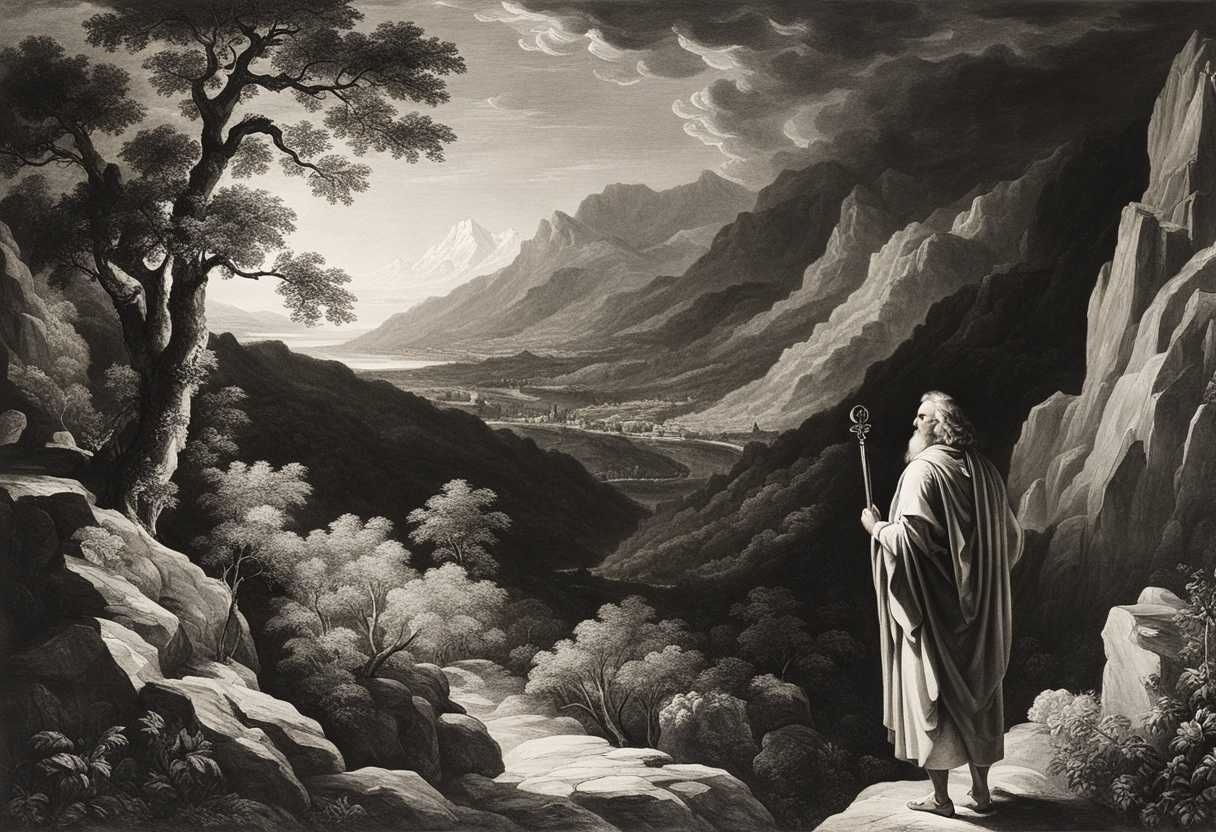
Setting the Scene for Exodus 3:1-4:17
In Exodus 3:1-4:17, we find Moses, a former prince of Egypt turned shepherd, tending to his father-in-law Jethro’s flock in the wilderness near Mount Horeb. It is a quiet and desolate place, with the rugged terrain stretching out as far as the eye can see. The sun beats down on the rocky ground, and the only sound is the bleating of sheep and the occasional gust of wind.
As Moses leads the flock, he suddenly notices a bush that is engulfed in flames but is not being consumed by the fire. Intrigued, he approaches the bush, and as he does, he hears a voice calling out to him. It is the voice of God, speaking to him from within the burning bush. God reveals His plan to Moses, instructing him to go back to Egypt and lead the Israelites out of slavery.
Overwhelmed by this divine encounter, Moses hesitates and expresses his doubts and fears to God. But God reassures him, promising to be with him every step of the way and providing him with signs to demonstrate His power. Eventually, Moses accepts his calling and sets out on the journey that will change the course of history.
What is Exodus 3:1-4:17 about?
This verse holds immense significance as it marks the beginning of a pivotal turning point in the history of the Israelites. Picture this: a humble shepherd named Moses encounters a burning bush that miraculously does not consume itself. God speaks to Moses in that moment, calling him to a monumental task – to lead the enslaved Israelites out of Egypt to freedom. It’s a moment of divine intervention, where the ordinary becomes extraordinary and the impossible becomes possible through God’s power.
Have you ever felt like an ordinary person faced with an extraordinary task? This verse reminds us that God can use anyone to accomplish His plans, regardless of their background or qualifications. It’s a powerful reminder that when God calls us to something, He equips us with the strength and wisdom needed to fulfill that calling, just as He did with Moses. This verse encourages us to trust in God’s guidance, even when the path ahead seems daunting or impossible. We also have faith that God will lead us through any challenges we face, just as Moses trusted in God’s promise and led the Israelites to freedom.
Understanding what Exodus 3:1-4:17 really means
In Exodus 3:1-4:17, we witness Moses’ pivotal encounter with God at the burning bush, a moment that marks the commencement of his divine mission to lead the Israelites out of Egypt. The significance of this passage lies not only in the historical narrative but also in the profound theological truths it reveals. When the angel of the Lord appears to Moses in flames of fire from within a bush, it symbolizes God’s presence and holiness, setting the stage for a sacred encounter.
God’s command for Moses to remove his sandals because the ground is holy serves as a reminder of the need for reverence and respect in the presence of the Almighty. This act underscores the sacredness of the moment and the importance of approaching God with humility and awe. As God declares, “I have seen the misery of my people in Egypt,” we witness His awareness and compassion for human suffering, a testament to His intimate involvement in the lives of His people.
The directive for Moses to go to Pharaoh and lead the Israelites out of Egypt highlights God’s call and mission for him. Despite Moses’ initial hesitations and feelings of inadequacy, God assures him of His presence and power, culminating in the profound declaration, “I AM WHO I AM,” revealing God’s eternal and self-sufficient nature. This divine revelation not only reassures Moses but also establishes the foundation of God’s authority and sovereignty.
Drawing parallels with other biblical passages such as Isaiah 6:1-8, Jeremiah 1:4-10, and Acts 7:30-34, we see a recurring theme of God’s call, human reluctance, and divine empowerment. These narratives serve as reminders that God equips those He calls, even in the face of doubts and insecurities. Today, we can find solace in the fact that just as God saw the suffering of the Israelites, He sees and cares about our struggles, offering comfort and hope in our times of need.
In a modern context, we can envision individuals grappling with their sense of purpose and calling, much like Moses did. Despite feeling ill-equipped for the tasks before them, through prayer and seeking God’s guidance, they discover the strength and resources to fulfill their mission. Exodus 3:1-4:17 serves as a timeless reminder of God’s presence, compassion, and calling in our lives, urging us to trust in His plan and approach Him with reverence, knowing that He equips us for the challenges He sets before us.
How can we recognize the presence of God?
The presence of God can be recognized in many ways. God manifests His presence through a mysterious and miraculous encounter with Moses in the form of a burning bush that is not consumed by the fire in the passage. This serves as a powerful sign of God’s presence and a divine calling to Moses. Similarly, in our lives today, we can recognize God’s presence through moments of awe, wonder, and inexplicable circumstances that point to His divine intervention. Those who seek Him know God’s presence through His voice and communication. God speaks to Moses from the burning bush in the passage, revealing His divine plan and instructions. This highlights the importance of prayer, meditation, and listening for God’s voice in discerning His presence and guidance in our lives. We can recognize His presence working in and through us by being attentive to God’s words and prompts.
Lastly, the presence of God is often accompanied by a sense of peace, comfort, and conviction. When God reveals Himself, there is a profound sense of awe and reverence that leads to worship and obedience. We can confidently recognize and acknowledge the presence of God among us by experiencing these spiritual fruits and witnessing the transformative work of God in our lives and the lives of others.
Application
Rise to the challenge of following God’s plan with faith and courage. Just as Moses led his people through the unknown, trust that divine guidance will see you through life’s uncertainties. Find strength in the belief that you are capable of achieving great things under God’s guidance. Are you ready to take those bold steps towards your purpose, even when the path seems unclear?

Reverend Michael Johnson is an experienced Church Minister with a profound expertise in spirituality and guidance. With a serene presence and a compassionate heart, he has faithfully served his congregation for over 20 years, leading them on a spiritual journey towards inner peace and enlightenment. Reverend Johnson’s extensive knowledge of religious philosophies and profound understanding of human nature have made him a trusted confidant and mentor to many, as he seamlessly weaves his profound wisdom into life teachings. Reverend Johnson’s calming demeanor and empathetic nature continue to uplift and heal souls, nurturing a sense of unity and tranquility within his community.