
Ezra 1:1-8 is about the decree by King Cyrus of Persia allowing the Israelites to return to Jerusalem and rebuild the temple, demonstrating God’s sovereignty and faithfulness in fulfilling prophecies.
1 In the first year of Cyrus king of Persia, that the word of the Lord by the mouth of Jeremiah might be fulfilled, the Lord stirred up the spirit of Cyrus king of Persia, so that he made a proclamation throughout all his kingdom and also put it in writing:
2 “Thus says Cyrus king of Persia: The Lord, the God of heaven, has given me all the kingdoms of the earth, and he has charged me to build him a house at Jerusalem, which is in Judah.”
3 Whoever is among you of all his people, may his God be with him, and let him go up to Jerusalem, which is in Judah, and rebuild the house of the Lord, the God of Israel—he is the God who is in Jerusalem.
4 And let each survivor, in whatever place he sojourns, be assisted by the men of his place with silver and gold, with goods and with beasts, besides freewill offerings for the house of God that is in Jerusalem.”
5 Then rose up the heads of the fathers’ houses of Judah and Benjamin, and the priests and the Levites, everyone whose spirit God had stirred to go up to rebuild the house of the Lord that is in Jerusalem.
6 And all who were about them aided them with vessels of silver, with gold, with goods, with beasts, and with costly wares, besides all that was freely offered.
7 Cyrus the king also brought out the vessels of the house of the Lord that Nebuchadnezzar had carried away from Jerusalem and placed in the house of his gods.
8 Cyrus the king also brought out the vessels of the house of the Lord that Nebuchadnezzar had carried away from Jerusalem and placed in the house of his gods.
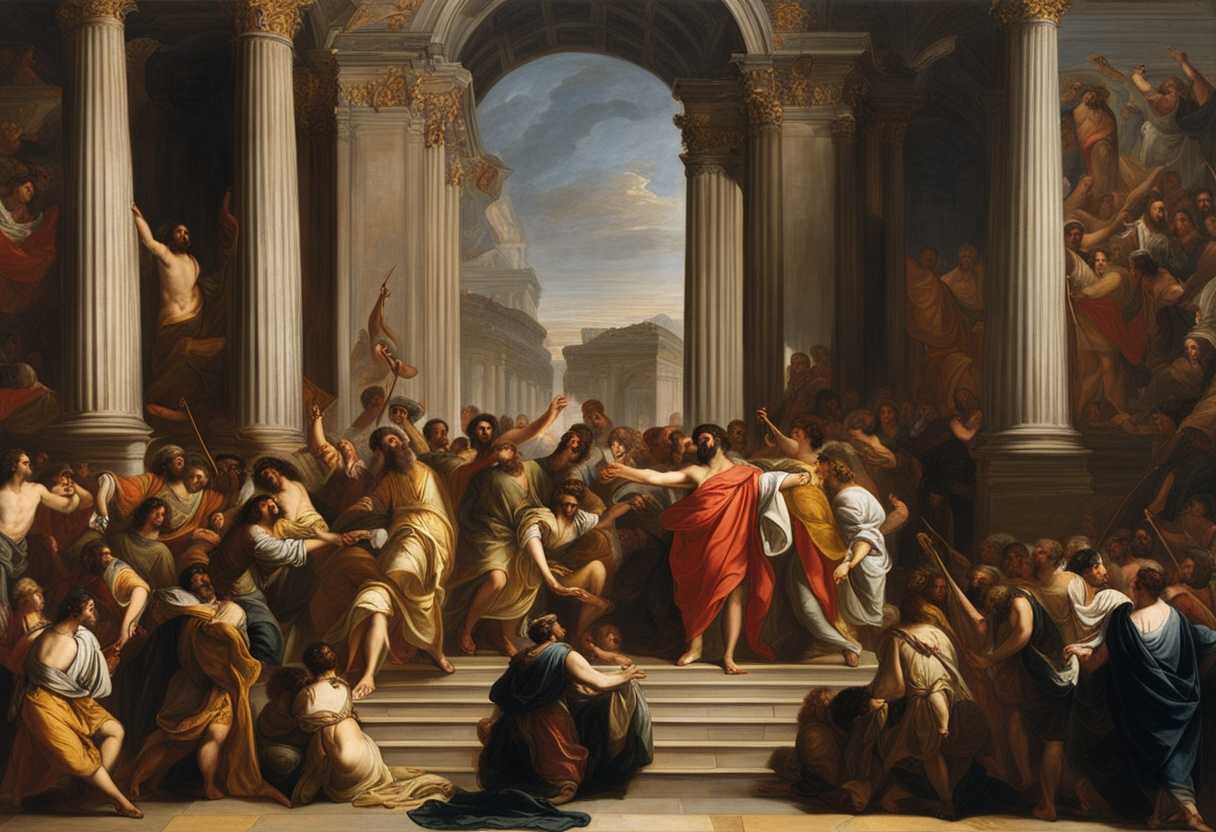
Setting the Scene for Ezra 1:1-8
The scene in Ezra chapter 1 opens with the Persian King Cyrus issuing a decree. The setting is the royal palace in Babylon, a grand and opulent structure adorned with intricate designs and luxurious furnishings. King Cyrus, a powerful ruler known for his conquests and benevolent policies towards conquered peoples, is surrounded by his courtiers and advisors as he makes a momentous decision.
Among those present is Ezra, a scribe and priest of Israelite descent who had been taken into exile in Babylon along with many others from the kingdom of Judah. Ezra had gained favor in the eyes of the king due to his wisdom and integrity. As the king’s decree is read aloud, Ezra’s heart swells with hope and gratitude as he realizes that God is fulfilling His promise to restore His people to their homeland.
The atmosphere in the palace is charged with a sense of divine purpose as King Cyrus proclaims that the Lord, the God of heaven, has charged him with the task of rebuilding the temple in Jerusalem. Ezra and his fellow exiles are filled with a mixture of awe and joy at the prospect of returning to their homeland and worshiping the Lord in the newly restored temple. The scene is one of anticipation and thanksgiving as the stage is set for the exiles to embark on a journey of faith and restoration.
What is Ezra 1:1-8 about?
This verse highlights a pivotal moment in Jewish history, where King Cyrus of Persia issued a decree allowing the exiled Jews to return to Jerusalem and rebuild their temple. This act of kindness and support from a foreign ruler showcases the providence of God and His ability to work through various individuals to fulfill His plans.
Imagine the joy and gratitude felt by the Jewish people upon receiving such news after years of exile and longing for their homeland. King Cyrus’s decree not only allowed them to return to Jerusalem but also provided them with the resources and protection needed to rebuild their sacred temple. This verse serves as a reminder of God’s faithfulness and the importance of being open to unexpected sources of support in times of need. God can work through even unlikely circumstances and individuals to bring about His purposes as we reflect on this verse. It challenges us to trust in God’s sovereignty and remain open to His leading, even when it may come from unexpected places. Just like the Jews who returned to Jerusalem with the decree of King Cyrus, may we too be encouraged to persevere in faith and obedience, trusting that God can use even the most unlikely allies to fulfill His promises.
Understanding what Ezra 1:1-8 really means
The Book of Ezra opens with a pivotal moment in Israelite history, as Cyrus, the king of Persia, issues a decree allowing the Israelites to return to Jerusalem and rebuild the temple, marking the end of the Babylonian exile. This decree showcases God’s faithfulness in fulfilling His promises and underscores the significance of obedience and faith in His divine plans. The historical background sets the stage for a powerful display of God’s sovereignty and the intricate ways in which He orchestrates events for His purposes.
One key phrase in this passage highlights the profound truth that “The LORD moved the heart of Cyrus king of Persia,” emphasizing God’s ultimate authority over even the hearts of earthly rulers. This divine influence serves as a reminder of God’s ability to work through human instruments to accomplish His will. Additionally, the reference to fulfilling the word of the LORD spoken by Jeremiah points to the reliability and fulfillment of God’s prophecies, reinforcing the trustworthiness of His promises to His people.
The invitation for any Israelite to return to Jerusalem and contribute to the rebuilding effort signifies a message of freedom, opportunity, and communal responsibility. The call for provision of silver and gold underscores the importance of collective support and generosity in carrying out God’s work. These elements highlight the themes of unity, cooperation, and shared commitment within the faith community, echoing the principles of stewardship and collaboration that remain relevant today.
Drawing connections to related biblical passages such as Jeremiah 29:10-14, Isaiah 44:28, and 2 Chronicles 36:22-23 further enriches our understanding of the historical and prophetic context surrounding Cyrus’s decree. These passages offer additional layers of insight into God’s plans for His people and the intricate tapestry of His divine intervention throughout history. By exploring these interconnected scriptures, we gain a deeper appreciation for the continuity and fulfillment of God’s promises across generations.
In applying the lessons from Ezra 1:1-8 to our lives today, we are reminded of God’s unwavering faithfulness, His sovereign control over all circumstances, and the importance of community and generosity in fulfilling His purposes. Just as the Israelites were called to return and rebuild the temple, we are encouraged to trust in God’s timing and plans, recognizing His hand at work in our lives and communities. Reflecting on these timeless truths can inspire us to embrace opportunities for unity, support, and collaboration in our faith journey.
Consider a modern example where a community rallies together to rebuild a church after a natural disaster, mirroring the Israelites’ restoration efforts. In this scenario, the congregation experiences a sense of divine purpose and unity as they witness God’s provision through the generosity of donors and the cooperation of local authorities. This contemporary parallel illustrates the enduring principles of faith, resilience, and shared commitment that transcend time and cultural contexts.
As we contemplate the themes of divine faithfulness, sovereignty, and community exemplified in Ezra 1:1-8, let us take heart in the assurance that God remains steadfast in His promises and purposes. May we be open to His leading, whether through supporting causes, participating in community endeavors, or simply trusting in His unfailing guidance in our personal journeys. In doing so, we align ourselves with the legacy of faith and obedience demonstrated by the Israelites, embracing the call to walk in God’s ways and contribute to His kingdom work with willing hearts.
How do we discern God’s plan for our lives?
Seeking God earnestly through prayer, meditation on His word, and listening to His guidance is important in understanding His plan for our lives. We too can discern God’s plan by being attuned to His voice and direction in our lives, just as Cyrus, the king of Persia, was moved by God to make a proclamation to rebuild the temple in Jerusalem. We can trust that He will lead us in the right path by seeking His will with a humble and open heart.
Additionally, looking at the circumstances and doors that God opens for us can also provide insight into His plan for our lives. God can also work in our lives by orchestrating events and opportunities that align with His purposes for us, just as He stirred the hearts of the people to return to Jerusalem and support the rebuilding of the temple. We can have confidence that He is leading us according to His perfect plan as we trust in His sovereignty and providence.
Furthermore, seeking wisdom and counsel from fellow believers who are grounded in their faith can also help us discern God’s plan for our lives. We can gain valuable insight and confirmation about the direction in which God is guiding us by surrounding ourselves with godly influences and seeking input from those who are sensitive to the leading of the Holy Spirit. Through a combination of prayer, reflection on scripture, observation of circumstances, and seeking wise counsel, we can better discern God’s plan for our lives and walk in obedience to His will.
Application
Think of Ezra 1:1-8 like your boss calling you into an important meeting. It’s a reminder of God keeping His promises, just like the CEO who always follows through. Cyrus was a tool to rebuild the temple, just like you’re a key player in your family’s or team’s success. Don’t let challenges at work or home hold you back. Take a leap of faith; trust in God’s plan. Will you answer His call and make a bold move today?

Reverend Michael Johnson is an experienced Church Minister with a profound expertise in spirituality and guidance. With a serene presence and a compassionate heart, he has faithfully served his congregation for over 20 years, leading them on a spiritual journey towards inner peace and enlightenment. Reverend Johnson’s extensive knowledge of religious philosophies and profound understanding of human nature have made him a trusted confidant and mentor to many, as he seamlessly weaves his profound wisdom into life teachings. Reverend Johnson’s calming demeanor and empathetic nature continue to uplift and heal souls, nurturing a sense of unity and tranquility within his community.