
Author: Reverend Michael Johnson
-

What the Bible Says About Being Hot or Cold
In biblical interpretation, “hot or cold” refers to the spiritual fervor of believers, as noted in Revelation 3:15-16, where the Laodicean church is admonished for being lukewarm. The passage emphasizes the importance of being passionately committed to faith, rather than a half-hearted or indifferent stance. Scripture 14 “And to the angel of the church in…
-
What the Bible Says About the Definition of the True Church
In the Bible, the “true church” refers to the community of believers who have genuine faith in Jesus Christ and adhere to His teachings, as outlined in Scriptures (Ephesians 5:25-27). It is often characterized by love, unity, and the faithful proclamation of the Gospel (Acts 2:42-47). Scripture 13 Now when Jesus came into the district…
-

What the Bible Says About Rule Definition
In the Bible, “rule” often refers to authority or governance, as seen in passages where leaders are called to shepherd and guide their people with righteousness (e.g., Proverbs 29:2). It can also imply the exercising of control over one’s own behavior or choices, as noted in Romans 6:14, where believers are encouraged to let grace…
-

What the Bible Says About Dissolute Living
Dissolute behavior in the Bible refers to a lifestyle characterized by excessive indulgence in sensual pleasures and moral corruption, often associated with a lack of self-control and disregard for divine law. It is condemned in scripture, as seen in passages like Proverbs 28:7 and Ephesians 5:18, emphasizing the importance of living righteously and avoiding sinful…
-

What the Bible Says About Missionaries: Definitions and Verses
In the Bible, a missionary is one who is sent to proclaim the gospel and make disciples of Jesus Christ, as exemplified by the Great Commission in Matthew 28:19-20. Missionaries are called to spread the message of salvation and establish churches among unreached peoples. Scripture 18 And Jesus came and said to them, “All authority…
-

What the Bible Says About Vain Repetition
In the Bible, “vain repetition” refers to the use of empty or meaningless words in prayer, particularly highlighted in Matthew 6:7, where Jesus warns against repetitive prayers that lack genuine intent and sincerity. It emphasizes the importance of heartfelt communication with God rather than mere rote or formulaic speech. Scripture 7 “And when you pray,…
-
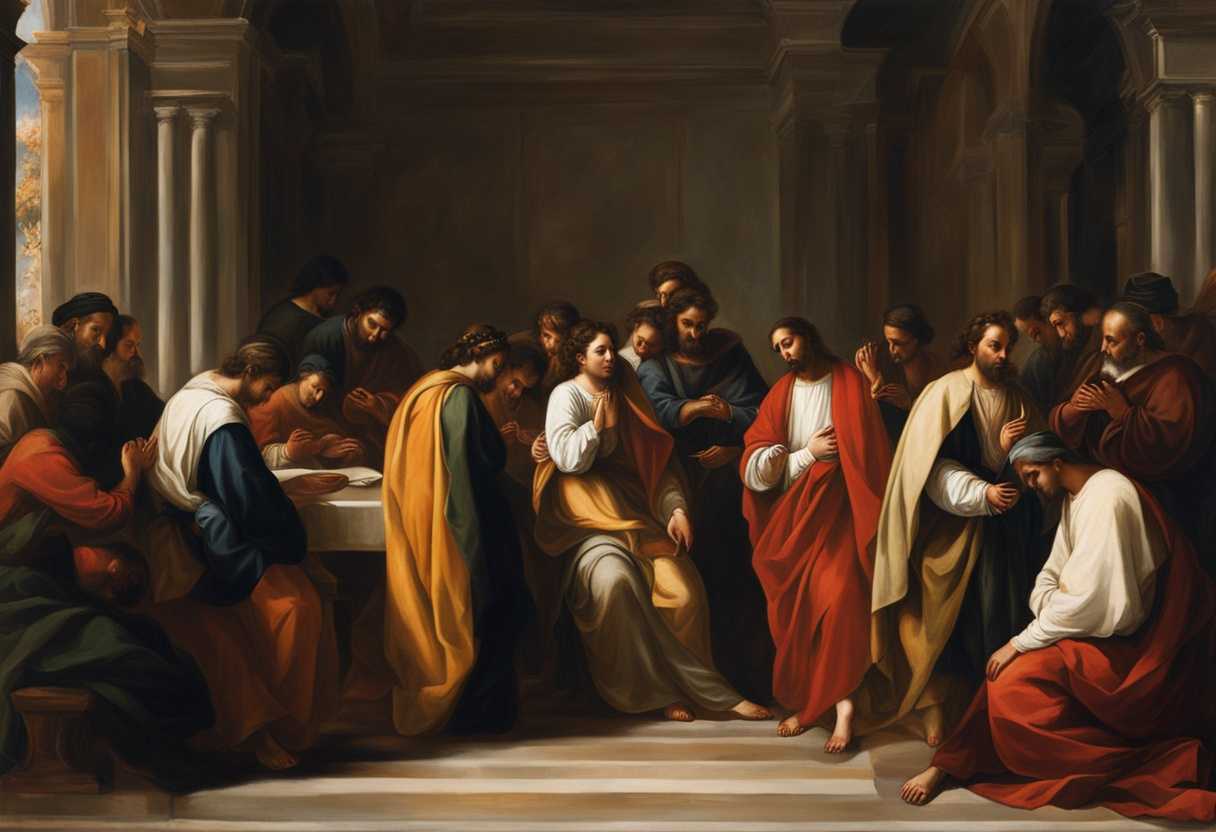
What the Bible Says About Not Calling Yourself a Rabbi
In the Bible, specifically in Matthew 23:8-10, “do not call yourself a rabbi” emphasizes humility and the importance of recognizing that all followers of Christ are equals under God, discouraging the elevation of certain individuals through titles. It teaches that God is the ultimate authority and guide in spiritual matters, rather than human leaders. Scripture…
-

What the Bible Says About “Never Again”
The phrase “never again” in the Bible signifies a promise or commitment from God to refrain from repeating a particular action, often in the context of judgment or punishment. For example, after the flood, God declares in Genesis 9:11, “I establish my covenant with you: Never again will all life be destroyed by the waters…
-

What the Bible Says About the Root Word of Faith
The term “Bible” originates from the Greek word “biblia,” meaning “books,” and refers to the collection of sacred scriptures in Christianity and Judaism. It encompasses the Old Testament and the New Testament, serving as a foundational text for faith, doctrine, and moral guidance. Scripture 16 All Scripture is breathed out by God and profitable for…
-

What the Bible Says About the Didache: Understanding Its Definition and Significance
The Didache, also known as “The Teaching of the Twelve Apostles,” is an early Christian text that provides instructions on ethics, rituals, and church practices. It is not part of the canonical Bible but is considered an important historical document that reflects the beliefs and practices of the early Christian community. Scripture 18 And Jesus…