
Category: 1 Kings
-

What does 1 Kings 19:15-17 really mean?
1 Kings 19:15-17 is about God commissioning Elijah to anoint Hazael as king over Aram, Jehu as king over Israel, and Elisha as his own successor, signaling the fulfillment of divine judgment and the transition of power in the region. 15 And the Lord said to him, “Go, return on your way to the wilderness…
-

What does 1 Kings 5:13-14 really mean?
1 Kings 5:13-14 is about King Solomon conscripting labor to build the temple of the Lord in Jerusalem, signifying the importance of unity and dedication in undertaking divine tasks. 13 And King Solomon drafted forced labor out of all Israel, and the draft numbered 30,000 men. 14 And he sent them to Lebanon, 10,000 a…
-

What does 1 Kings 8:6-9 really mean?
1 Kings 8:6-9 is about the joyful and reverent procession of the Ark of the Covenant by King Solomon and the Israelites into the newly constructed temple, signifying the presence and dwelling of God among His people. 6 Then the priests brought the ark of the covenant of the Lord to its place in the…
-

What does 1 Kings 12:1-15 really mean?
1 Kings 12:1-15 is about the division of the kingdom of Israel after the death of King Solomon, illustrating the consequences of arrogance and lack of wisdom in leadership. 12 Rehoboam went to Shechem, for all Israel had come to Shechem to make him king. 2 And when Jeroboam the son of Nebat heard of…
-

What does 1 Kings 19:5-8 really mean?
1 Kings 19:5-8 is about Elijah’s struggle with exhaustion and despair, where an angel provided him with food and drink, demonstrating God’s care and provision even in difficult times. 5 Then he lay down under the broom tree and fell asleep. 6 And he looked, and behold, there at his head was a cake baked…
-
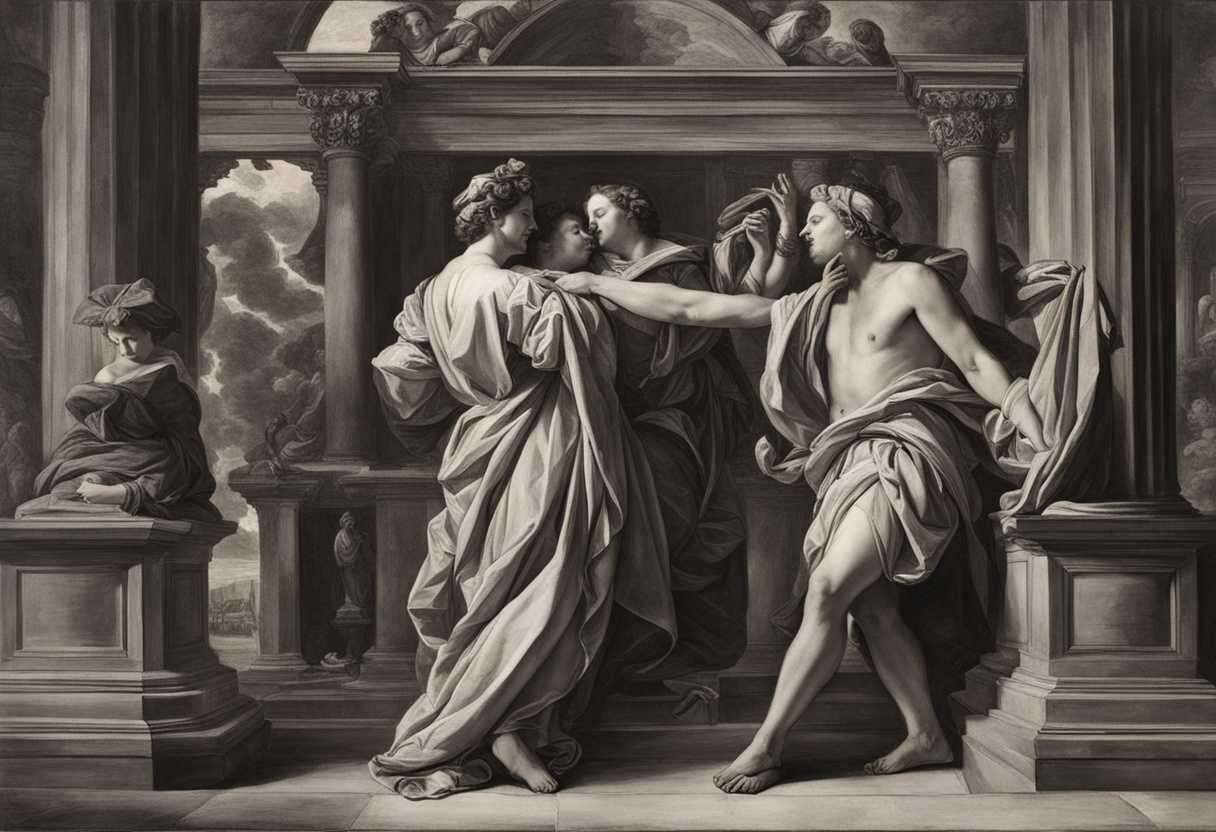
What does 1 Kings 5:6-10 really mean?
1 Kings 5:6-10 is about King Solomon requesting materials from King Hiram of Tyre to build the temple of the Lord, showcasing the importance of collaboration and resources in the service of God’s work. 6 Now therefore command that cedars of Lebanon be cut for me. And my servants will join your servants, and I…
-
What does 1 Kings 9:20-21 really mean?
1 Kings 9:20-21 is about the forced labor imposed by King Solomon on the remnants of the Canaanite population to build his royal palace and the temple of the Lord, representing the consequences of using power and wealth at the expense of others. 20 All the people who were left of the Amorites, the Hittites,…
-

What does 1 Kings 17-18 really mean?
1 Kings 17-18 is about the prophet Elijah demonstrating the power and faithfulness of God through miraculous signs and his confrontation with the prophets of Baal to reveal the one true God. 1 Now Elijah the Tishbite, of Tishbe in Gilead, said to Ahab, “As the Lord, the God of Israel, lives, before whom I…
-

What does 1 Kings 1-2 really mean?
1 Kings 1-2 is about the transition of power from King David to his son Solomon, highlighting the importance of wisdom, obedience, and God’s appointed leadership. 1 Now King David was old and advanced in years. And although they covered him with clothes, he could not get warm. 2 So his servants said to him,…
-

What does 1 Kings 12:1-24 really mean?
1 Kings 12:1-24 is about the consequences of King Rehoboam’s decision to rule with harshness and pride, leading to the division of the kingdom of Israel and the fulfillment of God’s prophetic warnings regarding the downfall of Solomon’s dynasty. 12 Rehoboam went to Shechem, for all Israel had come to Shechem to make him king.…