
Category: Hebrews
-

What does Hebrews 4:3-5 really mean?
Hebrews 4:3-5 is about the promise of entering God’s rest by faith, emphasizing the importance of trusting in God rather than relying on our own works. 3 For we who have believed enter that rest, as he has said, “As I swore in my wrath, ‘They shall not enter my rest,’” although his works were…
-

What does Hebrews 2:7-9 really mean?
Hebrews 2:7-9 is about the exaltation of Jesus Christ, who temporarily humbled himself to take on human form, in order to taste death for everyone and be crowned with glory and honor as the bringer of salvation through his suffering. 7 You made him for a little while lower than the angels; you have crowned…
-

What does Hebrews 3:18-19 really mean?
Hebrews 3:18-19 is about the consequences of disobedience and lack of faith leading to being unable to enter God’s rest, emphasizing the importance of faith and obedience in one’s relationship with God. 18 And to whom did he swear that they would not enter his rest, but to those who were disobedient? 19 So we…
-

What does Hebrews 7:11-28 really mean?
Hebrews 7:11-28 is about the superiority of Jesus’ priesthood over the Levitical priesthood, emphasizing his eternal priesthood, perfect sacrifice, and ability to save completely those who come to God through him. 11 Now if perfection had been attainable through the Levitical priesthood (for under it the people received the law), what further need would there…
-

What does Hebrews 5:5-10 really mean?
Hebrews 5:5-10 is about Jesus Christ being appointed by God as a high priest forever, who learned obedience through suffering and became the source of eternal salvation for all who obey him. 5 So also Christ did not exalt himself to be made a high priest, but was appointed by him who said to him,…
-
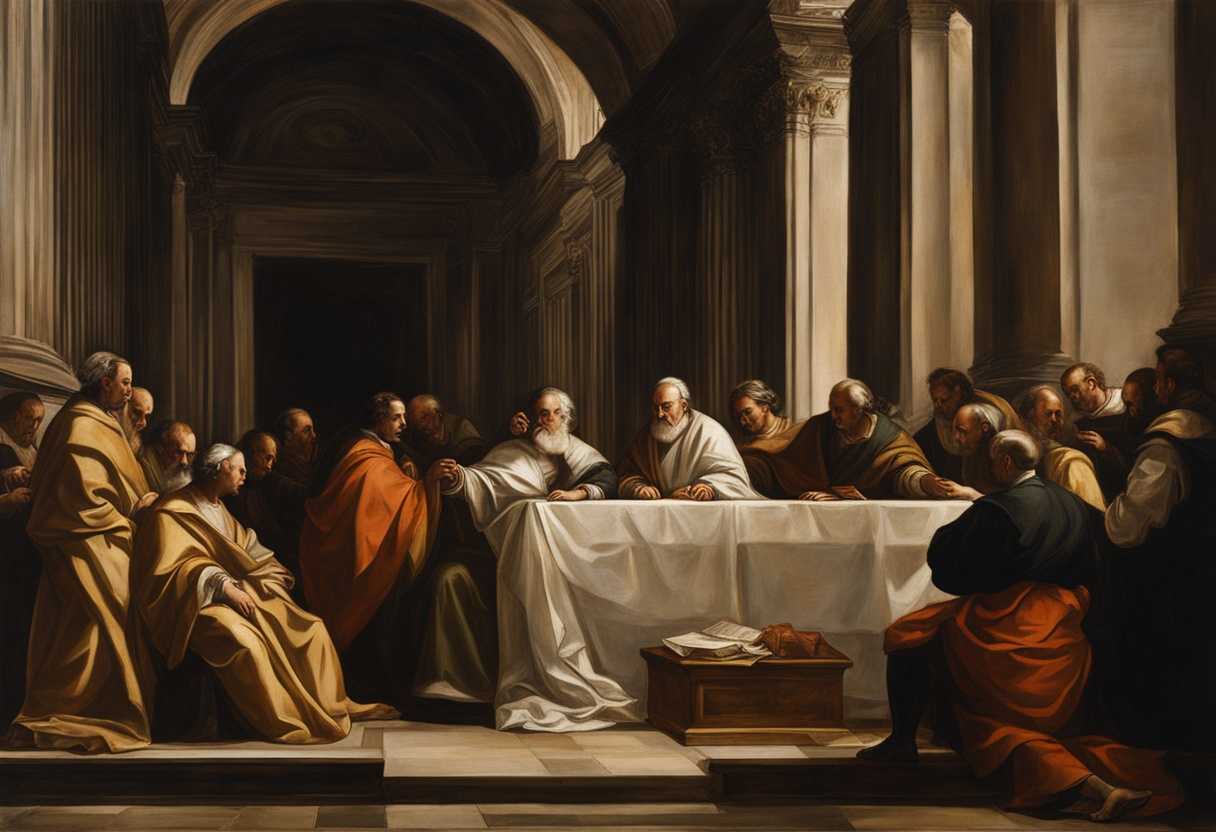
What does Hebrews 7:23-24 really mean?
Hebrews 7:23-24 is about highlighting the superiority of Jesus as a high priest, contrasting with the temporary nature of human priests who were limited by death, emphasizing Jesus’ perpetual priesthood and ability to intercede for believers forever. 23 The former priests were many in number, because they were prevented by death from continuing in office,…
-

What does Hebrews 11:32-38 really mean?
Hebrews 11:32-38 is about the enduring faith and resilience of individuals who faced various trials and persecution throughout history, illustrating the power of faith to overcome hardships and pointing believers to the ultimate hope in God’s promises. 32 And what more shall I say? For time would fail me to tell of Gideon, Barak, Samson,…
-

What does Hebrews 3:2-6 really mean?
Hebrews 3:2-6 is about the supremacy of Jesus Christ as the faithful servant and Son over all God’s house, emphasizing the importance of holding firm to our faith and obedience as partakers of Christ. 2 He was faithful to him who appointed him, just as Moses also was faithful in all God’s house. 3 For…
-

What does Hebrews 10:37-38 really mean?
Hebrews 10:37-38 is about the writer urging readers to have faith and patience, quoting Habakkuk 2:3-4 to emphasize the importance of trusting in God’s timing and living a righteous life. 37 For, “Yet a little while, and the coming one will come and will not delay; 38 but my righteous one shall live by faith,…
-

What does Hebrews 7:4-10 really mean?
Hebrews 7:4-10 is about highlighting the superiority of Melchizedek, a priestly figure without genealogy or end of days, over the Levitical priesthood by showcasing Abraham’s offering of a tithe to Melchizedek and emphasizing the eternal and unchanging nature of Christ’s priesthood who is after the order of Melchizedek. 4 See how great this man was…