
Category: Doctrines and Beliefs
-

What the Bible Says About Presbytery: A Definition and Understanding
In the Bible, “presbytery” refers to a body of elders or leaders within the church, responsible for spiritual oversight and governance. It is derived from the Greek word “presbyteros,” meaning elder, and highlights the role of mature believers in guiding the church community (1 Timothy 4:14). Scripture 14 Do not neglect the gift you have,…
-

What the Bible Says About Lasciviousness: A KJV Perspective
In the KJV Bible context, “lascivious” refers to behavior that is driven by lust or a lack of restraint, often associated with wantonness or immoral conduct. It is used to describe actions that are sexually provocative or indulgent, as seen in passages like Galatians 5:19, where it is listed among the works of the flesh.…
-

What the Bible Says About Pious Living
The term “Pius” does not appear directly in the Bible; however, it is often used to describe someone who is devoutly religious or exhibiting a sense of piety and reverence towards God. In a biblical context, qualities associated with “pious” individuals include faithfulness, righteousness, and adherence to God’s commandments. Scripture Let love be genuine. Abhor…
-

What the Bible Says About the Adulteress: Understanding Its Meaning and Implications
In the Bible, an adulteress refers to a married woman who engages in sexual relations with someone other than her husband, thus violating the covenant of marriage. It is often used to symbolize unfaithfulness to God as well, representing idolatry or spiritual betrayal. Scripture 24 to preserve you from the evil woman, from the smooth…
-

What the Bible Says About the Meaning of Deaconess
In the Bible, a deaconess is generally considered to be a female servant or helper in the church, as suggested by passages like Romans 16:1, where Phoebe is referred to as a deacon (or servant) of the church in Cenchreae. The role emphasizes service, support, and care within the Christian community, often focusing on assisting…
-
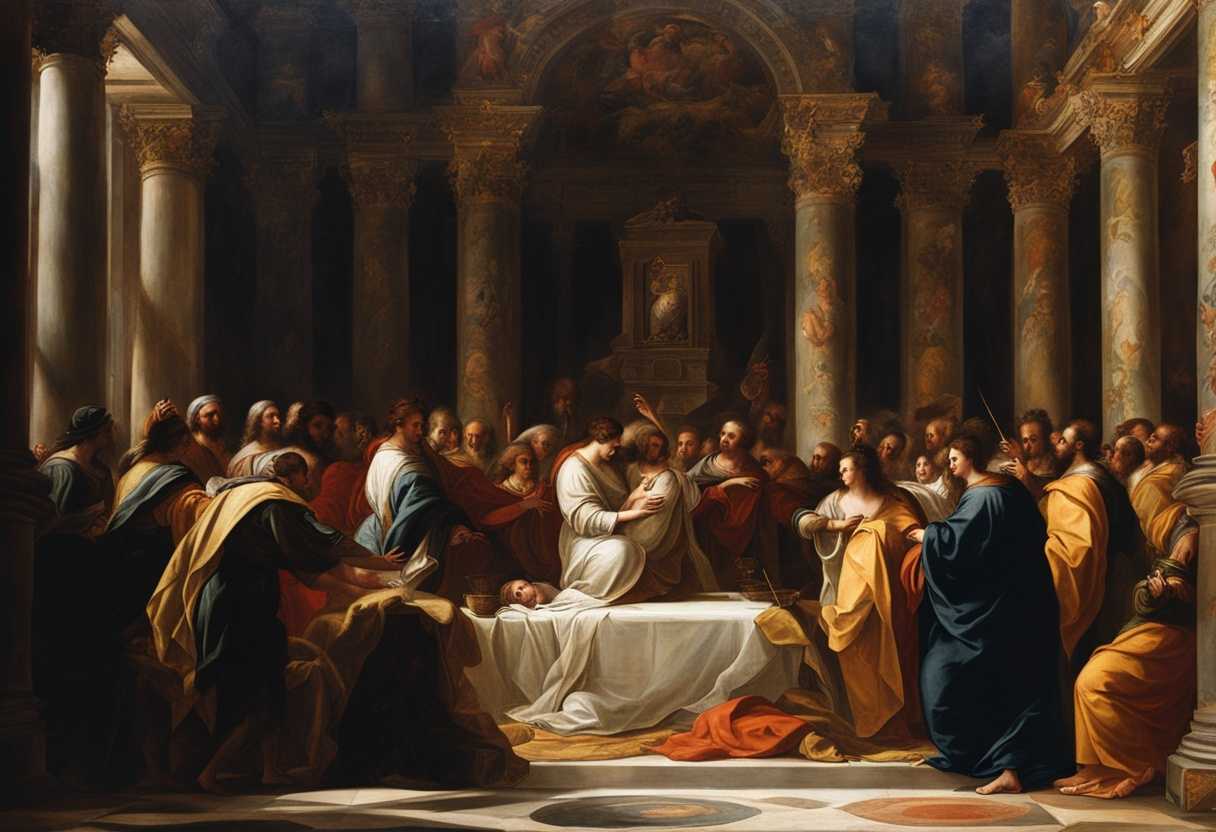
What the Bible Says About Inauguration and Its Meaning
In the Bible, “inauguration” often refers to the ceremonial initiation or consecration of individuals to specific roles or offices, such as the anointing of kings or the dedication of the temple (e.g., 1 Samuel 10:1 for Saul and Exodus 40:9-11 for the temple). It signifies the formal beginning of a divinely appointed mission or service.…
-

What the Bible Says About Presumption: Understanding Its Meaning and Implications
In the Bible, presumption generally refers to an arrogance or overconfidence in one’s own abilities or judgments, often leading to disregard for God’s authority or commands. It is often viewed negatively, as seen in Proverbs 3:7, which advises against being wise in one’s own eyes. Scripture 30 “But the person who does anything with a…
-

What the Bible Says About the Meaning of the 10 Commandments
The Ten Commandments, found in Exodus 20:1-17, represent God’s moral laws given to Israel, outlining duties to God and responsibilities towards others. They serve as a foundational guideline for ethical behavior and a covenant between God and His people. Scripture 1 And God spoke all these words, saying, 2 “I am the Lord your God,…
-

What the Bible Says About the Meaning of Tithes
In the Bible, tithes refer to the practice of giving one-tenth of one’s income or agricultural produce to God, typically for the support of the Levites, the poor, and the temple service (Leviticus 27:30-32, Malachi 3:10). This act is seen as a demonstration of faithfulness and gratitude towards God’s provision. Scripture 30 Every tithe of…
-

What the Bible Says About Manhood: A Definition and Guide
Biblical manhood is characterized by the call to lead with humility, serve others selflessly, and seek to reflect God’s character in behavior, relationships, and responsibilities. It involves a commitment to righteousness, integrity, and sacrificial love, as exemplified by Christ. Scripture 26 Then God said, “Let us make man in our image, after our likeness. And…