
Category: Names and Characters
-

What the Bible Says About the Two People Who Did Not Die
In the Bible, two figures are notably described as not experiencing death: Enoch, who “walked with God” and was taken by Him (Genesis 5:24), and Elijah, who was taken up to heaven in a whirlwind (2 Kings 2:11). Their unique departures from earth signify a special relationship with God and the promise of eternal life.…
-

What the Bible Says About Apostles: Definition and Key Facts
In the Bible, apostles are defined as individuals chosen and commissioned by Jesus Christ to spread the Gospel and establish the church, with the original twelve apostles playing a foundational role in Christianity (Acts 1:26; Matthew 28:19-20). Their significance lies in their authority as eyewitnesses of Jesus’ ministry and resurrection, serving as key leaders in…
-

What the Bible Says About Miracle Workers
In the Bible, a miracle worker is an individual endowed by God with the ability to perform miraculous acts that demonstrate divine power, such as healing the sick or raising the dead. Jesus Christ is the most notable miracle worker, as seen through His numerous acts of healing and supernatural wonders documented in the Gospels.…
-

What the Bible Says About Joseph of Arimathea
Joseph of Arimathea is identified in the Bible as a wealthy member of the Sanhedrin who provided his own tomb for the burial of Jesus after the crucifixion. He is portrayed as a compassionate figure who, despite the risks, asked Pilate for Jesus’ body and ensured it received a proper burial (Matthew 27:57-60; Mark 15:43-46;…
-

What the Bible Says About the Meaning of a Psalmist
In the Bible, a Psalmist refers to a person who composes or sings psalms, which are sacred songs or poems expressing worship, praise, lament, or thanksgiving to God. The most well-known Psalmist is King David, attributed with writing many of the Psalms found in the Book of Psalms. Scripture 1 Blessed is the man who…
-

What the Bible Says About the Meaning of Amminadab
In the Bible, Amminadab means “my kinsman is noble” or “my people are generous.” He is mentioned in the genealogies found in Exodus 6:23 and Matthew 1:4, and is recognized as the father of Nahshon and an ancestor of Jesus Christ. Scripture 23 Aaron took as his wife Elisheba, the daughter of Amminadab and the…
-

What the Bible Says About Bilhah: Meaning and Significance
Bilhah is a biblical figure, identified as Rachel’s handmaid in the Book of Genesis. She was given to Jacob as a concubine, and bore him two sons, Dan and Naphtali, serving as a surrogate to fulfill Rachel’s desire for children. Scripture 28 Jacob did so, and completed her week. Then Laban gave him his daughter…
-

What the Bible Says About the Meaning of Effa
In the Bible, an “effa” is a unit of measurement used for dry volume, equivalent to approximately 22 liters or 5.8 gallons. It is mentioned in passages such as Exodus 16:36 and Zechariah 5:6, where it is used to quantify grain and other agricultural products. Scripture 36 (Now an omer is the tenth part of…
-
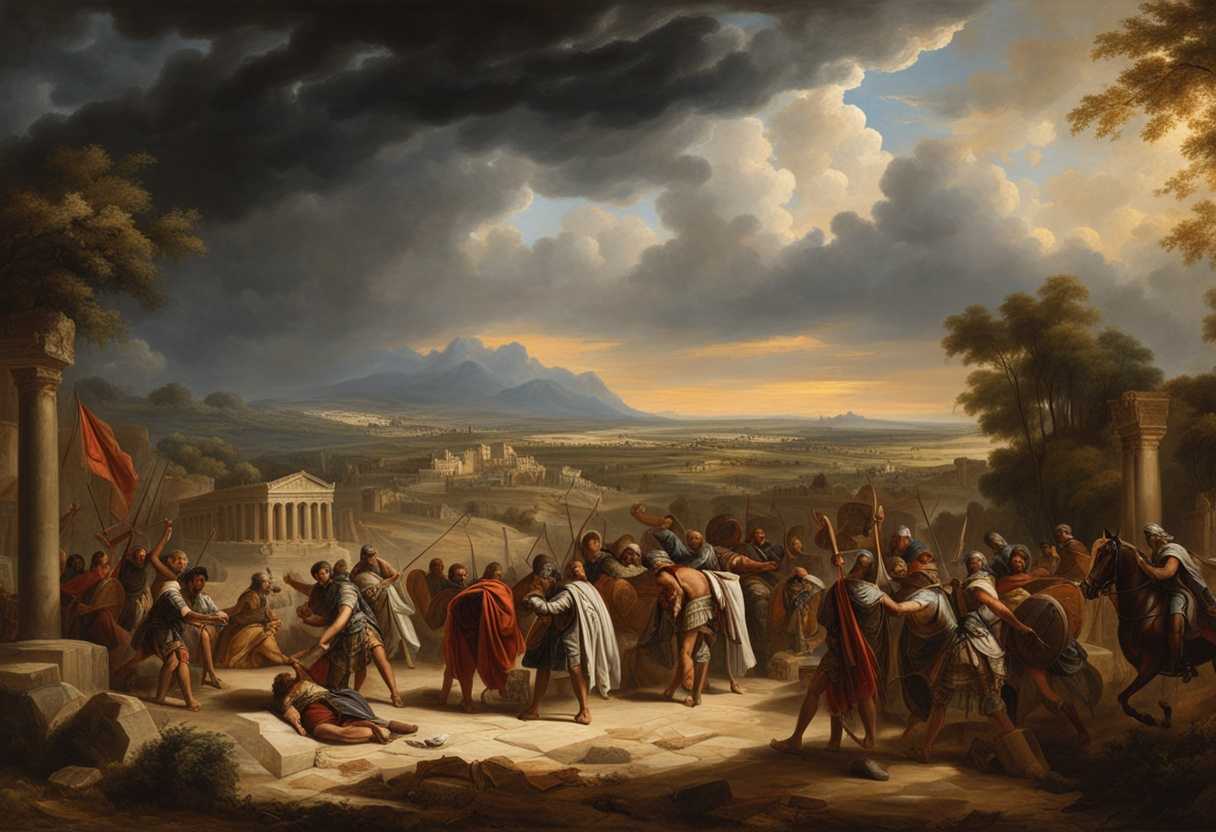
What the Bible Says About the Meaning of Girgashites
The Girgashites are one of the seven nations mentioned in the Bible that the Israelites encountered in the Promised Land. They are often associated with the Canaanites and are listed in texts such as Deuteronomy 7:1 as inhabitants that God commanded the Israelites to conquer. Scripture 15 Canaan fathered Sidon his firstborn and Heth, 16…
-

What the Bible Says About the Meaning of Isai
In the Bible, Isai (or Jesse) refers to the father of King David, as mentioned in the Old Testament. He is notable for being part of the lineage from which the Messiah would come, as foretold in scriptures like Isaiah 11:1. Scripture 1 The vision of Isaiah the son of Amoz, which he saw concerning…