
Category: Definitions
-

What the Bible Says About the Meaning of Practice
In the Bible, “practice” often refers to the habitual action of living out one’s faith and teachings (James 1:22), while “application” involves actively implementing God’s principles in daily life, demonstrating obedience and understanding of His Word (Philippians 4:9). Together, they emphasize the importance of not just knowing scripture but actively living it through righteous actions.…
-
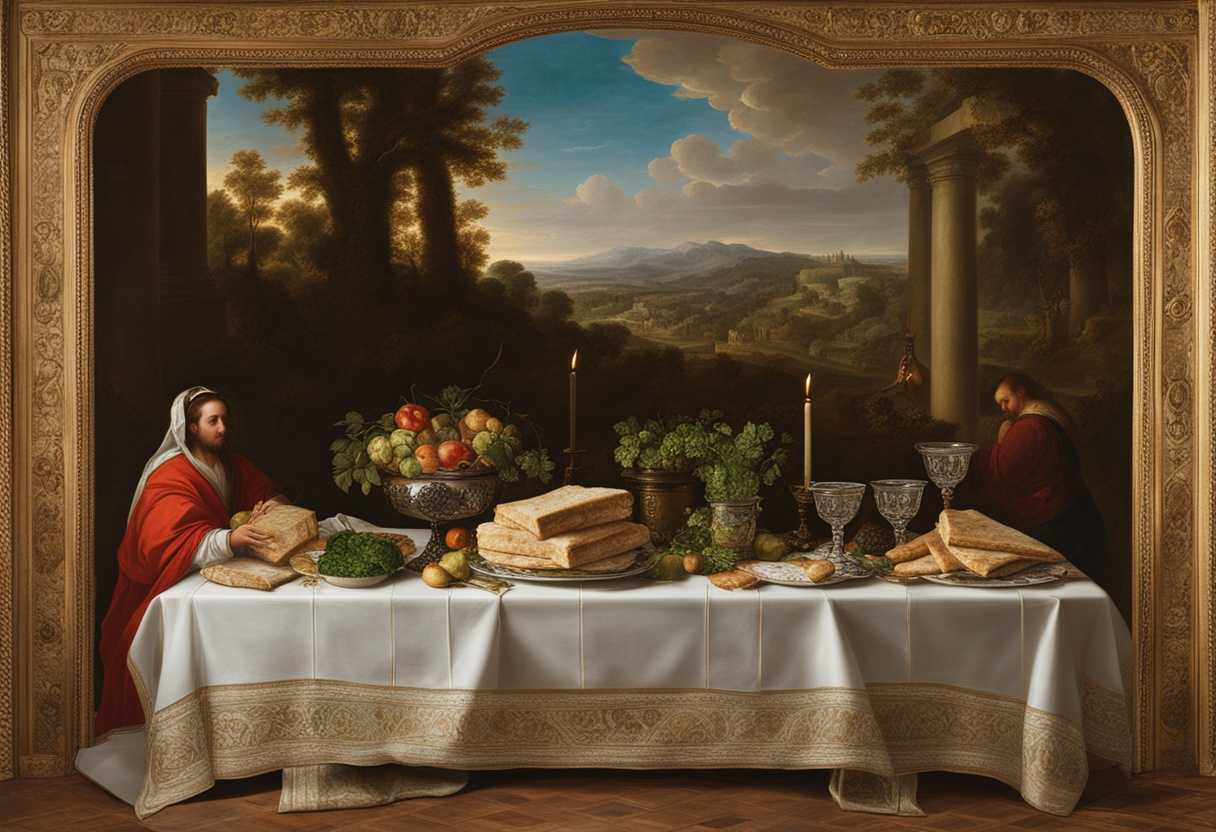
What the Bible Says About the Items of the Passover Menu and Their Symbolic Meaning
In the Bible, Passover commemorates the Israelites’ exodus from Egypt, represented through specific menu items. Key elements include unleavened bread (matzah) symbolizing haste in leaving Egypt, bitter herbs (maror) representing the bitterness of slavery, and lamb (the Passover sacrifice) symbolizing redemption and God’s protection during the final plague. Scripture 1 The Lord said to Moses…
-

What the Bible Says About Sheaves: A KJV Perspective
In the King James Version (KJV) of the Bible, “sheaf” refers to a bundle of grain stalks that have been harvested and tied together. It is often used symbolically, as in the story of Joseph in Genesis 37:7, where his sheaf stands upright while his brothers’ sheaves bow down, representing his future authority over them.…
-

What the Bible Says About the Bed Symbolizes Rest and Renewal
In the Bible, a bed symbolizes rest and comfort, often representing a place of peace and refuge (Psalm 4:8). It can also signify intimacy and the fulfillment of marital love (Hebrews 13:4). Scripture 10 Jacob left Beersheba and went toward Haran. 11 And he came to a certain place and stayed there that night, because…
-

What the Bible Says About Tempestuous Times
In the Bible, “tempestuous” refers to violently turbulent or chaotic conditions, often used to describe fierce storms or upheaval, which can symbolize spiritual turmoil or divine judgment. It illustrates the power of God over nature and the challenges faced by individuals in times of adversity (e.g., Acts 27:14). Scripture 1 Then the Lord answered Job…
-

What the Bible Says About Biblical Grain
In the Bible, grain symbolizes sustenance, blessings, and abundance, often representing God’s provision for His people. It is frequently used in agricultural metaphors to illustrate spiritual truths and principles, such as growth, harvest, and faithfulness. Scripture 47 During the seven plentiful years the earth produced abundantly. 48 And he gathered up all the food of…
-

What the Bible Says About the Definition of Weight
In the Bible, “weight” often symbolizes burden or responsibility, as seen in passages like Hebrews 12:1, which encourages believers to lay aside every weight and sin that hinders them. It can also represent the significance or heaviness of one’s actions and their moral or spiritual implications (Proverbs 11:1). Scripture 1 A false balance is an…
-

What the Bible Says About Important Flowers
Significant flowers mentioned in the Bible include the lily, often symbolizing beauty and purity (Matthew 6:28-29), and the rose, associated with love and beauty (Song of Solomon 2:1). These flowers are frequently used in scripture to convey deeper spiritual meanings and themes. Scripture 1 I am a rose of Sharon, a lily of the valleys.…
-
What the Bible Says About the Meaning of Cloth
In the Bible, cloth often symbolizes purity and righteousness, as seen in the metaphor of being clothed in the righteousness of Christ (Philippians 3:9). Additionally, cloth has significance in rituals and offerings, such as the garments of the priests (Exodus 28) that represent holiness and set apart for God’s service. Scripture 1 “Then bring near…
-

What the Bible Says About Horses and Their Symbolism
In the Bible, horses often symbolize strength, power, and speed, as seen in military contexts (e.g., Psalms 20:7). They can also represent divine judgment, as in the imagery of the four horsemen in Revelation 6, where each horse symbolizes various aspects of God’s judgment on the earth. Scripture 8 I saw in the night, and…